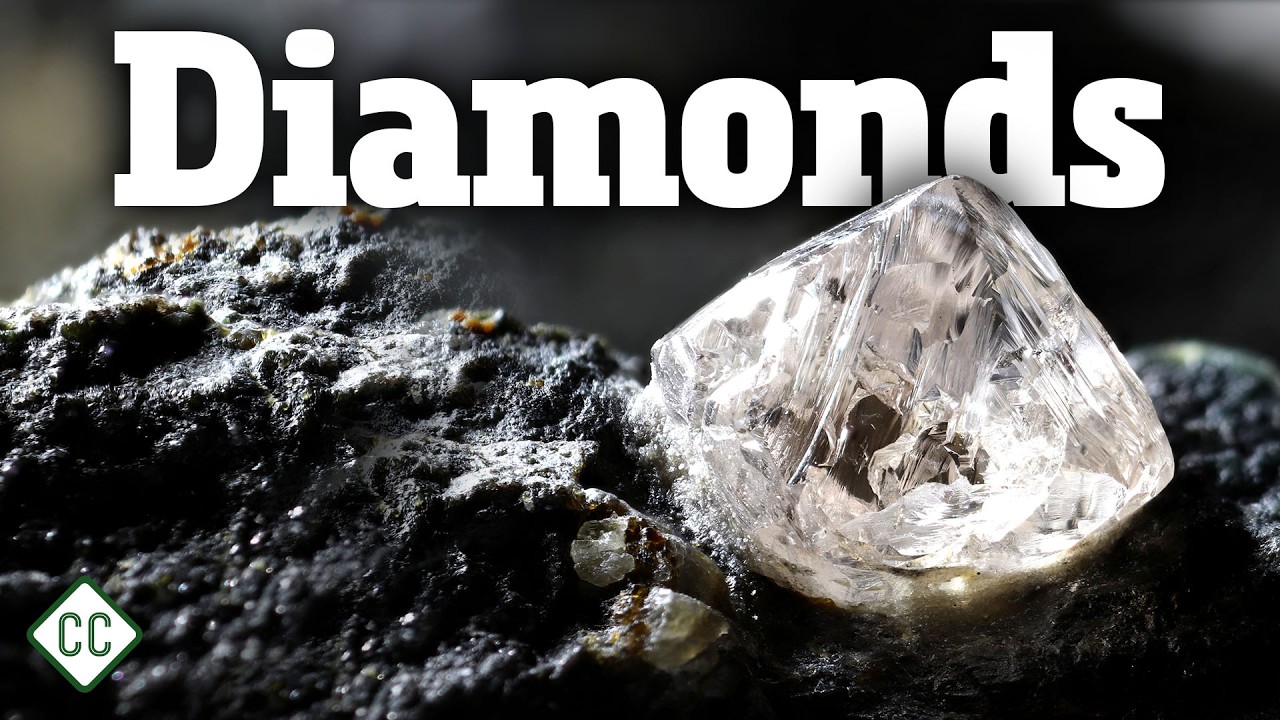
Where Do Diamonds Come From?: Crash Course Geology #8
Keywords
Summary
151 words
Critical Evaluation
Value of the Information & Strength of the Argument
The video provides substantial educational value by clarifying misconceptions about diamond formation and rarity. It presents a well-structured argument, starting with the geological process, then addressing the historical and economic context, and finally discussing ethical considerations. The explanation of kimberlite eruptions and the role of cratons is scientifically sound and effectively communicated. The argument that diamonds are not inherently rare but were made to seem so by De Beers is supported by historical evidence. The discussion on lab-grown diamonds is balanced, acknowledging both their authenticity and ethical advantages. The video also touches on the complexity of the blood diamond trade, encouraging viewers to explore further. Overall, the argumentation is coherent and persuasive, backed by credible sources.
Scientific Rigor, Source Quality, Title Accuracy
The video demonstrates strong scientific rigor, with accurate geological information and references to expert research, such as Dr. Kate Kaseyeva’s work on garnet inclusions. The sources cited in the description include reputable organizations like Human Rights Watch and the International Gem Society, and a comprehensive sources document is provided. The title accurately reflects the content, which comprehensively covers the origins of diamonds. The video maintains a high standard of factual accuracy, with minor simplifications appropriate for a general audience. The inclusion of multiple perspectives on the ethical debate adds to its credibility.
223 words
Title / Content Match
The title accurately reflects the content, which comprehensively explains the geological origins of diamonds and addresses common myths.
Quality & Reliability
8/10
The video presents accurate geological information about diamond formation, kimberlite eruptions, and the distinction between natural and lab-grown diamonds. It cites reputable sources (e.g., Human Rights Watch, International Gem Society) and includes a detailed sources document. Minor simplifications for a general audience do not undermine the core scientific accuracy.
Key Moments
Markers derived by PSI from the transcript: the creator did not define chapters.
Cited Sources
- Conflict-Free Diamonds: What Does it Mean? — Referenced for further reading on conflict-free diamonds.
- The Hidden Cost of Jewelry — Referenced for information on human rights in jewelry supply chains.
- Blood Diamonds — Referenced for information on blood diamonds.
- Crash Course Geology Sources Document — Comprehensive list of sources used in the episode.
- Crash Course Geology Extracurricular Playlist — Additional learning resources.
Concurring Sources
- International Gem Society: Conflict-Free Diamonds — Supports the discussion on ethical diamond sourcing.
- Human Rights Watch: The Hidden Cost of Jewelry — Corroborates the human rights concerns in diamond mining.
External References
Contribution & Novelties
The video offers a comprehensive and accessible overview of diamond geology, effectively debunking common myths and providing historical context. It uniquely combines geological science with socio-economic and ethical discussions, making it valuable for a broad audience. The explanation of kimberlite eruptions and the role of cratons is particularly well-presented.
Pour aller plus loin :
- Kimberlite — Relevant for understanding the volcanic rock that hosts diamonds.
- Craton — Essential for grasping the geological setting of diamond formation.
- Synthetic diamond — Provides further details on lab-grown diamonds.
- Blood diamond — Offers additional context on the conflict diamond trade.
96 words
Radar Profile
The radar profile shows high scores in information quantity and quality, with a moderate technical level, indicating a well-balanced educational video. The reliability score is also high, reflecting the use of credible sources and accurate scientific content.