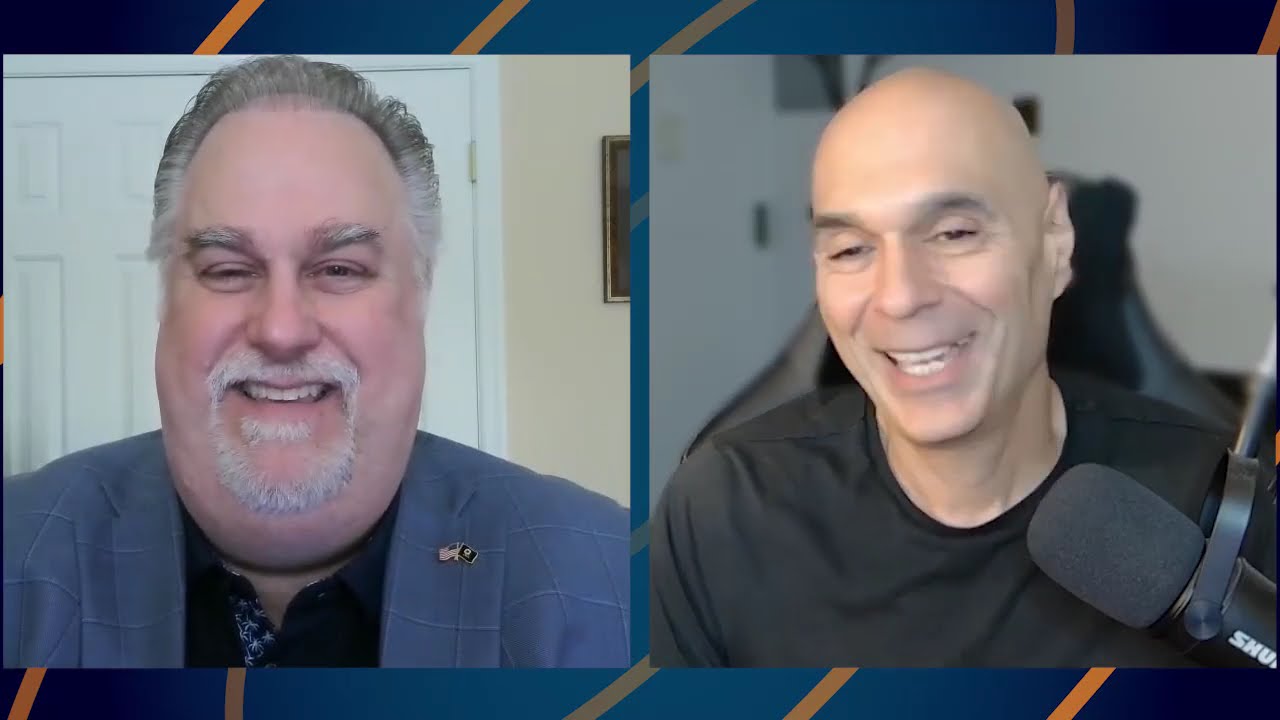
Q-Day Before 2030 Remains Firm – with Cameron Chehreh of IonQ | Ep. 136
Keywords
Summary
148 words
Critical Evaluation
Value of the Information & Strength of the Argument
The episode provides valuable insights into IonQ’s strategic direction and technical approach, offering a rare look at a company’s internal roadmap and rationale. Chehreh’s arguments are coherent and grounded in engineering pragmatism, emphasizing iterative design and the importance of a full-stack platform. However, the discussion is largely promotional, with claims about timelines and capabilities presented without independent verification. The argumentation is persuasive but relies heavily on the speaker’s authority and company optimism rather than peer-reviewed evidence.
Scientific Rigor, Source Quality, Title Accuracy
The scientific rigor is moderate: the conversation references specific technical milestones and papers (e.g., Pinnacle architecture, IonQ’s ‘walking cat’ paper) but does not provide detailed data or citations. The quality of sources is limited to the guest’s expertise and company materials, with no external validation. The title accurately reflects the content, focusing on the Q-Day timeline claim. No public comments were provided for analysis.
155 words
Title / Content Match
The title accurately reflects the core claim discussed: IonQ's commitment to a cryptographically relevant quantum system before 2030.
Quality & Reliability
7/10
The episode features a senior industry executive presenting a company's roadmap and strategic views. Claims are largely forward-looking and not independently verified, but the discussion is technically informed and references specific milestones (256 qubits, 10,000 qubits, PQC deadlines).
Key Moments
Markers derived by PSI from the transcript: the creator did not define chapters.
- Introduction of guest Cameron Chehreh and his background.
- Discussion on executive orders and urgency for PQC migration.
- IonQ's platform approach and SkyWater acquisition rationale.
- Update on 256-qubit system and roadmap to 10,000 qubits.
- Comparison with Pinnacle architecture paper and trapped-ion estimates.
- Challenges and engineering hurdles in scaling quantum systems.
- CEO's bold claims and company's execution focus.
- Closing thoughts on the race to quantum advantage and Q-Day.
Cited Sources
- IonQ Official Website — Company information and quantum computing services.
- Protiviti Quantum Computing Services — Consulting services for post-quantum readiness.
Concurring Sources
- NIST Post-Quantum Cryptography Standards — NIST guidelines referenced in the episode for PQC implementation.
Dissenting Sources
- Pinnacle Architecture Paper — The episode discusses the Pinnacle paper's estimate of ~300,000 trapped ions needed to crack RSA, which contrasts with IonQ's more optimistic projections. The paper is not directly cited with a URL, but it represents a differing technical viewpoint.
Contribution & Novelties
The episode provides an exclusive update on IonQ’s hardware roadmap, confirming the 256-qubit system is in fabrication and reiterating the company’s commitment to a cryptographically relevant quantum computer before 2030. It offers insights into the strategic rationale behind the SkyWater acquisition and the shift to chip-scale trapped-ion technology. The discussion also highlights the importance of a holistic platform approach and the need for policy alignment.
Pour aller plus loin :
- Post-quantum cryptography on Wikipedia — Provides background on cryptographic algorithms designed to resist quantum attacks.
- Quantum key distribution on Wikipedia — Explains QKD, a complementary technology mentioned in the episode.
- IonQ’s ‘walking cat’ architecture paper — Note: URL is illustrative; the paper is referenced but not directly linked in the episode. This is a key technical reference for IonQ’s approach.
130 words
Radar Profile
The radar profile shows a balanced distribution across information quantity, quality, and technical depth, with slightly lower reliability due to the promotional nature of the content. The episode is rich in technical details and strategic insights, but the lack of independent verification and the forward-looking nature of the claims temper the overall reliability score.