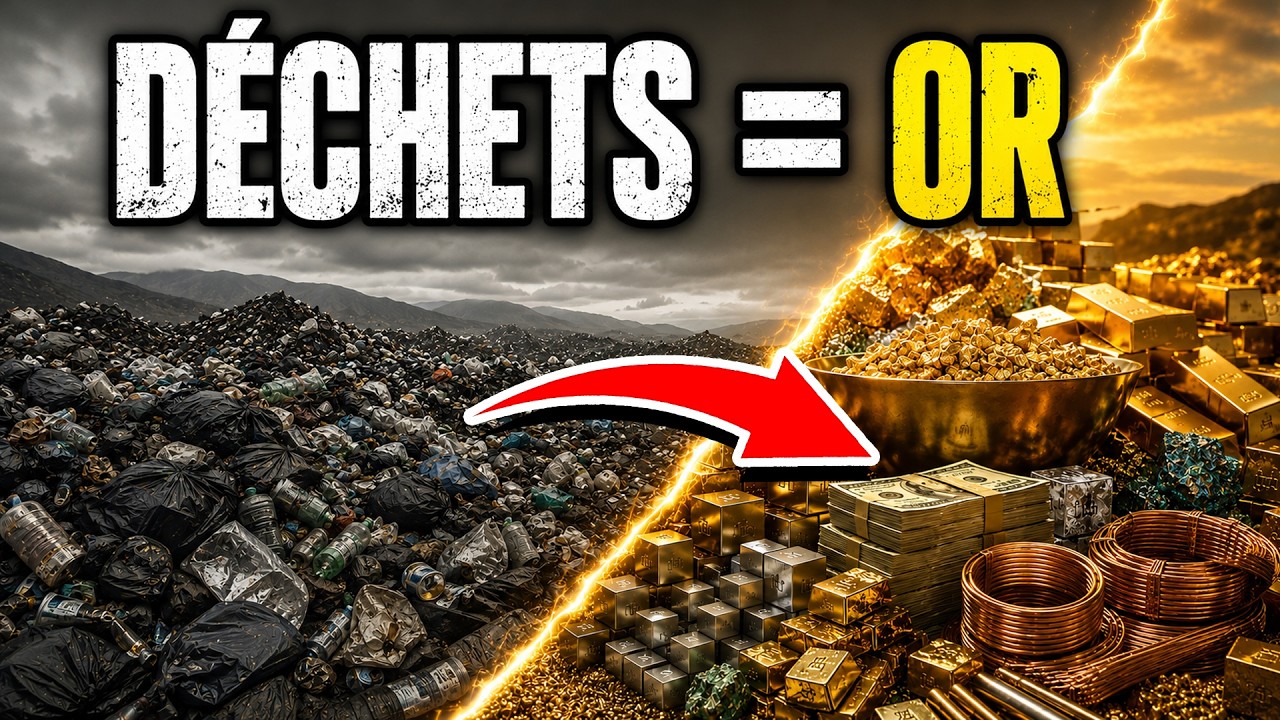
La Chine Recycle Des Montagnes De Déchets Avec Cette Technologie Insensée
China Recycles Mountains of Waste with This Insane Technology
Keywords
Summary
141 words
Critical Evaluation
Value of the Information & Strength of the Argument
The video provides valuable insights into China’s waste recycling systems, offering specific data points like the 70% global share of battery recycling and the 1100+ incineration plants. The argumentation is structured around the economic viability of recycling different materials, explaining why some streams succeed (batteries, e-waste) while others lag (construction, textiles). The use of concrete examples, such as Shanghai’s waste sorting law and the 99.5% purity of sorted food waste, strengthens the narrative. However, the video lacks critical analysis of the environmental impacts and relies on somewhat sensationalist language, which may oversimplify complex issues.
Scientific Rigor, Source Quality, Title Accuracy
The video cites a scientific study for the electricity contribution of waste-to-energy plants, but does not provide specific references or links. The information appears generally accurate, but the lack of citations makes verification difficult. The title accurately reflects the content, focusing on China’s advanced recycling technologies. The description mentions ‘7 waste streams’, which is consistent with the video’s structure. Overall, the scientific rigor is moderate, with a need for more transparent sourcing.
181 words
Title / Content Match
The title accurately reflects the content, focusing on China's advanced waste recycling technologies.
Quality & Reliability
7/10
The video provides a broad overview of China's waste recycling technologies, citing specific figures and a scientific study, but lacks detailed citations and verification of sources.
Key Moments
Markers derived by PSI from the transcript: the creator did not define chapters.
- Introduction to the concept of urban mining and the value hidden in waste.
- Battery recycling process: from discharge to black mass production.
- Challenges of solar panel recycling due to complex lamination.
- Construction waste recycling: simple process but low rates due to economics.
- E-waste as a 'urban mine' and the detailed dismantling process.
Cited Sources
- No specific sources cited in the video — The video mentions a scientific study but does not provide a reference.
Concurring Sources
- No concordant sources provided
Dissenting Sources
- No discordant sources provided
Contribution & Novelties
The video offers a comprehensive overview of China’s waste recycling industry, highlighting the economic drivers and technological solutions. It provides a unique perspective on the scale and sophistication of China’s approach, which is often overlooked. The emphasis on the ‘urban mine’ concept and the detailed breakdown of each waste stream adds value.
Pour aller plus loin :
- Circular economy — Relevant to the overall theme of recycling and resource recovery.
- Urban mining — Directly related to the concept of recovering metals from e-waste.
- Waste-to-energy — Discusses the technology and its applications, relevant to the incineration section.
96 words
Radar Profile
The radar profile shows high scores in quantity and quality of information, with moderate technical depth and reliability. This indicates a well-rounded but not deeply technical overview, suitable for a general audience.