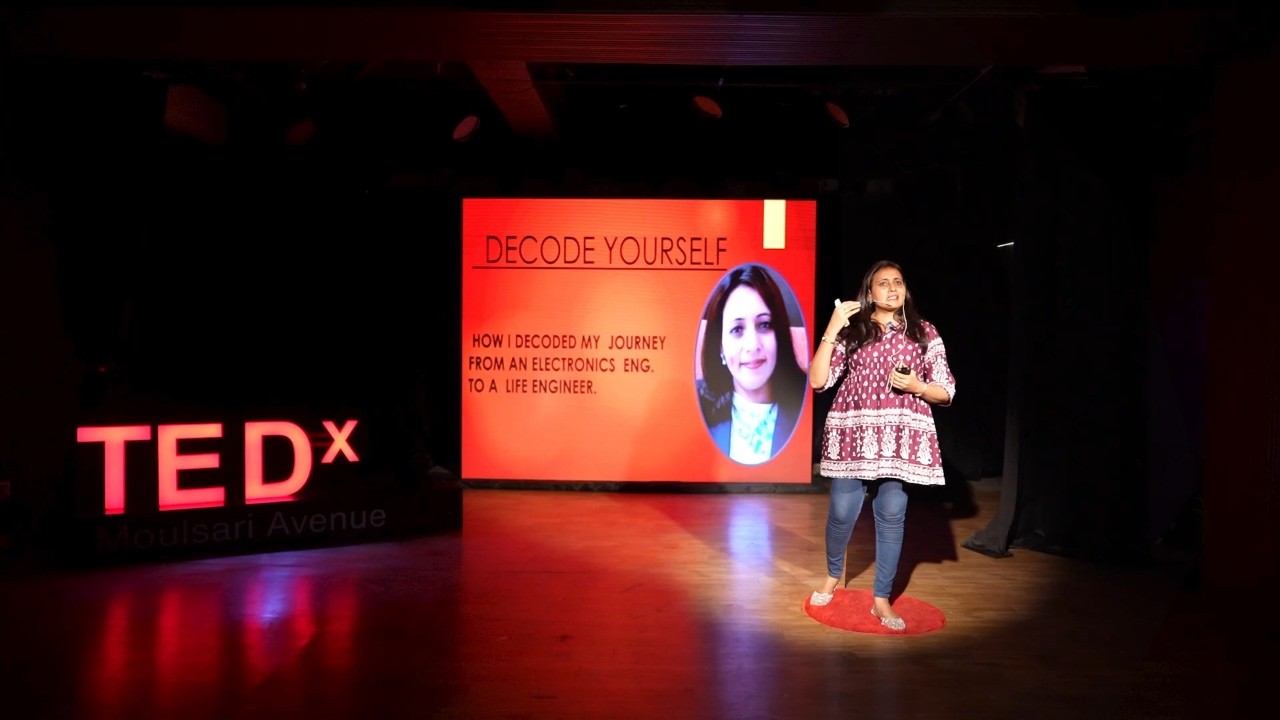
Who Taught You to Be You? | Er Sonesh Bhardwaj | TEDxMoulsari Avenue
Keywords
Summary
143 words
Critical Evaluation
Value of the Information & Strength of the Argument
The talk’s value lies in its inspirational personal story, which may resonate with individuals facing similar societal pressures. However, the argumentation is largely anecdotal and lacks empirical support. The speaker’s claims about belief systems and personal growth are presented as universal truths without referencing psychological theories or research. The DECODE framework is introduced but not substantiated with evidence or practical application details. The argument is built on personal experience and motivational rhetoric rather than rigorous analysis, limiting its scientific value.
Scientific Rigor, Source Quality, Title Accuracy
The talk does not cite any scientific sources or studies, relying solely on the speaker’s personal narrative. The title accurately reflects the content, focusing on the question of who shapes our identity. The speaker’s background in engineering and sales, while relevant to her story, does not establish her as an expert in psychology or personal development. The lack of citations and empirical evidence significantly reduces the scientific rigor of the talk. The description mentions TEDx but provides no additional references. The talk is more of a motivational speech than a scientifically grounded presentation.
188 words
Title / Content Match
The title accurately reflects the talk's central theme of questioning inherited beliefs and self-identity.
Quality & Reliability
4/10
The talk is a personal narrative with anecdotal evidence, lacking empirical data or citations. The speaker's expertise is in industry, not psychology, and the content is motivational rather than scientifically rigorous.
Key Moments
Markers derived by PSI from the transcript: the creator did not define chapters.
- Introduction: The mirror metaphor and the question of self-reflection.
- Speaker's background and decision to deviate from traditional engineering career.
- Challenges faced when moving to a new city and entering sales.
- Discussion on belief systems formed by parents, teachers, and society.
- Introduction of the DECODE framework for personal transformation.
- Speaker's experience with corporate clients and the void she felt.
- Conclusion: Call to authenticity and becoming your own masterpiece.
Cited Sources
- TEDx Program — Mentioned as the event organizer and format.
Concurring Sources
- Self-determination theory — Supports the idea of intrinsic motivation and autonomy in personal growth.
Dissenting Sources
- No direct discordant sources — The talk lacks citations, so no direct contradictions are found, but the lack of evidence weakens its claims.
Contribution & Novelties
The talk offers a personal narrative on questioning inherited beliefs and pursuing authenticity, but the concepts are not novel. The DECODE framework is a simple mnemonic for personal development, but lacks depth and empirical backing.
Pour aller plus loin :
- Self-determination theory — Relevant to intrinsic motivation and authenticity.
- Fixed vs. growth mindset — Carol Dweck’s work on beliefs about abilities.
- Impostor syndrome — Related to self-perception and societal expectations.
70 words
Radar Profile
The radar profile shows low scores across all dimensions, indicating a talk that is low in information density, technical depth, and reliability. The content is primarily anecdotal and motivational, with minimal scientific grounding.