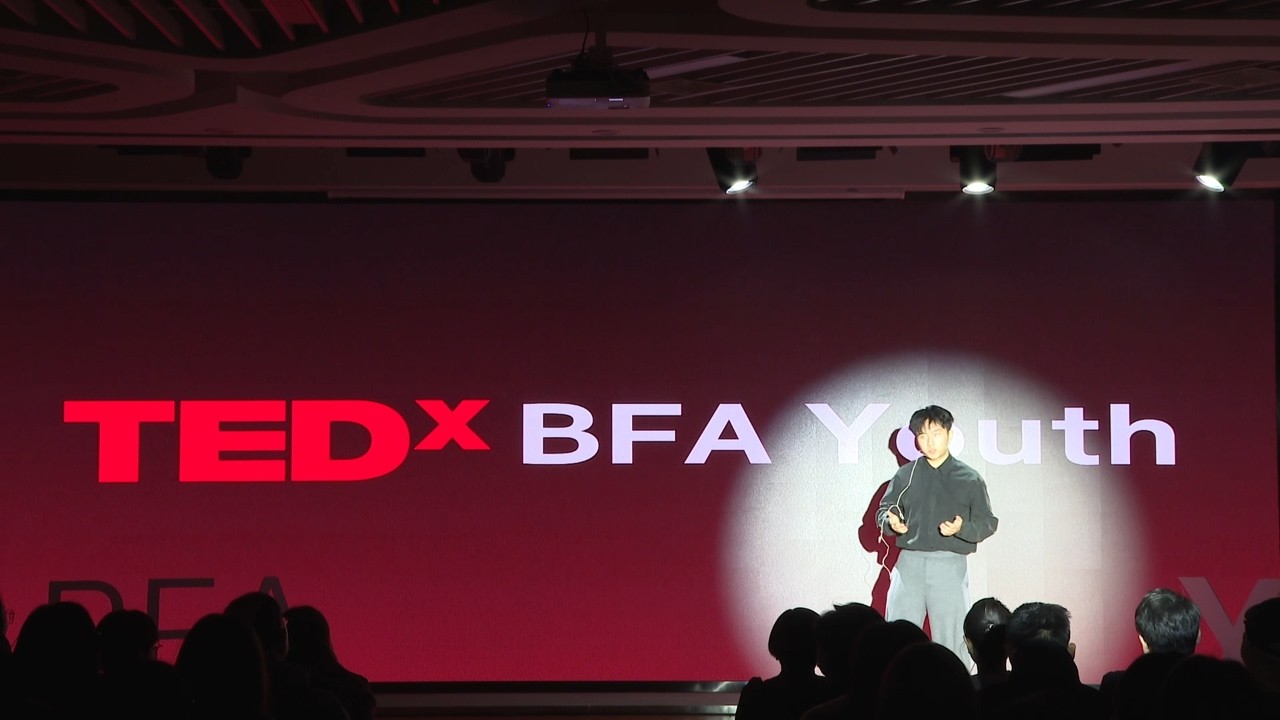
TEDxBeijing Haidian Future Academy Youth | Shao Xu | TEDxBeijing Haidian Future Academy Youth
Keywords
Summary
165 words
Critical Evaluation
Value of the Information & Strength of the Argument
The talk offers a valuable personal perspective on the intersection of AI and education, particularly from a student’s viewpoint. The argument is coherent and well-structured, moving from general observations about AI to specific personal experiences. The speaker effectively uses anecdotes to illustrate his points, such as the AI-generated essay lacking his ‘own voice,’ which powerfully conveys the importance of personal expression. However, the argumentation relies heavily on personal narrative and lacks empirical evidence or references to research. The speaker’s claim about AI’s three-layer architecture is presented without citation, and the discussion of AI’s capabilities is simplified. The proposed three-step routine (think, consult, reflect) is practical but not deeply developed. Overall, the value lies in its relatable perspective and thought-provoking questions, but the argumentation would benefit from stronger evidence and a more nuanced exploration of counterarguments.
Scientific Rigor, Source Quality, Title Accuracy
The talk is a personal opinion piece rather than a rigorous scientific analysis. The speaker does not cite any sources or studies, and the only reference is to OpenAI’s model performance at the IMO, which is mentioned without a specific citation. The title accurately reflects the content, focusing on embracing mistakes in the AI era. The description provides context that the talk is independently organized under the TEDx format, which is a form of expert opinion but not peer-reviewed. The lack of citations and the speaker’s status as a student limit the scientific rigor. The talk’s strength lies in its authentic student perspective, but it does not offer a comprehensive or evidence-based examination of the topic.
266 words
Title / Content Match
The title accurately reflects the content: a TEDx talk by Shao Xu on embracing mistakes in the AI era.
Quality & Reliability
6/10
Personal narrative and reasoned argument, but lacks empirical evidence or citations. The speaker is a student, not an expert in AI or education, which limits authority. Claims about AI architecture are simplified and not sourced.
Key Moments
Markers derived by PSI from the transcript: the creator did not define chapters.
- Introduction: Shao Xu introduces the topic of AI and its impact on learning.
- Mentions OpenAI's model winning a gold medal at the International Mathematical Olympiad.
- Explains AI's three-layer architecture: generator, verifier, and meta-verifier.
- Discusses the importance of mistakes for high school students and how AI removes this privilege.
- Shares a personal story about using AI to write a college application essay and realizing it lacked his own voice.
- Proposes a three-step routine: think first, consult AI, and reflect.
- Concludes by emphasizing the need to preserve space for human imperfection and growth.
Cited Sources
- TEDx Talks — The talk was given at a TEDx event, and the description links to the TEDx program.
Concurring Sources
- TEDx Talks — The talk is part of the TEDx series, which often features personal perspectives on education and technology.
Contribution & Novelties
The talk provides a unique student perspective on the role of mistakes in learning in the AI era. It argues that AI, while efficient, can undermine the educational value of trial and error. The speaker’s personal anecdotes, such as the AI-generated essay, illustrate the importance of personal voice and authenticity. The proposed three-step routine (think, consult, reflect) offers a practical approach to integrating AI into learning without losing human agency.
Pour aller plus loin :
- AI in Education — Overview of AI applications in education and debates on its impact.
- Growth Mindset — Concept by Carol Dweck on the importance of embracing challenges and learning from mistakes.
- Trial and Error — Learning method that emphasizes experimentation and learning from failures.
120 words
Radar Profile
The radar profile shows moderate scores across all dimensions, with slightly higher quality of information and lower technical level. This reflects a talk that is more about personal reflection and less about technical depth or empirical rigor.