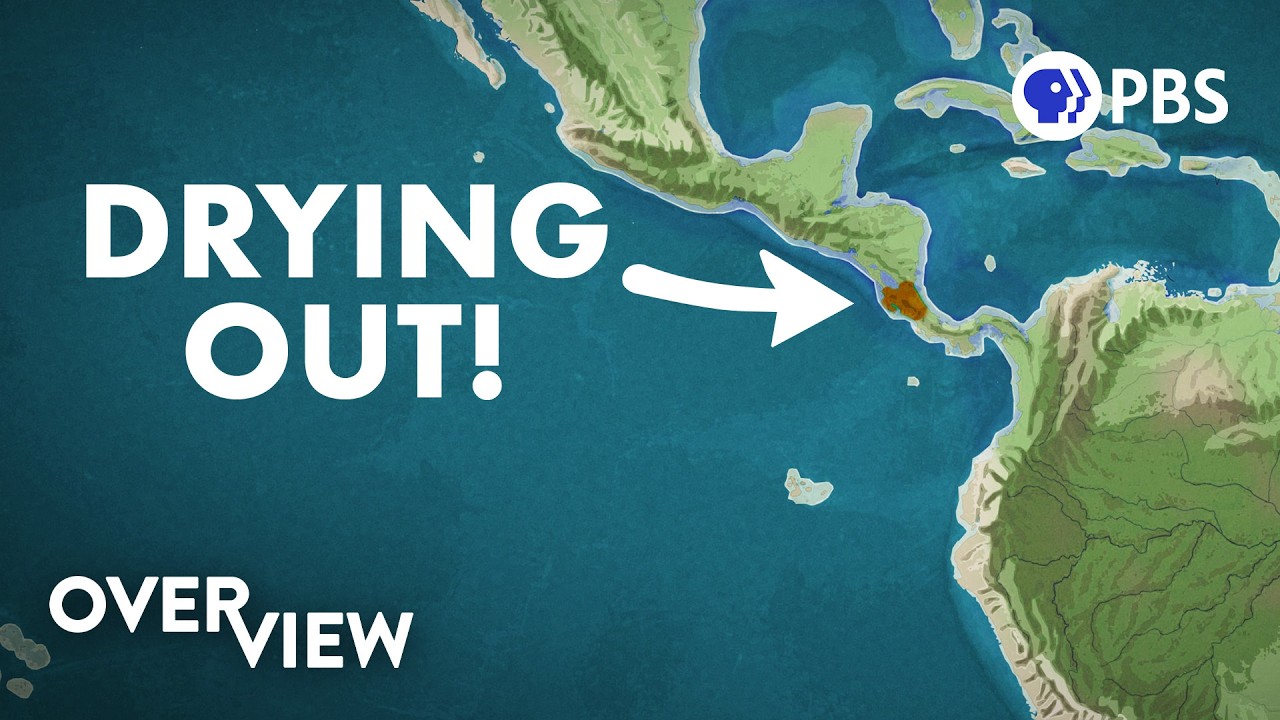
How This Dying Rainforest Is a Sign of Things to Come
Keywords
Summary
160 words
Critical Evaluation
Value of the Information & Strength of the Argument
The documentary provides valuable insights into the often-overlooked role of epiphytes in cloud forest ecosystems. It presents a compelling argument, supported by visual evidence and expert commentary, that these plants are keystone species whose loss could have cascading effects. The argumentation is solid, building from observations of plant distress to a controlled experiment and then to a plausible climate-based explanation. The film effectively communicates the complexity of the issue without oversimplifying, and it balances scientific rigor with emotional engagement. The inclusion of reforestation efforts adds a constructive dimension, showing potential mitigation strategies.
Scientific Rigor, Source Quality, Title Accuracy
The scientific rigor is generally high, featuring credible researchers and a well-designed experiment. However, the documentary lacks explicit citations to peer-reviewed studies, which would strengthen its credibility. The sources mentioned are primarily the researchers themselves and their ongoing work. The title accurately reflects the content, and the documentary’s focus on a specific case study effectively illustrates broader climate change impacts. The description provides links to PBS donation and a related show, but no direct references to the scientific literature. Overall, the content is reliable but could benefit from more transparent sourcing.
198 words
Title / Content Match
The title accurately reflects the content, focusing on the drought stress in a cloud forest as an indicator of broader climate change impacts.
Quality & Reliability
8/10
The documentary features interviews with established researchers (Nalini Nadkarni, Sybil Gotsch) and presents a unique large-scale experiment, but lacks detailed citations or peer-reviewed references in the description.
Key Moments
Markers derived by PSI from the transcript: the creator did not define chapters.
- Introduction to the cloud forest and its unique moisture capture mechanism.
- Nalini Nadkarni explains the historical neglect of epiphytes in research.
- Description of the large-scale experiment stripping epiphytes from trees.
- Sybil Gotsch discusses the microclimate data showing warmer, drier canopies without epiphytes.
- Explanation of how rising cloud bases due to climate change are the root cause.
- Introduction to reforestation efforts on the Pacific slope.
- Victor Molina Rojas shares his philosophy on planting trees and hope for the future.
Cited Sources
- PBS Donation Page — Support link for PBS Terra, mentioned in the video description.
- Eons: Life and Death on Pangea — Promotional link for a related PBS show, mentioned at the end of the video.
Concurring Sources
- Wikipedia: Cloud forest — General reference supporting the importance of cloud forests and their vulnerability.
- Wikipedia: Epiphyte — General reference on epiphytes and their ecological roles.
Contribution & Novelties
The documentary offers a unique behind-the-scenes look at a pioneering experiment on epiphytes, providing new insights into their critical role in cloud forest hydrology. It effectively communicates the concept of ‘canary in the coal mine’ for climate change impacts on these ecosystems. The film also highlights the practical application of scientific research in reforestation efforts, offering a hopeful narrative.
Pour aller plus loin :
- Cloud forest — Background on the ecosystem type.
- Epiphyte — General information on epiphytes.
- Nalini Nadkarni — Profile of a key researcher featured.
- Climate change in Costa Rica — Context on regional climate impacts.
98 words
Radar Profile
The radar profile shows high scores in information quantity and quality, with a slightly lower technical level, indicating a well-balanced documentary that is accessible yet informative. The reliability score is strong, reflecting the credible researchers and experimental approach.
💬 Très positif. Sur les 30 commentaires analysés, les spectateurs expriment une profonde inquiétude pour l'écosystème tout en saluant le travail des scientifiques et la qualité du documentaire, avec des témoignages personnels et des appels à l'action.