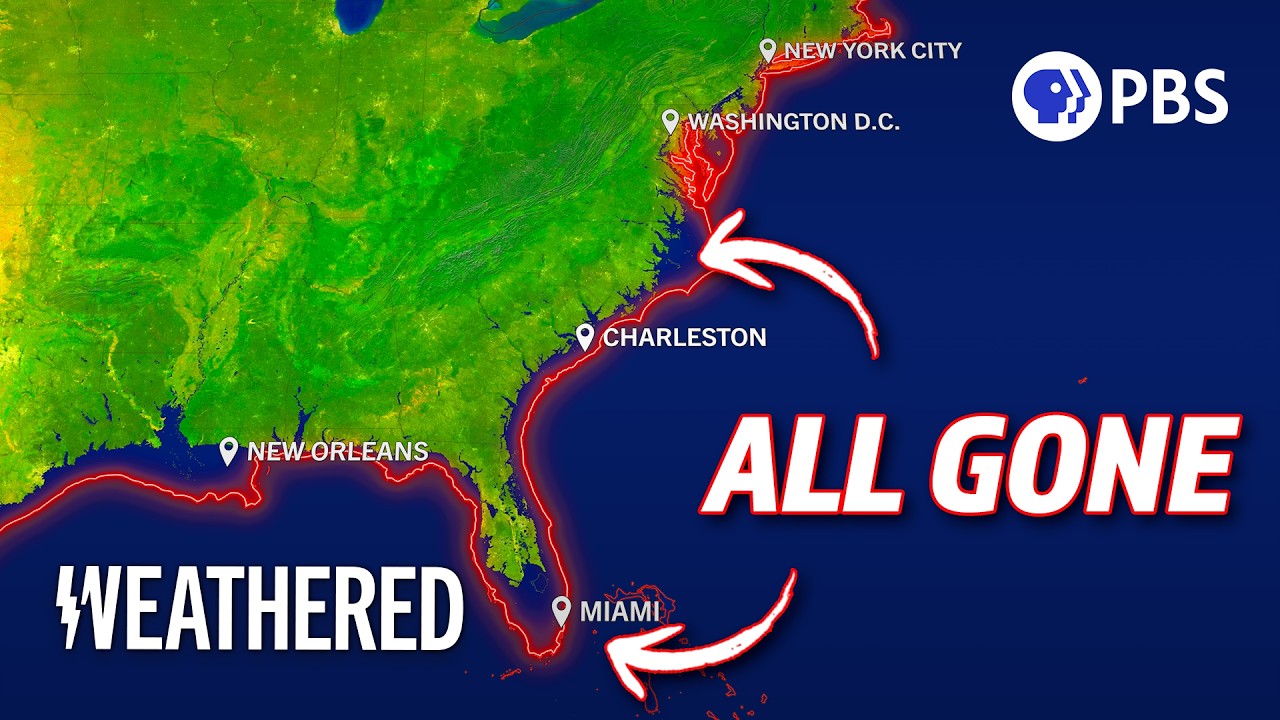
The WORST Climate News I've Ever Seen
Keywords
Summary
176 words
Critical Evaluation
Value of the Information & Strength of the Argument
The video provides valuable information by presenting a recent, peer-reviewed study and explaining its implications for sea level rise. The argumentation is solid, relying on expert interviews and paleoclimate data to support the claim that even modest warming could trigger irreversible ice-sheet loss. The presentation of feedback loops and the emphasis on the rate of sea level rise as a key factor for adaptation is well-argued and scientifically grounded.
Scientific Rigor, Source Quality, Title Accuracy
The video maintains scientific rigor by citing a specific study (Stokes & Dutton, 2025) published in Nature Communications Earth & Environment, and includes an interview with the lead author. The sources are credible and the information is presented accurately, though some simplifications are made for a general audience. The title accurately reflects the content, which presents concerning new findings on sea level rise.
147 words
Title / Content Match
The title accurately reflects the video's content, which presents alarming new research on sea level rise and its potential impacts.
Quality & Reliability
8/10
The video presents a recent peer-reviewed study (Stokes & Dutton, 2025) and explains its findings with input from the lead author, providing a credible scientific basis. The information is contextualized with IPCC projections and paleoclimate evidence, and the presentation is clear and accurate, though it simplifies some complex mechanisms.
Key Moments
Markers derived by PSI from the transcript: the creator did not define chapters.
- Introduction: 15 meters of sea level rise possible by 2300
- Announcement of Patreon launch
- Current sea level rise rates and acceleration
- Two main drivers: thermal expansion and ice sheet melt
- New study by Stokes and Dutton: 1.5°C may be too much
- Paleoclimate evidence: last interglacial sea levels 6-9 meters higher
- Pliocene evidence: sea levels 10-20 meters higher
- Rate of sea level rise as key factor for adaptation
- Feedback loops: surface elevation melt and marine ice sheet instability
- Even 1.5°C may not be enough; need to bring temperatures down to 1°C
Cited Sources
- Stokes and Dutton Study — The main study discussed in the video, providing evidence on ice-sheet collapse and sea level rise.
- PBS Donate — Support link for PBS Terra.
- Weathered Merch — Merchandise link for the show.
Concurring Sources
- IPCC AR6 Sea Level Rise Projections — The video's projections align with IPCC scenarios for sea level rise.
Dissenting Sources
- Some scientists argue for lower sea level rise projections — There is ongoing debate about the upper bounds of sea level rise projections, with some studies suggesting lower values than the most extreme scenarios.
Contribution & Novelties
The video brings attention to a recent study that suggests even the Paris Agreement target of 1.5°C may be insufficient to prevent catastrophic sea level rise, challenging common assumptions. It effectively communicates the concept of tipping points and feedback loops in ice-sheet dynamics, and emphasizes the importance of the rate of sea level rise for adaptation planning.
Pour aller plus loin :
- Marine ice sheet instability — Key mechanism discussed in the video.
- Last Interglacial — Paleoclimate period referenced for sea level evidence.
- Pliocene — Earlier warm period with similar CO2 levels.
- IPCC Special Report on the Ocean and Cryosphere — Comprehensive assessment of sea level rise projections.
108 words
Radar Profile
The radar profile shows high scores in information quantity, quality, and reliability, reflecting the video's strong scientific grounding and clear presentation. The technical level is also high, indicating a detailed explanation of complex mechanisms, suitable for an informed audience.
💬 Négatif : Sur les 30 commentaires analysés, la majorité exprime une profonde inquiétude face au changement climatique et à l'inaction politique, avec des témoignages personnels de impacts déjà visibles.