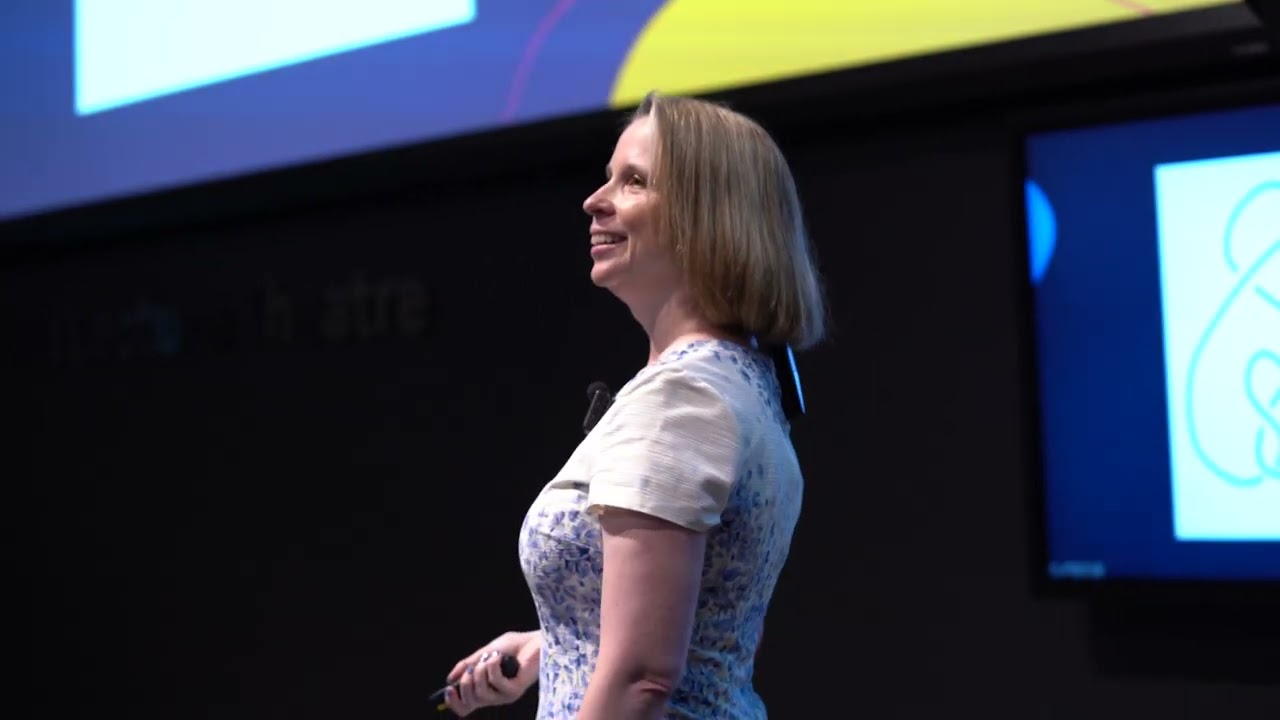
'Knots, graphs and algebra: a story of surprises' Public Lecture by Zsuzsanna Dancso
Keywords
Summary
158 words
Critical Evaluation
Value of the Information & Strength of the Argument
The lecture provides valuable insights into the connections between knot theory, graph theory, and algebra. The argumentation is clear and logical, building from basic definitions to more complex concepts. The speaker effectively uses analogies and visual aids to make abstract ideas accessible. The step-by-step construction of the knot-graph correspondence and the subsequent refinement to an invariant is well-motivated and demonstrates the process of mathematical discovery.
Scientific Rigor, Source Quality, Title Accuracy
The scientific content is rigorous, with accurate explanations of mathematical concepts. The speaker cites historical figures like Tait and Kelvin and mentions recent classification results, such as the enumeration of knots up to 20 crossings by Morven Thistlethwaite. The title accurately reflects the content. The lecture is well-structured and the sources mentioned are credible within the mathematical community.
138 words
Title / Content Match
The title accurately reflects the content, as the lecture explores the connections between knots, graphs, and algebra.
Quality & Reliability
9/10
The lecture is delivered by an expert mathematician, presents established mathematical concepts accurately, and includes historical context and recent results. The content is well-structured and pedagogically sound.
Key Moments
Markers derived by PSI from the transcript: the creator did not define chapters.
- Introduction and audience interaction
- Definition of mathematical knots and examples
- Introduction to knot invariants and the determinant
- Historical background: Lord Kelvin and Tait's knot tables
- Introduction to graphs and their applications
- Construction of a graph from a knot using checkerboard shading
- Why the naive graph construction is not an invariant
- Restriction to alternating knots and the idea of strategic forgetting
- Definition of graph cycles and the adjacency matrix
- Construction of the determinant invariant and its properties
Cited Sources
- Knot theory — General reference for knot theory concepts
- Graph theory — General reference for graph theory concepts
- Alternating knot — Definition and properties of alternating knots
- Determinant of a knot — Explanation of the determinant invariant
Concurring Sources
- Knot theory — Confirms the mathematical definitions and concepts presented.
- Graph theory — Supports the graph-related content.
Contribution & Novelties
The lecture offers a fresh perspective on the classical connection between knots and graphs, emphasizing the process of constructing invariants through strategic forgetting. It highlights recent advances in knot classification and makes advanced concepts accessible to a general audience.
Pour aller plus loin :
- Knot theory — Comprehensive overview of knot theory.
- Graph theory — Basics of graph theory.
- Alternating knot — Specifics on alternating knots.
- Knot invariant — Detailed discussion of invariants.
73 words
Radar Profile
The radar profile shows high scores in information quality and reliability, with a slightly lower score in technical level, reflecting the lecture's aim to be accessible to a general audience while maintaining scientific rigor.
💬 Sur les 0 commentaires analysés, aucune tendance n'est disponible.