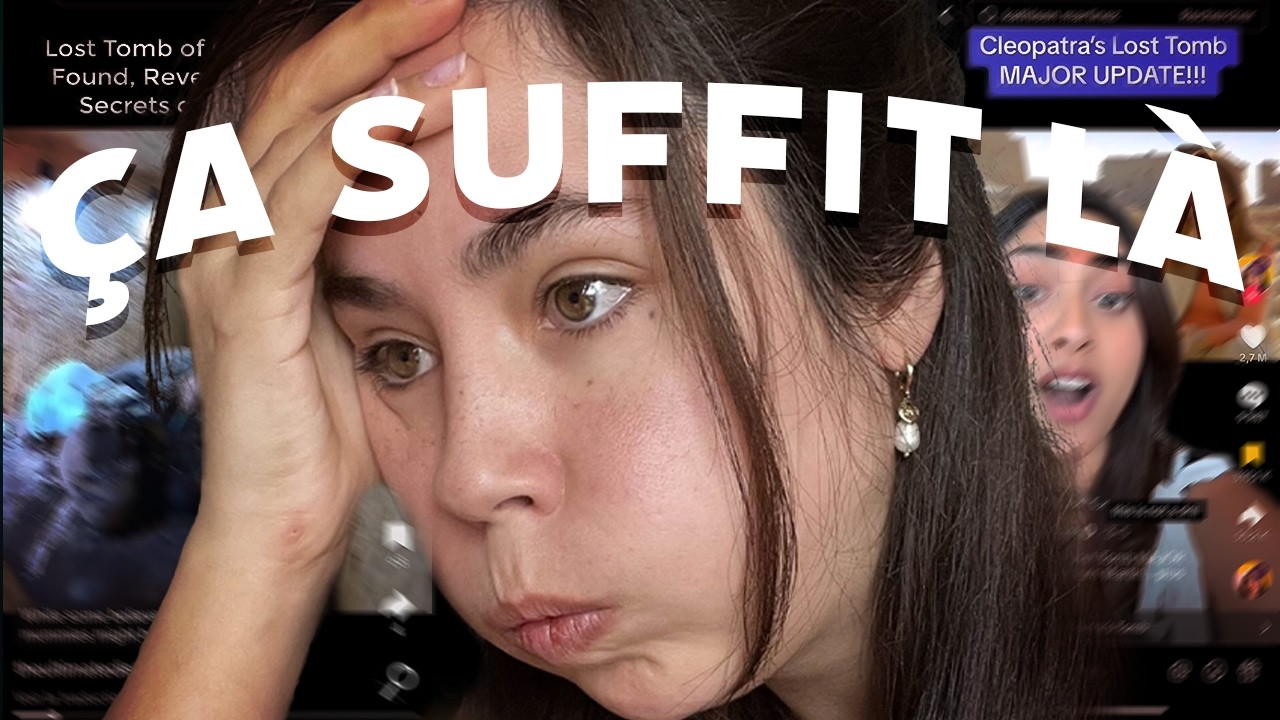
La tombe de Cléopâtre retrouvée ? Ma réponse à TikTok
Has Cleopatra's tomb been found? My response to TikTok
Keywords
Summary
159 words
Critical Evaluation
Value of the Information & Strength of the Argument
The video adds value by providing a clear, evidence-based rebuttal to the viral TikTok claims surrounding Cleopatra’s tomb. The argumentation is solid: it systematically distinguishes between actual archaeological findings (coins, a foundation plaque, a presumed tunnel) and the unfounded leap that these connect to Cleopatra’s burial. The creator draws on her prior research and interviews with experts to underline that no scientific publication supports Martinez’s theory. The reasoning follows a logical structure: presenting claims, questioning their significance, and concluding that the evidence is insufficient. While somewhat repetitive for those familiar with the case, it effectively counters misinformation and encourages critical thinking.
Scientific Rigor, Source Quality, Title Accuracy
Rigor is good: the video explicitly references the previous episodes and the recent conference, and it cites the fact that no peer-reviewed article exists. The creator avoids ad hominem attacks and acknowledges that if the tomb is found it would be major. The title accurately reflects the content: it addresses the TikTok buzz and gives a measured response. The sources used are mainly the creator’s own work and public statements; no external citations are provided, but the argument relies on known facts and expert opinions. Comment trends show strong public support for this critical approach, with many viewers appreciating the debunking effort.
218 words
Title / Content Match
The title accurately signals a response to viral TikTok claims and a critical assessment of the supposed discovery. The video delivers exactly that, concluding that the evidence is insufficient.
Quality & Reliability
8/10
The video offers a well-reasoned critical analysis, clearly separating factual findings from interpretations, and relies on prior research and expert consensus. While it remains an opinion piece, its logic and acknowledgment of uncertainties give it a high reliability score.
Key Moments
Markers derived by PSI from the transcript: the creator did not define chapters.
- Introduction: reminder of the context and previous investigations.
- Announcement of Kathleen Martinez's February conference.
- Discovery of coins with Cleopatra's likeness, but no direct link to her tomb.
- Discovery of the foundation plaque; temple dedicated to Isis.
- Collaboration with Robert Ballard for underwater exploration.
- Summary: no evidence that Cleopatra is buried at Taposiris Magna.
- Sponsor segment and conclusion.
Cited Sources
- Previous video on Cleopatra's tomb investigation — Referenced as the first part of the investigation that the viewer should watch before this update.
External References
Contribution & Novelties
The video’s original contribution lies in its critical synthesis of the latest claims, which were widely shared on TikTok, and its systematic dismantling of the causal link between the finds and Cleopatra’s tomb. It also highlights the problematic lack of scientific publication by Martinez and the media’s role in amplifying unverified statements. The video serves as a useful case study in scientific skepticism and media literacy.
Pour aller plus loin :
- Taposiris Magna — The archaeological site where the searches are located.
- Cleopatra — Historical queen whose tomb is sought.
- Underwater archaeology — The sub-discipline involved in the possible submerged temple research.
102 words
Radar Profile
The scores suggest a balanced profile: high information quality and reliability, moderate quantity and technical level, indicating an accessible but rigorous critical video.
💬 Positive — Based on the 30 comments analyzed, the sentiment is overwhelmingly supportive of Charlie's critical stance, with viewers praising the debunking and adding humorous remarks about the 'curse' narrative. A few comments express cautious hope for Martinez's theory but acknowledge the lack of evidence.