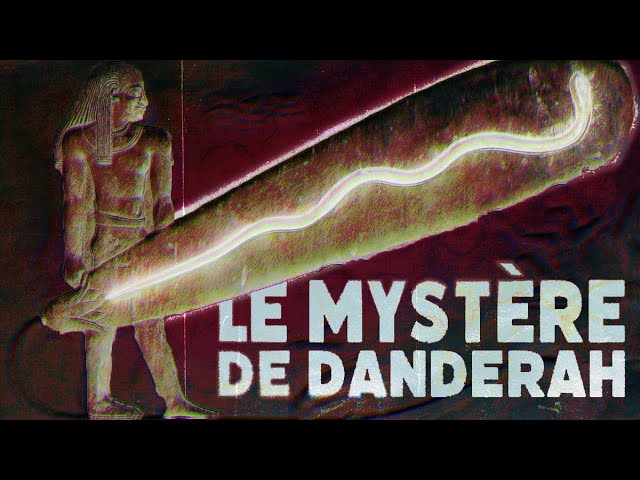
Cette ampoule remet en question TOUTE l'Histoire
This light bulb questions ALL of History
Keywords
Summary
175 words
Critical Evaluation
Value of the Information & Strength of the Argument
The information is highly valuable as it addresses a popular pseudoscientific claim with clear reasoning. The argumentation is solid: the host challenges the initial premise about the absence of soot, provides historical context (the temple is Greco-Roman), offers a correct mythological interpretation of the reliefs, and applies basic physics to refute the feasibility of the proposed light bulbs. She also conducts a practical experiment to demonstrate that oil lamps can burn cleanly. The step-by-step deconstruction is logical and easy to follow, turning a complex topic into an accessible and convincing debunk.
Scientific Rigor, Source Quality, Title Accuracy
The video demonstrates scientific rigor by relying on credible sources: it mentions the works of Peter Krassa and Reinhard Habeck (the originators of the theory), the opinions of Egyptologist Sylvie Cauville (specialist of Dendera), and the calculations of physicist Frank Dernenberg (spelled in the video). It also references ancient texts such as Herodotus. The description provides a link to a Google Doc with further sources. The title is somewhat clickbait but the content fully addresses the claim, so adequacy is acceptable. The quality of sources is high, and the video is transparent about its methodology. The comments (30 analyzed) are overwhelmingly positive, praising the clarity, humor, and thoroughness of the debunking.
217 words
Title / Content Match
The title suggests a groundbreaking discovery, but the video is a critical debunking of that claim. It is somewhat sensationalist but accurately points to the controversy.
Quality & Reliability
8/10
The video is well-researched, provides multiple lines of evidence (archaeological, textual, physical), and clearly cites sources. It includes a practical experiment and references scholarly interpretations, demonstrating high reliability.
Key Moments
Markers derived by PSI from the transcript: the creator did not define chapters.
- Introduction: the mystery of soot-free Egyptian monuments and the Dendera light bulbs.
- Presentation of the Dendera reliefs and the claim they represent electric bulbs.
- Origin of the theory: Peter Krassa and Reinhard Habeck, popularized by Ancient Aliens.
- Experiment with an oil lamp showing that it produces little soot.
- Interpretation of the relief as the creation myth (lotus, Harsomtus, Djed pillar).
- Historical context: the temple is Greco-Roman, not ancient Egyptian.
- Physics of a large bulb: pressure of 63 tonnes, no evidence of vacuum or noble gases.
- Conclusion: the theory is unsupported; importance of reading the hieroglyphs.
Cited Sources
- Grande Table Productions (official website) — Music production company credited for the soundtrack.
- Google Docs - Sources document — List of sources and further readings provided by the creator.
- La Grande Table on SoundCloud — Soundtrack audio tracks available for listening.
Contribution & Novelties
The video provides a comprehensive debunking of a widely spread pseudoscientific claim, offering a clear step-by-step methodology that combines historical, archaeological, textual, and physical evidence. It emphasizes the importance of reading accompanying hieroglyphs and contextualizing artifacts within their actual historical period. The practical experiment with an oil lamp is a novel way to demonstrate that ancient lighting methods could be soot-free, countering a key argument of the theory.
Pour aller plus loin :
- Dendera Temple Complex — Overview of the temple’s history and architecture.
- Djed — The symbol interpreted as a pillar, crucial to understanding the relief.
- Nymphaea caerulea (Blue Lotus) — The lotus flower’s significance in Egyptian mythology.
109 words
Radar Profile
The radar chart shows high scores in quantity and quality of information, as well as reliability, reflecting the video's thorough research and clear presentation. The technical level is moderate, as it includes some physics but remains accessible. Overall, the profile indicates a well-rounded, scientifically sound educational content.
💬 Très positif. Sur les 30 commentaires analysés, les spectateurs expriment un enthousiasme marqué, saluant le travail de déconstruction rigoureuse, l'humour et la qualité pédagogique de la vidéo, avec des éloges répétés pour la clarté de l'argumentation et l'approche scientifique.