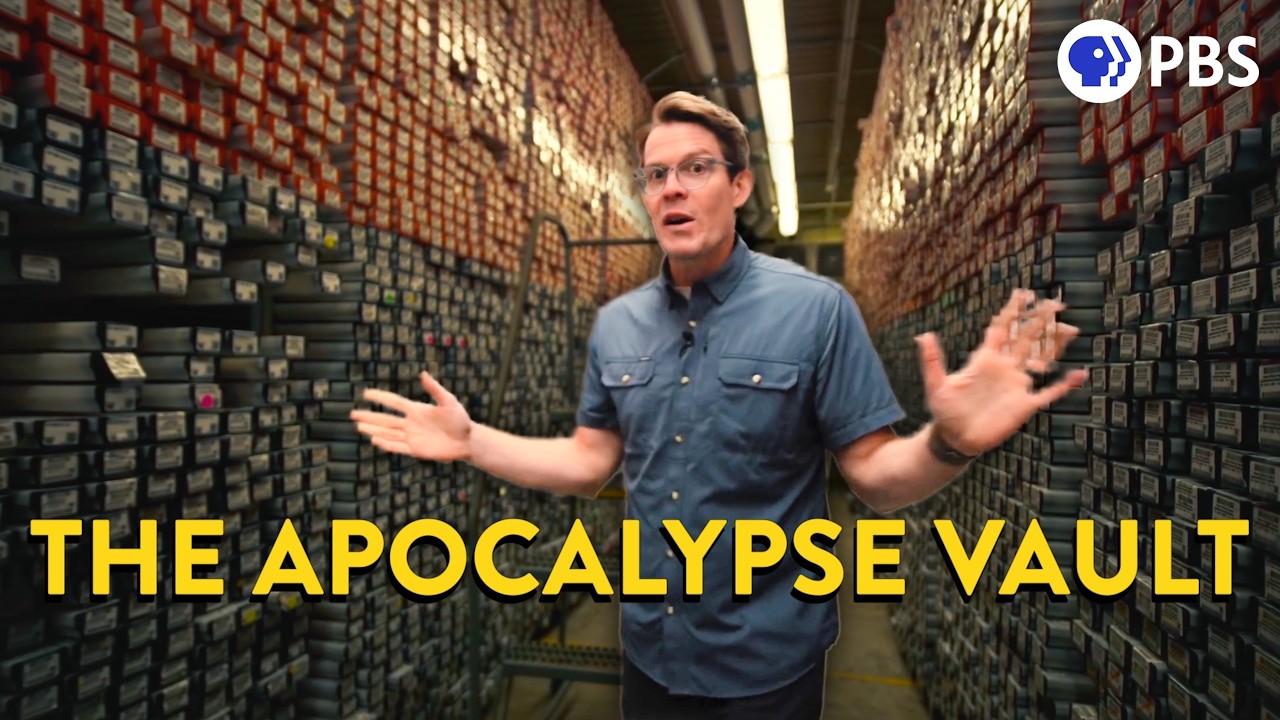
Inside the Vault Where They Keep the Dinosaur Apocalypse
Keywords
Summary
141 words
Critical Evaluation
Value of the Information & Strength of the Argument
The video provides a compelling and detailed account of the Chicxulub impact, based on direct evidence from core samples and expert commentary. The argumentation is solid, building the case from the physical evidence in the cores to the global consequences. It effectively communicates the scale and violence of the event, and the scientific reasoning behind the conclusions. The inclusion of the geologist’s perspective adds authority, and the explanations of concepts like shatter cones and spherules are clear and accessible. The video also addresses the historical discovery of the crater, providing a complete narrative.
Scientific Rigor, Source Quality, Title Accuracy
The scientific rigor is high, with the video relying on peer-reviewed research and expert interviews. The sources are clearly listed in the description, including a link to a reference page. The title accurately reflects the content, which is a tour of the core vault and the story it tells. The video does not overstate claims and clearly distinguishes between established facts and hypotheses. The adéquation between the title and content is excellent.
180 words
Title / Content Match
The title accurately reflects the content: the video takes viewers inside a core repository to examine the geological evidence of the Chicxulub impact and the dinosaur extinction.
Quality & Reliability
9/10
The video is based on interviews with a leading geologist (Sean Gulick) who led the IODP drilling expedition to the Chicxulub crater, and it presents peer-reviewed findings. The information is accurate and well-contextualized, with a clear distinction between established facts and ongoing research. The production is high-quality, and the scientific content is reliable.
Key Moments
Markers derived by PSI from the transcript: the creator did not define chapters.
- Introduction to the core repository and the geological evidence of the impact.
- Sean Gulick explains the core samples and the telescoping record of time.
- Description of the impact moment: vaporization, melting, and the peak ring formation.
- Explanation of shatter cones and the evidence for hypervelocity impact.
- The global firestorm and the thermal radiation effects.
- The mega-tsunami and its effects on coastal areas, with evidence from Texas.
- The impact winter and the collapse of food chains.
- The greenhouse phase and the role of CO2 from vaporized limestone.
- The discovery of the iridium layer and the Alvarez hypothesis.
- The recovery of life: ferns, mammals, and the rise of Purgatorius.
Cited Sources
- References for 'Inside the Vault Where They Keep the Dinosaur Apocalypse' — List of scientific references cited in the video.
Concurring Sources
- Chicxulub impact event — Wikipedia article on the Chicxulub crater, which supports the video's claims about the impact.
External References
Contribution & Novelties
The video provides a unique behind-the-scenes look at the core samples from the Chicxulub crater, offering a tangible connection to the evidence. It synthesizes the latest research on the impact’s immediate and long-term effects, including the recovery of life. The narrative is engaging and makes complex geology accessible.
Pour aller plus loin :
- Chicxulub crater — Overview of the impact structure and its discovery.
- Cretaceous–Paleogene extinction event — Detailed article on the extinction event.
- Iridium anomaly — Explanation of the iridium layer that provided the key clue.
- Sean Gulick — Profile of the geologist featured in the video.
98 words
Radar Profile
The radar profile shows high scores across all dimensions, indicating a well-balanced and reliable video. The quantity and quality of information are excellent, and the technical level is appropriate for a general audience while still being scientifically accurate. The overall reliability is very high, making this a trustworthy source for understanding the dinosaur extinction.
💬 Très positif. Sur les 30 commentaires analysés, le public exprime un fort enthousiasme et une appréciation pour la qualité scientifique et la narration, avec quelques demandes pour l'utilisation du système métrique et des suggestions de sujets complémentaires.