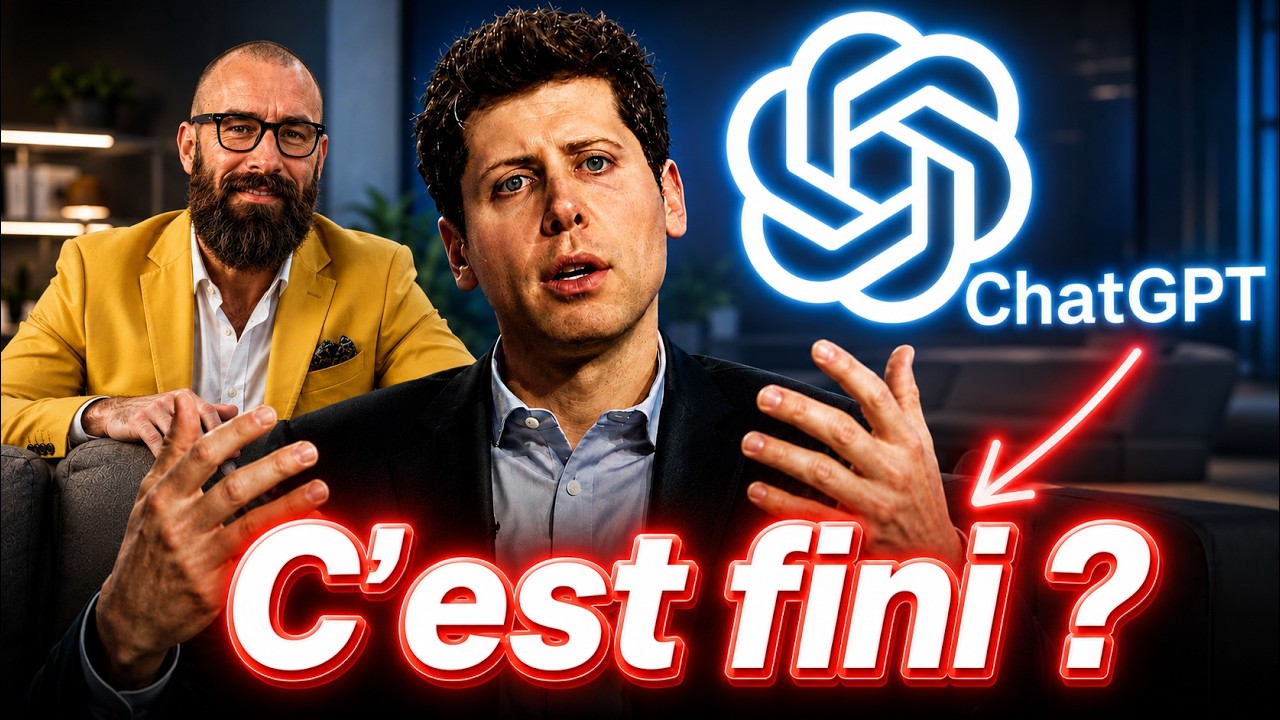
J'ai automatisé mon workflow avec ChatGPT : Le guide complet pour débutants
I tested the AI agent that works for you: ChatGPT did it!
Keywords
Summary
148 words
Critical Evaluation
Value of the Information & Strength of the Argument
The video provides valuable practical insights into building AI agents, explaining the difference between simple prompts and production-ready systems. The argumentation is structured and logical, with concrete examples and a clear pedagogical approach. The creator effectively demystifies the ‘magic’ of AI automation by breaking down the components of an agent architecture. However, the argument is weakened by sensationalist claims about job replacement and the urgency to acquire these skills, which may be exaggerated. The value lies in the technical walkthrough, but the presentation is somewhat repetitive and self-promotional.
Scientific Rigor, Source Quality, Title Accuracy
The video does not cite external scientific sources or research; the only link provided is to the creator’s own paid training. The content is based on the creator’s personal expertise and experience, which is not verifiable. The title is accurate but slightly misleading as it suggests a focus on ChatGPT, while the video also covers Claude and general agent concepts. The lack of references and the promotional tone reduce the scientific rigor. No comments were provided for analysis.
181 words
Title / Content Match
The title accurately reflects the content, which is a beginner-oriented guide to automating workflows with ChatGPT, though it also covers broader agent architecture concepts.
Quality & Reliability
6/10
The video provides a structured tutorial on building AI agents, with practical examples and clear explanations of concepts like harness, guardrails, and workflows. However, it contains promotional language and unverified claims about job replacement, and the sources cited are limited to a commercial training link.
Key Moments
Markers derived by PSI from the transcript: the creator did not define chapters.
- Introduction: claims that most jobs can be replaced by AI and introduces the concept of converting tokens into money.
- Example of using a tax simulator to show AI automation in a practical task.
- Discussion on the difference between marketing hype and real AI capabilities.
- Introduction to the concept of harness and tools for AI agents.
- Explanation of agent architecture: agent.md, workflows, guardrails, MCP, skills, runtime, and memory.
- Part 2: Building an agent that takes control of a screen and responds to clients.
- Detailed walkthrough of the agent's state, tool selection, and escalation strategies.
- Conclusion: emphasizes the importance of technical skills and the need to move from prompts to structured agents.
Cited Sources
- Formation IA Business — Promotional link to the creator's paid training course, mentioned in the description.
Concurring Sources
- OpenAI Documentation on Agents — Official documentation on building agents with OpenAI, which aligns with the video's approach.
Dissenting Sources
- McKinsey Report on AI and Employment — Contradicts the video's claim that most jobs will be replaced, suggesting a more gradual transformation.
Contribution & Novelties
The video offers a practical, step-by-step guide to building AI agents, which is more actionable than typical high-level overviews. It demystifies the architecture behind agentic AI, explaining components like harness, guardrails, and workflows in a beginner-friendly way. The emphasis on moving from simple prompts to structured systems is a valuable perspective for those entering the field.
Pour aller plus loin :
- Agentic AI (Wikipedia) — Provides background on autonomous AI agents.
- Model Context Protocol (MCP) — Official documentation for MCP, a key concept in the video.
- Loop Engineering — A concept mentioned in the video, though the Wikipedia page may not exist; consider searching for ‘agent loop’ instead.
108 words
Radar Profile
The radar profile shows a balanced but moderate performance across all dimensions, with slightly higher scores in information quantity and technical level, reflecting the tutorial's practical focus. The lower reliability score indicates the lack of cited sources and promotional tone.