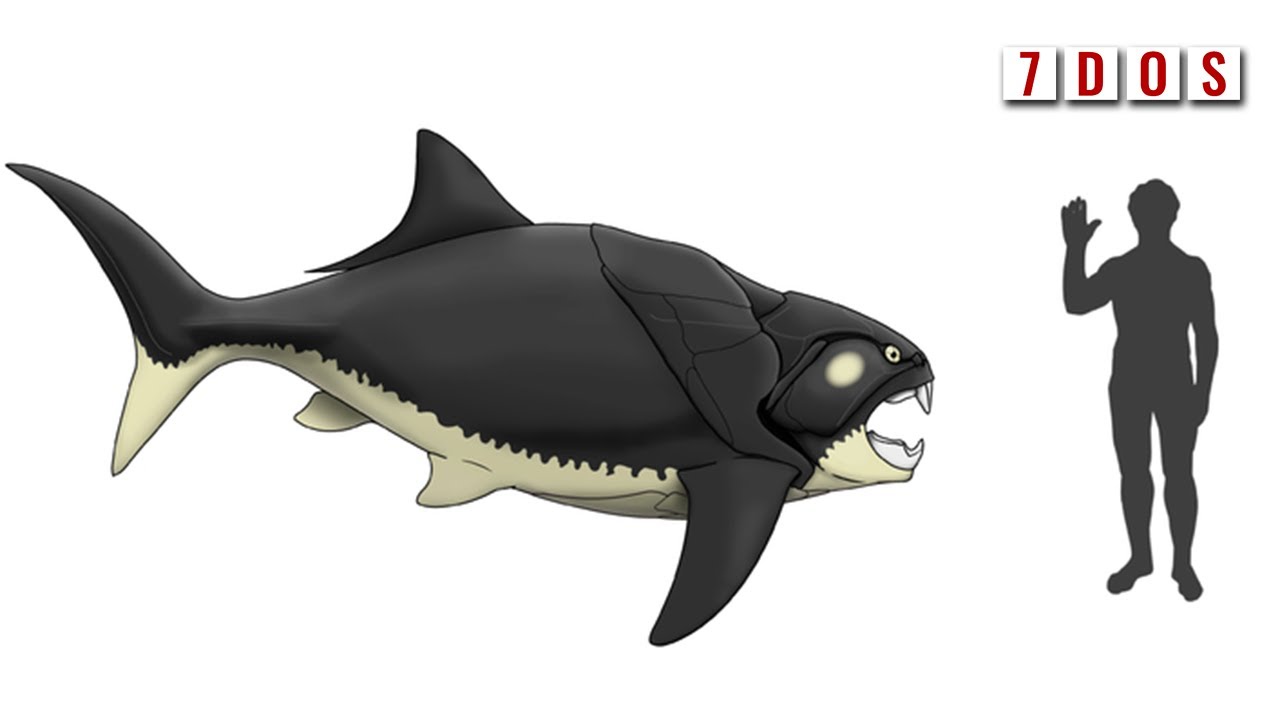
The New Look of (smaller) Dunkleosteus | 7 Days of Science
Keywords
Summary
131 words
Critical Evaluation
Value of the Information & Strength of the Argument
The video provides a high density of information, covering six distinct scientific stories in a concise format. Each story is grounded in a specific peer-reviewed paper, and the presenter explains the significance of the findings clearly. The argumentation is solid, as the presenter distinguishes between what is directly supported by the evidence and what is interpretive, such as the implications of the Dunkleosteus reconstruction. The inclusion of direct source links enhances the credibility and allows viewers to verify the claims.
Scientific Rigor, Source Quality, Title Accuracy
The video demonstrates strong scientific rigor by citing primary literature for each story, with links provided in the description. The sources are reputable journals such as Science, Nature, and The Lancet. The title accurately reflects the main focus on Dunkleosteus, and the content matches the promise of a science news roundup. The presenter’s tone is informative and appropriately cautious about the preliminary nature of some findings.
161 words
Title / Content Match
The title accurately reflects the main focus of the video, which is the new reconstruction of Dunkleosteus, while also indicating the broader science news format.
Quality & Reliability
8/10
The video is a science news roundup that accurately summarizes multiple peer-reviewed studies, providing direct links to the original papers. The presenter maintains a clear distinction between established findings and speculative interpretations. The information is presented with appropriate caveats about the preliminary nature of some research.
Key Moments
Markers derived by PSI from the transcript: the creator did not define chapters.
- Introduction to the science news roundup.
- Story about making mouse skin see-through using food dye.
- Gene therapy trial for Leber congenital amaurosis improves sight.
- Physicists create a one-dimensional photon gas.
- New titanosaur species Qunkasaura pintiquiniestra from Spain.
- New pterosaur species Inabtanin alarabia and flight mechanics.
- New reconstruction of Dunkleosteus reveals smaller, faster body.
- Polar dinosaur trackways found in Australia.
Cited Sources
- See-through mice skin — Original study on making mouse skin transparent.
- Tartrazine makes mouse skin transparent — News article about the see-through skin study.
- Sight gene therapy trial — Original study on gene therapy for Leber congenital amaurosis.
- Improvement in sight seen after gene therapy trial — Press release about the gene therapy trial.
- One-dimensional photon gas — Original study on dimensional crossover in a quantum gas of light.
- New titanosaur species from Spain Qunkasaura pintiquiniestra — Original study describing the new titanosaur.
- New azhdarchoid pterosaur species Inabtanin alarabia and pterosaur flight mechanics — Original study on the new pterosaur and flight mechanics.
- A new reconstruction of Dunkleosteus — Original study on the new Dunkleosteus reconstruction.
- Polar dinosaur trackways — Original study on polar dinosaur tracks.
Concurring Sources
- ScienceDaily article on see-through skin — Corroborates the see-through skin study.
- ScienceDaily article on gene therapy — Corroborates the gene therapy trial.
External References
Contribution & Novelties
The video synthesizes recent scientific breakthroughs, providing a concise and accessible overview. Its main novelty is the emphasis on the revised Dunkleosteus reconstruction, which challenges previous size estimates and offers a new perspective on its swimming capabilities. The inclusion of multiple studies in a single episode allows viewers to see connections across disciplines.
Pour aller plus loin :
- Dunkleosteus - Wikipedia — Provides background on the genus and its history.
- Leber congenital amaurosis - MedlinePlus — Detailed information on the genetic condition.
- Titanosaur - Wikipedia — Overview of the titanosaur clade.
91 words
Radar Profile
The radar profile shows high scores across all dimensions, indicating a well-rounded and reliable science communication video. The strongest points are the quantity and quality of information, while the technical level is slightly lower, reflecting its accessible presentation.
💬 Très positif. Sur les 30 commentaires analysés, la majorité exprime un enthousiasme pour les nouvelles découvertes, notamment la reconstruction de Dunkleosteus, avec un ton humoristique et une appréciation pour le format de la vidéo.