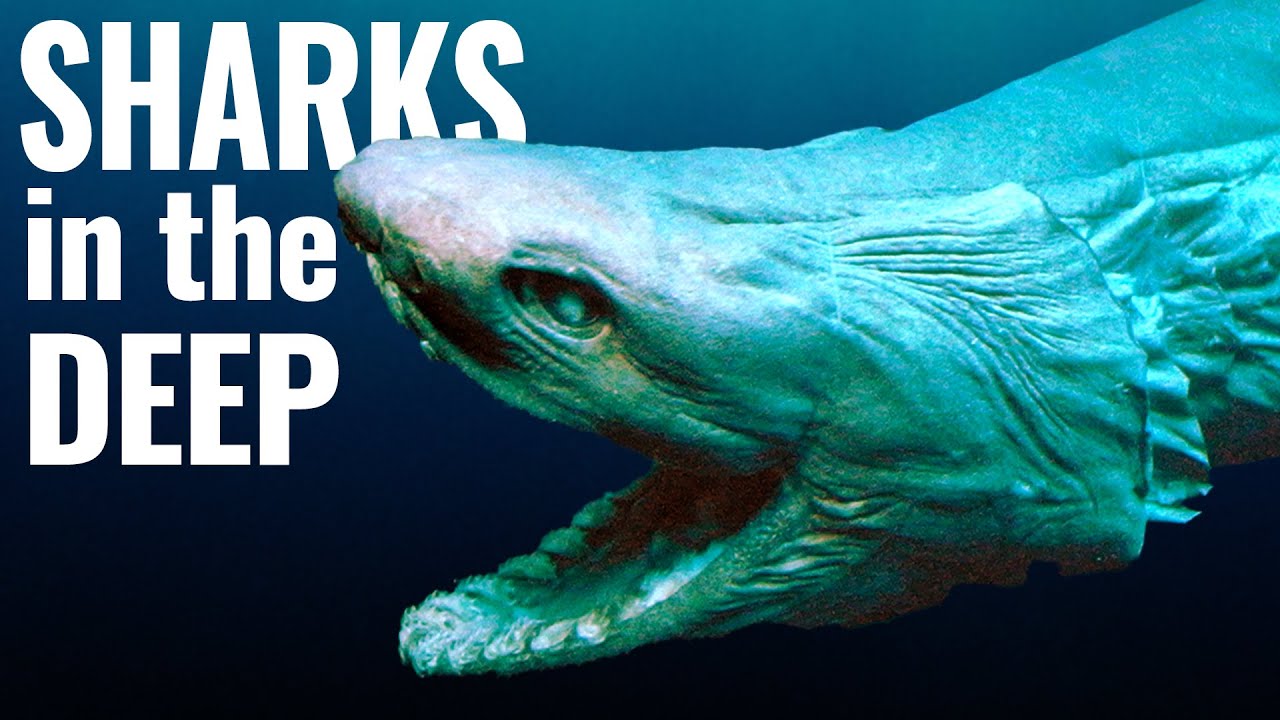
The Weird World of Deep Sea Sharks
Keywords
Summary
156 words
Critical Evaluation
Value of the Information & Strength of the Argument
The video provides substantial value by synthesizing a wide range of information about deep-sea sharks, from basic definitions to advanced adaptations and current research questions. It presents multiple hypotheses for observed behaviors, such as deep diving, and evaluates them with evidence, demonstrating a balanced scientific approach. The inclusion of a marine biologist adds practical expertise. The argumentation is solid, with clear explanations of complex concepts like buoyancy and osmoregulation, and it acknowledges uncertainties, which enhances credibility.
Scientific Rigor, Source Quality, Title Accuracy
The video demonstrates scientific rigor by referencing a sources document and incorporating expert commentary. The information is presented accurately, with appropriate caveats about uncertainties. The title accurately reflects the content, which is a comprehensive overview of deep-sea sharks. The video does not overstate claims and clearly distinguishes between established facts and hypotheses. The sources provided are credible, though the video itself does not cite specific studies in real-time, relying on the linked document.
164 words
Title / Content Match
The title accurately reflects the content, which explores the diversity, adaptations, and behaviors of deep-sea sharks.
Quality & Reliability
8/10
The video presents a well-structured, scientifically informed overview of deep-sea sharks, covering definitions, adaptations, specific species, and current hypotheses. It cites a sources document and features a marine biologist, enhancing credibility. However, some claims (e.g., specific depths, behaviors) lack direct citations within the video, and the presentation is primarily educational rather than peer-reviewed.
Key Moments
Markers derived by PSI from the transcript: the creator did not define chapters.
- Definition of the deep sea and its zones
- Adaptations of deep-sea sharks: eyes, bioluminescence, buoyancy
- Profiles of specific deep-sea sharks: megamouth, goblin, frilled, sleeper
- Discussion of vertical migration and deep scattering layer
- Theories for why shallow-water sharks dive deep
- Why sharks are absent from the abyssal zone
- Debunking the megalodon myth
Cited Sources
- Sources document — Referenced as the source list for the video's content
- Ben G Thomas Subreddit — Community discussion and additional context
Concurring Sources
- Deep sea — General information on deep-sea conditions and definitions
- Diel vertical migration — Supports the discussion of vertical migration behavior
Dissenting Sources
- Megalodon — The video debunks the idea of a living megalodon, which is a popular myth, but the scientific consensus agrees with the video.
Contribution & Novelties
The video offers a comprehensive and accessible synthesis of deep-sea shark biology, highlighting the diversity and adaptations of these often-overlooked species. It effectively challenges the simplistic notion of ‘weird deep-sea sharks’ by showing that many species cross the 200m boundary and that deep-sea habitats are the norm for many sharks. The discussion of vertical migration and the theories behind deep diving provides a nuanced view of shark behavior.
Pour aller plus loin :
- Deep sea — Overview of the deep sea environment and its zones.
- Bioluminescence — Explanation of the biological production of light, relevant to shark adaptations.
- Diel vertical migration — The daily movement of organisms between depths, a key concept in the video.
- Greenland shark — Details on the longest-lived vertebrate, mentioned in the video.
- Megalodon — Information on the extinct shark and why it cannot exist today.
140 words
Radar Profile
The radar profile shows high scores in quantity of information and technical level, indicating a content-rich video with moderate depth. The quality and reliability scores are also high, reflecting accurate and well-sourced information. The overall profile suggests a balanced and informative science communication piece.
💬 Positif — Sur les 30 commentaires analysés, le climat est très positif, avec des spectateurs exprimant leur enthousiasme pour le contenu, partageant des anecdotes personnelles et des remerciements pour l'information présentée.