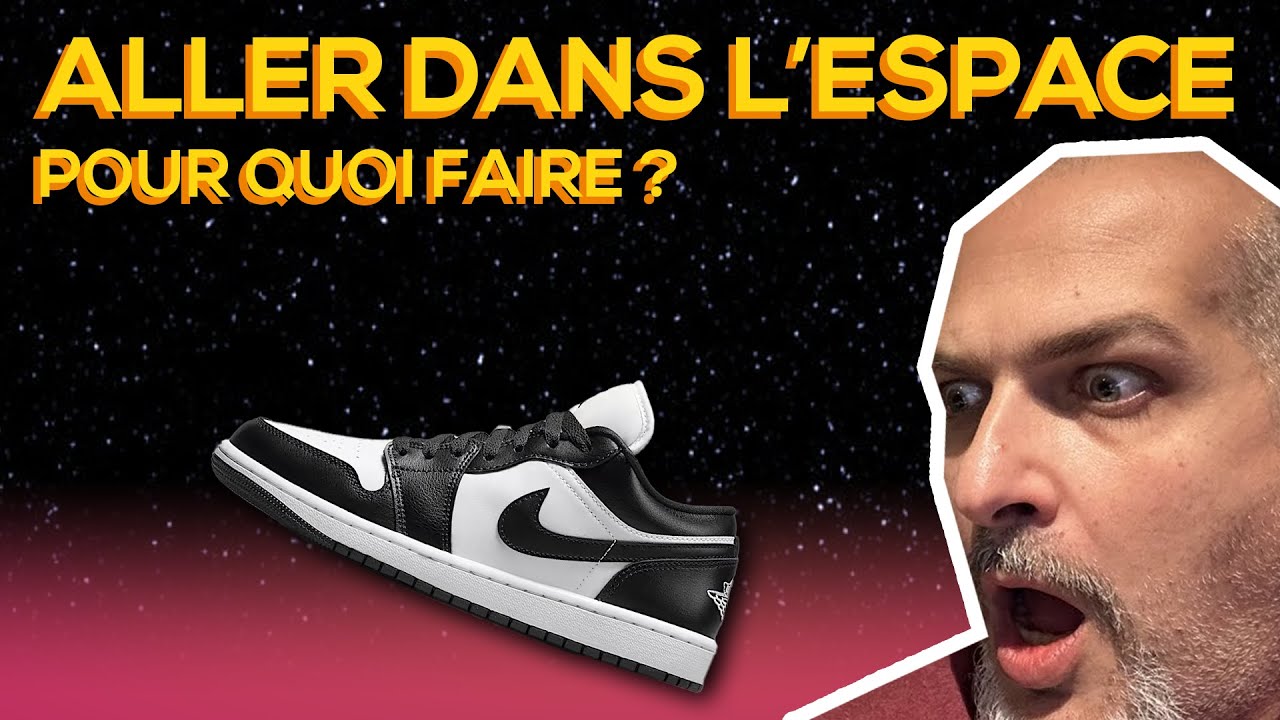
Les innovations issues de la conquête spatiale
Innovations resulting from the space conquest
Keywords
Summary
223 words
Critical Evaluation
Value of the Information & Strength of the Argument
The video provides valuable information by connecting specific NASA technologies to everyday objects, making the case for the practical benefits of space exploration. The argumentation is solid, as the presenter supports each claim with references to NASA sources and historical facts. He also demonstrates critical thinking by debunking the Space Pen myth and acknowledging that some innovations (like airbags) were developed independently. The presentation is engaging and accessible, with a clear structure that helps the viewer follow the logical progression.
Scientific Rigor, Source Quality, Title Accuracy
The scientific rigor is high, with the presenter citing NASA sources and providing links in the description for further reading. He is careful to distinguish between direct NASA contributions and parallel developments. The title accurately reflects the content, which is a list of innovations derived from space exploration. The video is well-researched and the presenter corrects common misconceptions, enhancing its credibility.
156 words
Title / Content Match
The title accurately reflects the content, which presents various technological innovations derived from space exploration.
Quality & Reliability
8/10
The video is well-researched, citing NASA sources and providing accurate historical context. The presenter corrects common misconceptions (e.g., the Space Pen story) and clearly distinguishes between innovations directly stemming from space programs and those developed in parallel. Minor simplifications are present but do not undermine overall reliability.
Key Moments
Markers derived by PSI from the transcript: the creator did not define chapters.
- Introduction: the question 'What is the use of going to space?'
- Air and water purification: Skylab, BioHome, and silver ion filtration
- CMOS sensor: developed by NASA's JPL, now in smartphones
- Medical innovations: auricular thermometer, radiology, MRI
- Survival blanket: origin from NASA thermal insulation
- Wireless headsets and Nike Air technology
- Space Pen myth debunked: the true story
- Conclusion: importance of space exploration
Cited Sources
- NASA Technical Reports Server - 19930073077 — Referenced in the description as a source for the CMOS sensor technology.
- NASA Spinoff - 9595 — Referenced in the description as a source for space spinoff technologies.
- Science et Vie - L'énergie des étoiles — Referenced in the description, possibly related to the IRAS satellite and infrared astronomy.
- JPL - Infrared Astronomical Satellite (IRAS) — Referenced in the description as the mission that led to the auricular thermometer technology.
- NASA Spinoff FAQ — Referenced in the description as a general source for NASA spinoffs.
- VetSecurite - Couverture de survie — Referenced in the description as a source for the survival blanket explanation.
- Cobrason - Plantronics MS50 — Referenced in the description as a source for the wireless headset used by Armstrong.
- Wikipedia - M. Frank Rudy — Referenced in the description as a source for the inventor of Nike Air.
- Wikipedia - Space Pen — Referenced in the description as a source for the Space Pen story.
Concurring Sources
- NASA Spinoff database — Confirms the existence of spinoff technologies like the survival blanket and CMOS sensor.
Dissenting Sources
- Space Pen myth — The video debunks the myth that NASA spent millions on developing a pen, clarifying that it was a private invention.
External References
Contribution & Novelties
The video offers a comprehensive and engaging overview of NASA spinoff technologies, correcting common misconceptions and providing historical context. It emphasizes the practical benefits of space exploration, making a strong case for its value. The presentation is original in its narrative style and debunking of myths.
Pour aller plus loin :
- NASA Spinoff database — Official database of NASA spinoff technologies.
- CMOS sensor on Wikipedia — Background on the technology.
- IRAS mission on Wikipedia — Details on the satellite that led to the auricular thermometer.
85 words
Radar Profile
The radar profile shows high scores in information quantity, quality, and reliability, with a moderate technical level. This indicates a well-researched and informative video that is accessible to a general audience.
💬 Très positif : Sur les 30 commentaires analysés, les spectateurs expriment une grande appréciation pour la vidéo, saluant la qualité de la vulgarisation et l'humour de Bruce, avec quelques précisions techniques apportées par des experts.