Les dégradations climatiques en Europe tempérée...
Climate degradation in temperate Europe...
Keywords
Summary
203 words
Critical Evaluation
Value of the Information & Strength of the Argument
The lecture provides valuable insights into the relationship between climate and human societies, based on a robust interdisciplinary approach. Kaenel effectively synthesizes archaeological data with palaeoclimatic records, demonstrating a strong command of the subject. The argumentation is well-structured, moving from general climate history to specific case studies of lake dwellings. He acknowledges the complexity of causal relationships, avoiding simplistic determinism. The use of dendrochronology as a precise dating and climate proxy is particularly compelling. The speaker’s expertise in archaeology lends credibility to the interpretation of archaeological evidence. However, the lecture is more of a synthesis of existing research than an original study, and some arguments rely on correlations that may not establish causation definitively.
Scientific Rigor, Source Quality, Title Accuracy
The lecture demonstrates scientific rigor through its reliance on well-established archaeological and palaeoclimatic data. Kaenel cites specific events (e.g., Löbben) and uses precise dating from dendrochronology. He explicitly mentions his reliance on other specialists’ work, which is appropriate for a synthesis. The sources are not explicitly listed in the video, but the speaker references general scientific consensus and specific studies. The title accurately reflects the content, focusing on climate degradation and its effects on human occupation. The lecture is well-aligned with the title, providing a detailed examination of the topic. The speaker’s credentials and the institutional context (Musée de l’Homme) add to the reliability. No major discrepancies were noted between the title and the content.
244 words
Title / Content Match
The title accurately reflects the content: the lecture focuses on climate degradation in temperate Europe and its effects on human occupation, particularly lake dwellings, from the Late Bronze Age to the 1st century BC.
Quality & Reliability
8/10
The lecture is given by a recognized archaeologist (former director of the Cantonal Museum of Archaeology and History in Lausanne, professor at the University of Geneva). The content is based on interdisciplinary data (dendrochronology, palaeoclimatology, archaeology) and is presented with scientific caution. The speaker explicitly acknowledges his non-specialist status in climatology, which is a sign of epistemic humility. The information is consistent with current knowledge in the field.
Key Moments
Markers derived by PSI from the transcript: the creator did not define chapters.
- Introduction: the speaker presents himself as an archaeologist, not a climatologist, and sets the interdisciplinary framework.
- Discussion of current climate change and its relevance, including examples of glacier retreat and societal impacts.
- Overview of the study area: temperate Europe, specifically the Swiss Plateau, and the chronological framework (Bronze Age and Iron Age).
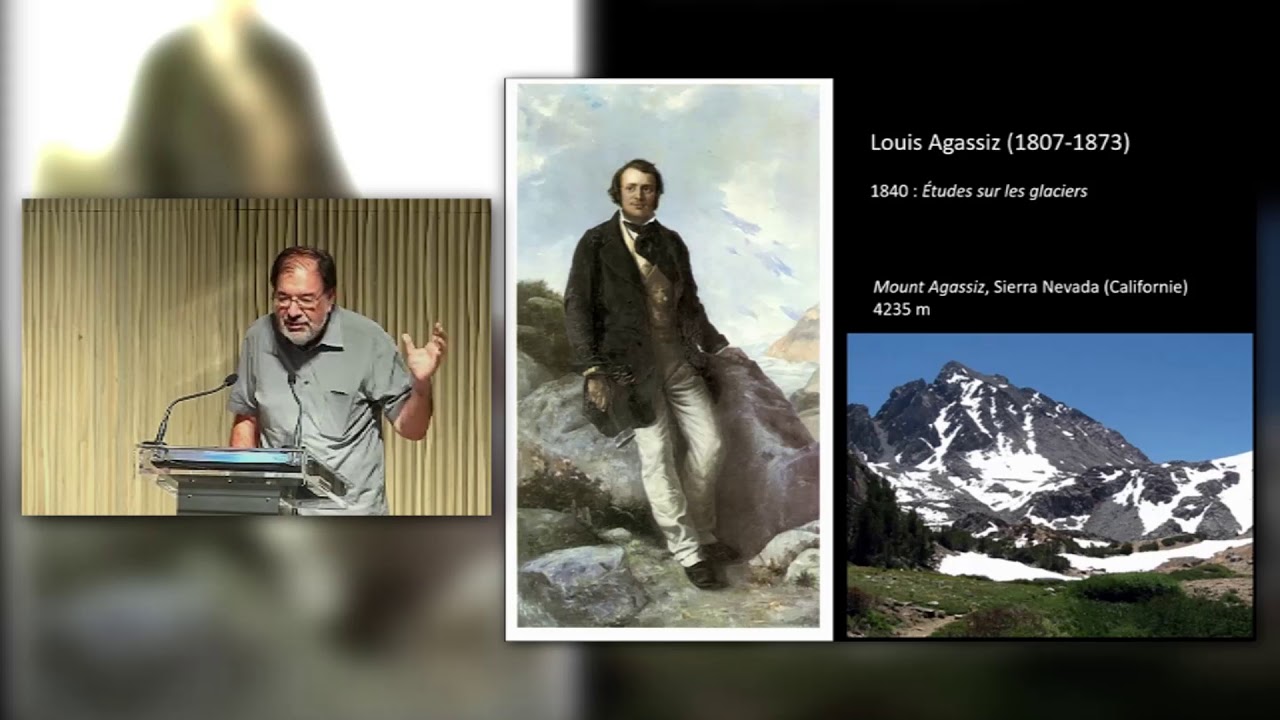
- Historical digression on Louis Agassiz and the development of glaciation theory, highlighting the history of climate research.
- Introduction to lake dwellings (palafittes) and their exceptional preservation, including UNESCO World Heritage status.
- Explanation of dendrochronology and its importance for dating and climate reconstruction, with examples from lake villages.
- Detailed analysis of occupation phases and interruptions in lake dwellings, correlated with climate events.
- Discussion of the impact of climate on economy, culture, and demography, including the Celtic migrations.
- Use of historical sources (e.g., Julius Caesar's Commentaries) to infer climate conditions in the 1st century BC.
- Conclusion: synthesis of the relationship between climate and human adaptation, and implications for the present.
Cited Sources
- Playlist of lectures from the Musée de l'Homme — The description provides a link to a playlist of lectures from the Musée de l'Homme, which may include related content.
Concurring Sources
- UNESCO World Heritage: Prehistoric Pile Dwellings around the Alps — The lecture mentions the UNESCO classification of palafitte sites, which is consistent with this official listing.
Contribution & Novelties
The lecture offers a comprehensive synthesis of archaeological and palaeoclimatic data, highlighting the intricate relationship between climate change and human settlement patterns in temperate Europe. It provides a detailed case study of lake dwellings, demonstrating how precise dendrochronological dating can reveal correlations with climate events. The speaker’s perspective as an archaeologist adds depth to the interpretation of these interactions.
Pour aller plus loin :
- Dendrochronology — Essential for understanding the dating method central to the lecture.
- Lake dwelling — Provides background on the archaeological sites discussed.
- Bronze Age Europe — Context for the chronological framework of the lecture.
- Subatlantic — Climate period mentioned in the lecture.
106 words
Radar Profile
The radar profile shows high scores in information quantity, quality, and reliability, with a slightly lower technical level. This indicates a well-balanced lecture that is both informative and credible, though it may not delve into highly technical details for a specialist audience.