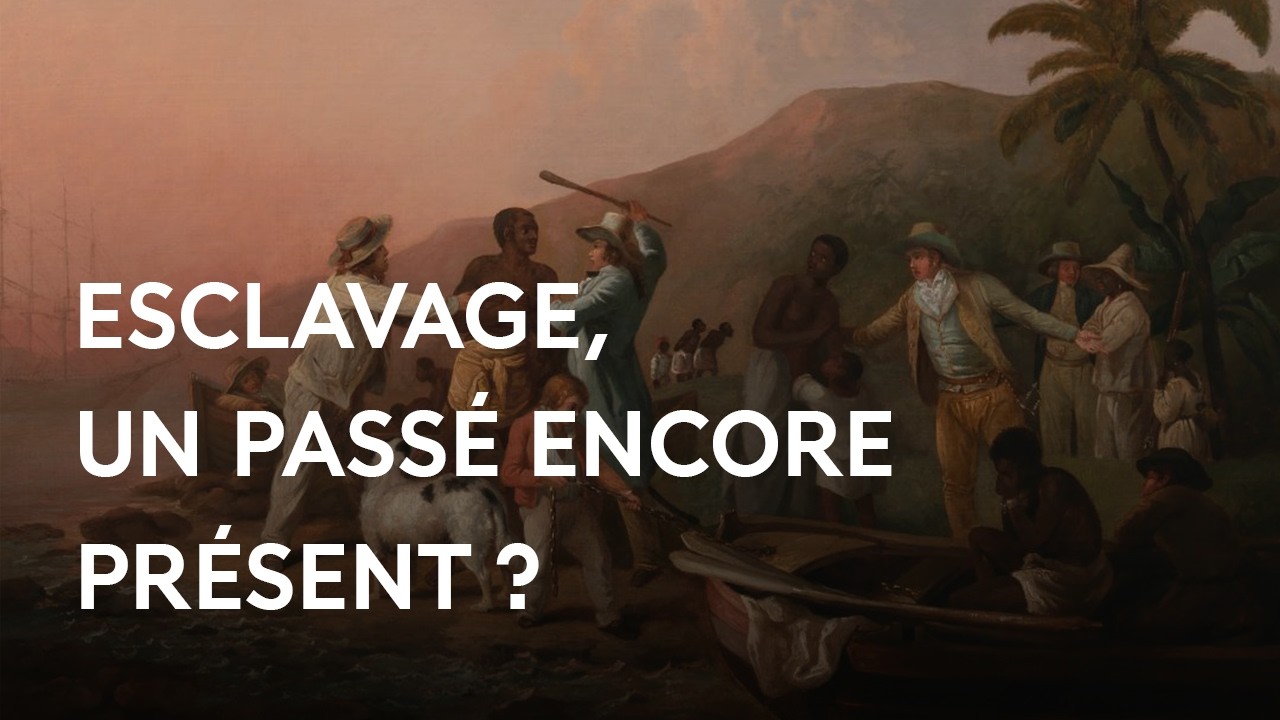
Esclavage : un passé qui nous façonne encore
Slavery: A Past That Still Shapes Us
Keywords
Summary
153 words
Critical Evaluation
Value of the Information & Strength of the Argument
The video provides valuable insights into the historical and contemporary dimensions of slavery. The historian’s argumentation is solid, grounded in archival research and a clear explanation of the transition from Mediterranean to Atlantic slavery. The geneticist offers a unique perspective on how genetic data can illuminate the demographic history of enslaved populations, though he acknowledges the limitations and the need for interdisciplinary collaboration. The curator’s contribution highlights the importance of memory and heritage, connecting historical events to present-day commemorative practices. The argumentation is coherent and well-supported, though the debate format sometimes leads to overlapping points.
Scientific Rigor, Source Quality, Title Accuracy
The scientific rigor is high, with experts citing specific laws (Taubira Law), publications (Les mondes de l’esclavage), and ongoing research (white paper on French research on slavery). The sources are credible and relevant. The title accurately reflects the content, which explores the historical and contemporary impacts of slavery. The discussion is well-structured, and the experts demonstrate a deep understanding of their respective fields. The only minor weakness is the lack of visual aids or specific data, but the verbal explanations are clear and precise.
194 words
Title / Content Match
The title accurately reflects the content, which explores the historical and contemporary impacts of slavery.
Quality & Reliability
8/10
The video features three experts (historian, geneticist, heritage curator) providing a multidisciplinary perspective. The content is well-structured, with clear definitions and historical context. The discussion is based on established research and institutional knowledge, though it is a debate format rather than a peer-reviewed presentation.
Key Moments
Markers derived by PSI from the transcript: the creator did not define chapters.
- Introduction of the panel and the topic of slavery.
- First quiz question: when did the Atlantic slave trade begin?
- Historian Antonio de Almeida Mendes explains the origins of the Atlantic slave trade in the 15th century.
- Discussion on the terminology of slavery and the shift from captives to racialized slavery.
- Geneticist Paul Verdu explains how population genetics can trace the history of enslaved populations.
- Curator Coralie de Souza Vernay discusses the Taubira Law and the work of the Foundation for the Memory of Slavery.
- Discussion on the diversity of slave systems and the concept of 'les mondes de l'esclavage'.
- Debate on the representation of slavery in museums and the challenges of heritage.
- Conclusion and final thoughts on the legacy of slavery.
Cited Sources
- Fondation pour la Mémoire de l'Esclavage — Mentioned by Coralie de Souza Vernay as her institution and its work on the memory of slavery.
- Les mondes de l'esclavage — Referenced as a key publication on the diversity of slave systems.
Concurring Sources
- UNESCO - Slave Route Project — Aligns with the discussion on the memory and heritage of slavery.
Contribution & Novelties
The video offers a multidisciplinary perspective on slavery, combining history, genetics, and heritage studies. It provides a nuanced understanding of the terminology and the evolution of slave systems, emphasizing the shift from Mediterranean to Atlantic slavery. The geneticist’s contribution highlights how modern DNA analysis can reveal the demographic impact of the slave trade, offering a new dimension to historical research.
Pour aller plus loin :
- Taubira Law — The French law recognizing slavery and the slave trade as crimes against humanity.
- Population genetics — The field that studies genetic variation and its historical implications.
- Atlantic slave trade — Overview of the transatlantic slave trade.
104 words
Radar Profile
The radar profile shows high scores in information quantity and quality, reflecting the rich content and expert input. The technical level is moderate, suitable for a general audience, while the overall reliability is high due to the credibility of the speakers.
💬 Sur les 0 commentaires analysés, aucune tendance n'est disponible.