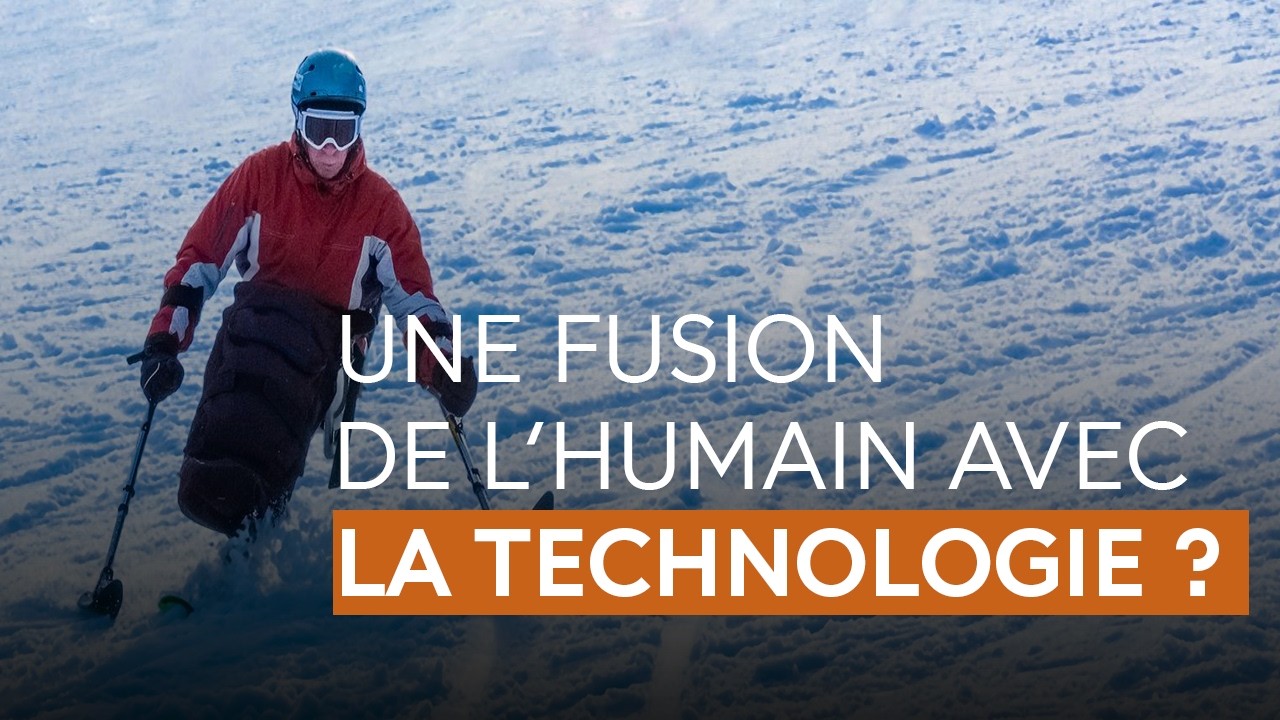
L'athlète et le handicap
The athlete and the disability
Keywords
Summary
187 words
Critical Evaluation
Value of the Information & Strength of the Argument
The value of the information is high, as it provides a unique interdisciplinary perspective on disability and sport, combining evolutionary biology, biomechanics, robotics, and neuroscience. The argumentation is solid, based on scientific research and clinical cases. The speakers present concrete examples and data, such as the analysis of baboon locomotion and the design of an orthosis for a patient with Charcot-Marie-Tooth disease. The conference successfully demonstrates that understanding the diversity of human and non-human locomotion can lead to innovative solutions for assistive technologies.
Scientific Rigor, Source Quality, Title Accuracy
The scientific rigor is generally high, with experts from reputable institutions. However, the conference format does not allow for detailed citations of sources, and some claims are presented without direct references. The quality of sources is good, as the speakers are recognized researchers in their fields. The title accurately reflects the content, focusing on the athlete with disabilities and the fusion between technology and the human body. The conference is well-structured, with clear transitions between speakers.
174 words
Title / Content Match
The title accurately reflects the content, which focuses on the athlete with disabilities and the fusion between technology and the human body.
Quality & Reliability
8/10
The conference features recognized experts (palaeoanthropologist, biomechanician, roboticist, neurobiologist) from prestigious institutions (Muséum national d'Histoire naturelle, CNRS, Collège de France). The content is based on scientific research and clinical cases, with a multidisciplinary approach. However, as a conference, it lacks peer-reviewed citations and some claims are presented without direct references.
Key Moments
Markers derived by PSI from the transcript: the creator did not define chapters.
- Introduction by Isabelle Sigler, professor at the Faculty of Sport Sciences, University of Paris-Saclay.
- Gilles Berillon begins his presentation on bipedal locomotion in primates and fossil hominins.
- Berillon discusses the diversity of bipedalism in baboons and other primates, highlighting different mechanical strategies.
- Antoine Perrier takes over, discussing the concepts of structural and functional anatomy, and the definition of disability.
- Perrier presents the case of a patient with Charcot-Marie-Tooth disease and the design of an orthosis inspired by baboon locomotion.
- Abderrahman Kheddar discusses robotics and the integration of technology with the human body.
- Alain Berthoz presents the neurobiological aspects of sensorimotor adaptation and the brain's ability to incorporate prostheses.
- Discussion and Q&A session with the audience.
Cited Sources
- L'athlète et le handicap : à la pointe de la fusion entre la technologie et l'homme — Official conference page on the Musée de l'Homme website, providing details about the event and speakers.
Concurring Sources
- L'athlète et le handicap : à la pointe de la fusion entre la technologie et l'homme — Official conference page, consistent with the content of the video.
Contribution & Novelties
The conference provides a unique interdisciplinary perspective on disability and sport, bridging evolutionary biology, biomechanics, robotics, and neuroscience. It highlights the importance of understanding the diversity of human and non-human locomotion to design innovative assistive technologies. The case study of the orthosis inspired by baboon locomotion is a concrete example of how basic research can lead to clinical applications.
Pour aller plus loin :
- Tensegrity — Concept of structural integrity based on tension and compression, relevant to the design of orthoses and prostheses.
- Charcot-Marie-Tooth disease — A hereditary neurological disorder affecting peripheral nerves, relevant to the patient case discussed.
- Biomechanics of running — Overview of the mechanical principles underlying running, relevant to the analysis of locomotion.
116 words
Radar Profile
The radar profile shows high scores in quantity and quality of information, as well as technical level and global reliability, indicating a well-rounded and informative conference. The slightly lower score in technical level compared to others suggests that some parts may be accessible to a general audience.