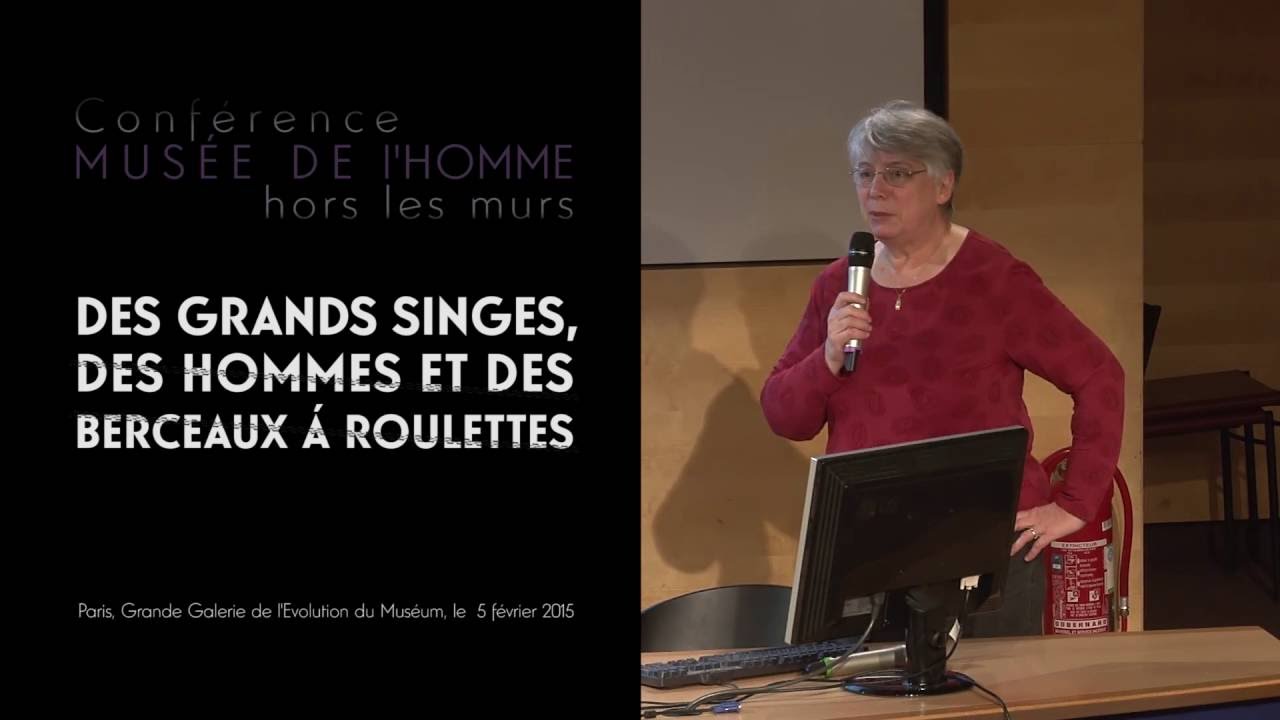
Des grands singes, des Hommes et des berceaux à roulettes (Musée de l’Homme "hors les murs")
Great apes, Humans and stroller cradles (Musée de l’Homme "hors les murs")
Keywords
Summary
154 words
Critical Evaluation
Value of the Information & Strength of the Argument
The lecture provides a valuable historical perspective on paleoanthropology, highlighting the evolution of ideas and the role of key discoveries. Senut’s argumentation is solid, based on published data and her own research. She critically examines Coppens’ hypothesis, offering alternative evidence from her fieldwork in Uganda, which adds nuance to the understanding of hominid biogeography.
Scientific Rigor, Source Quality, Title Accuracy
The scientific rigor is high, with references to major discoveries and researchers. The sources are not explicitly cited in the video, but the speaker’s expertise and the institutional context (Musée de l’Homme) lend credibility. The title accurately reflects the content, using a metaphor that encapsulates the shifting hypotheses about human origins.
120 words
Title / Content Match
The title accurately reflects the content: the lecture discusses the history of ideas about the origins of humans and great apes, using the metaphor of a 'cradle on wheels' to illustrate the shifting geographic hypotheses.
Quality & Reliability
8/10
The lecture is given by a recognized professor of the Muséum national d'Histoire naturelle, with a historical and critical approach, based on published scientific data and her own field research. The information is reliable, though some interpretations are presented as hypotheses.
Key Moments
Markers derived by PSI from the transcript: the creator did not define chapters.
- Introduction: the 'cradle on wheels' metaphor and the question of origins.
- Darwin's hypothesis of an African origin.
- Haeckel and the Asian hypothesis; Dubois' discovery of Pithecanthropus.
- Return to Africa: discovery of Australopithecus africanus in South Africa.
- The East African sites: Omo, Olduvai, and the discovery of Lucy.
- The 'East Side Story' hypothesis of Yves Coppens.
- Senut's fieldwork in Uganda: evidence against the 'East Side Story'.
- Conclusion: the complexity of hominid origins and the 'cradle on wheels'.
Cited Sources
- Musée de l'Homme — Institution hosting the lecture.
Concurring Sources
- Muséum national d'Histoire naturelle — Institution of the speaker, supporting the scientific context.
Dissenting Sources
- Yves Coppens' 'East Side Story' — The lecture presents field evidence that contradicts the hypothesis of a strict east-west division of hominids and apes.
Contribution & Novelties
The lecture offers a personal and critical perspective on the history of paleoanthropology, particularly challenging the ‘East Side Story’ hypothesis with field data from Uganda. It emphasizes the dynamic nature of scientific hypotheses and the importance of considering climatic fluctuations.
Pour aller plus loin :
- East Side Story (hypothèse) — The hypothesis proposed by Yves Coppens, central to the lecture.
- Australopithecus afarensis — The species of Lucy, a key fossil discussed.
- Rift est-africain — The geological context of hominid evolution.
80 words
Radar Profile
The radar profile shows high scores in information quantity and quality, reflecting the dense historical and scientific content. The technical level is moderate, suitable for a general audience, while reliability is high due to the speaker's expertise.