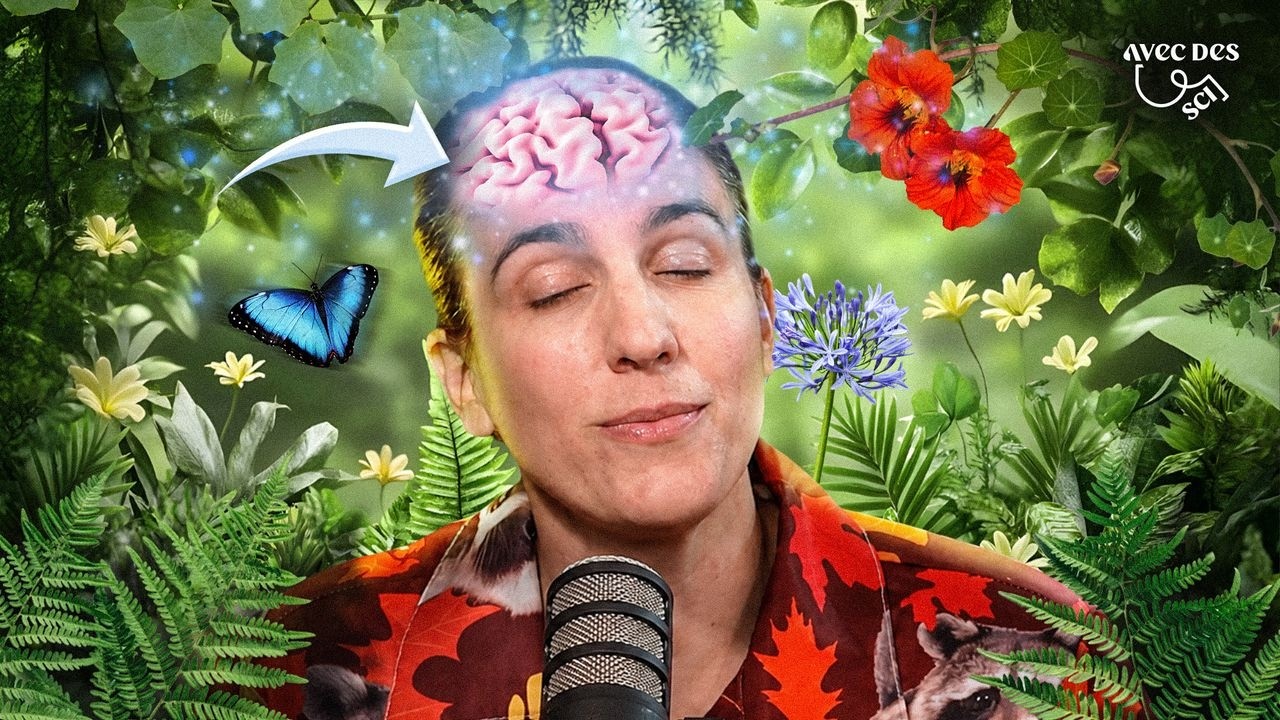
Comment la nature "nettoie" votre charge mentale
How nature "cleans" your mental load
Keywords
Summary
142 words
Critical Evaluation
Value of the Information & Strength of the Argument
The video provides substantial value by synthesizing a large body of research on nature’s effects on the brain, making it accessible to a general audience while maintaining scientific nuance. The argumentation is solid: the hosts clearly distinguish between correlation and causation, acknowledge methodological limitations, and avoid overstating conclusions. The raccoon study is presented with careful attention to avoiding anthropomorphism, and the exploration-exploitation trade-off is explained clearly. The treetop glow phenomenon is accurately contextualized within atmospheric electricity. The mystery segment is clearly labeled as anecdotal, preventing confusion with scientific reporting. Overall, the information is well-structured and supported by credible sources.
Scientific Rigor, Source Quality, Title Accuracy
The scientific rigor is high: the hosts cite peer-reviewed studies and reputable news outlets, and they explicitly discuss limitations and potential biases. The literature review on nature and the brain is presented with appropriate caution, noting the heterogeneity of methodologies and the correlational nature of long-term findings. The raccoon study is described with attention to experimental design and the distinction between observed behavior and inferred motivation. The treetop glow story is backed by a peer-reviewed article in AGU journals. The title accurately reflects the main topic, though the video covers additional news. The inclusion of a sponsored segment is transparently disclosed and does not affect the scientific content.
222 words
Title / Content Match
The title accurately reflects the main segment on nature's effects on the brain, though the video also covers other science news.
Quality & Reliability
8/10
The video presents a rigorous literature review on nature's effects on the brain, clearly distinguishing correlation from causation and acknowledging methodological heterogeneity. The raccoon study is well-explained with attention to anthropomorphism and limitations. The treetop glow phenomenon is accurately described with reference to a peer-reviewed study. The mystery segment is clearly labeled as anecdotal. Overall, the information is reliable and well-sourced.
Chapters
- Sommaire
- Image mystère : nouveau format
- L'actu c'est cool, mais on ne s'emballe pas
- Le défi nature
- Image mystère : les deux possibilités
- L'actu wow !
- Financement de l'émission
- Soutenez-nous sur Ulule :) https://www.ulule.com/avecdessci/
- Image mystère : votez !
- L'actu hmm, c'est intéressant
- Votez pour la prochaine photo du mois sur Ulule !
- Image mystère : la réponse
- Quoi voir ensuite
Cited Sources
- Nature exposure and brain health: a systematic review of neuroimaging studies — Main study on nature's effects on the brain, cited in the first segment.
- Radio-Canada article on nature's effects on the brain — Interview with a scientist from the brain study, providing additional context.
- Raccoon curiosity study — Study on raccoon problem-solving and curiosity, cited in the second segment.
- Radio-Canada article on raccoon study — News coverage of the raccoon study.
- Science article on treetop glow during thunderstorms — News article about the first filming of treetop glow in nature.
- Smithsonian Magazine article on treetop glow — Additional coverage of the treetop glow phenomenon.
- AGU journal article on treetop glow — Peer-reviewed study documenting the treetop glow phenomenon.
- Le Monde article on swallowed earbud — Source for the mystery segment about a woman swallowing a wireless earbud.
- La Presse article on giant kidney stone — Source for the alternative mystery explanation about a giant kidney stone.
Concurring Sources
- Attention restoration theory — Supports the idea that nature restores cognitive resources.
- Biophilia hypothesis — Provides a broader framework for human affinity with nature.
Contribution & Novelties
The video synthesizes recent research on nature’s effects on the brain, highlighting both short-term and long-term benefits while emphasizing the need for further mechanistic studies. It also presents novel findings on raccoon curiosity and the first observation of treetop glow in nature, contributing to public understanding of these phenomena.
Pour aller plus loin :
- Attention restoration theory — Relevant to the cognitive benefits of nature exposure.
- Exploration-exploitation tradeoff — Directly related to the raccoon study’s behavioral analysis.
- Corona discharge — Explains the physical mechanism behind treetop glow.
87 words
Radar Profile
The radar profile shows high scores in information quantity, quality, and reliability, with a slightly lower technical level, indicating a well-balanced science communication piece that is accessible yet rigorous.