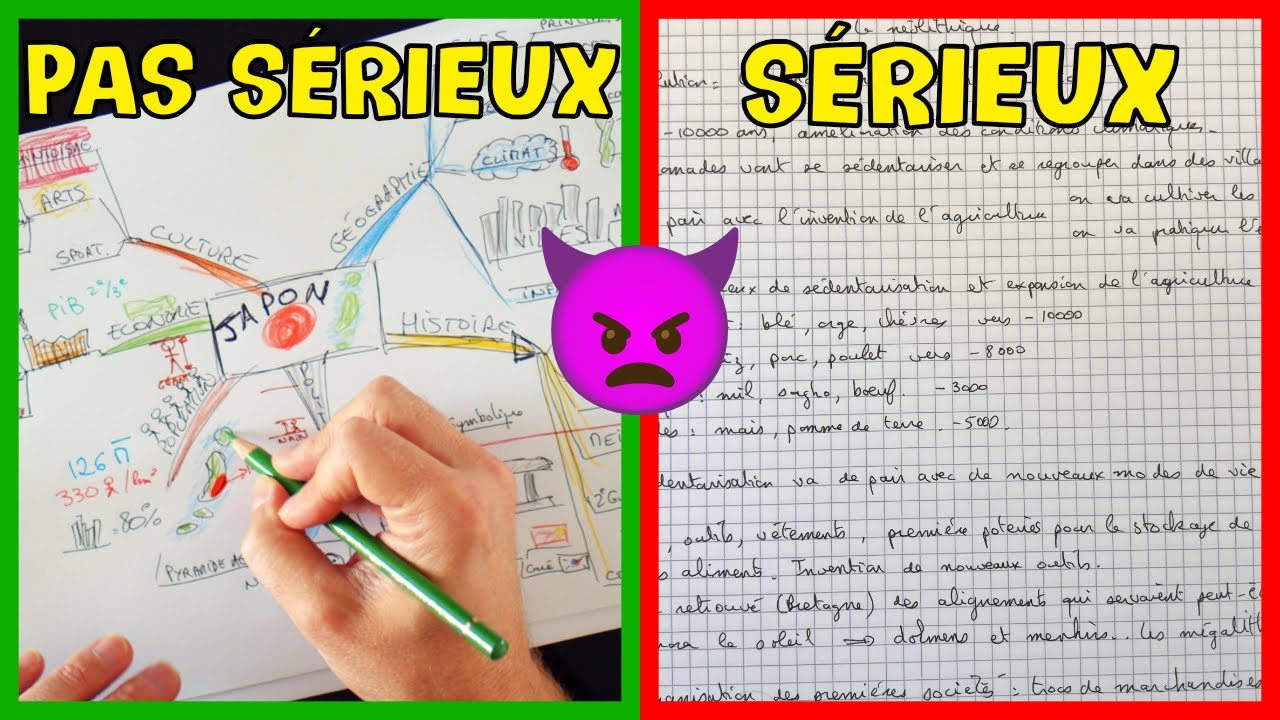
Les CARTES MENTALES (mind map) : écrire et prendre ses notes autrement
MIND MAPS: writing and taking notes differently
Keywords
Summary
181 words
Critical Evaluation
Value of the Information & Strength of the Argument
The video offers valuable practical insights into mind mapping, grounded in the author’s extensive personal experience. The argumentation is clear and well-structured, distinguishing between the technique’s benefits for personal use and its limitations as a communication tool. The author is honest about the subjective nature of the method and avoids overstating scientific evidence, instead referencing general principles like generative learning. The live example effectively demonstrates the process, making the advice actionable. However, the video does not delve into empirical research on mind mapping’s efficacy, and some claims, such as the superiority of hand-drawing, are presented as personal preference rather than evidence-based.
Scientific Rigor, Source Quality, Title Accuracy
The video is scientifically honest in that it clearly labels the content as personal opinion and experience, not as a review of scientific literature. The author references his previous video on learning, which likely provides more scientific context, but does not cite specific studies in this video. The title accurately reflects the content, which is a practical tutorial on mind mapping. The video’s strength lies in its clear, practical guidance and the author’s transparency about the subjective nature of the technique.
197 words
Title / Content Match
The title accurately reflects the content, which is a practical guide to creating and using mind maps.
Quality & Reliability
7/10
The video is a personal, experience-based presentation of mind mapping techniques, not a scientific study. It clearly distinguishes personal opinion from scientific evidence, and references the author's previous video on learning. The claims about memory and comprehension are plausible and align with general educational psychology, but are not rigorously supported by cited research in this video.
Chapters
Cited Sources
- Science étonnante - Books — The author's books, mentioned in the video description.
- Science étonnante - YouTube Channel — The channel's main page, where viewers can subscribe.
- Video on Learning — The author's previous video on learning, which introduced mind maps and is referenced in this video.
Concurring Sources
- Mind map - Wikipedia — General information on mind maps, consistent with the video's description of the technique.
Contribution & Novelties
The video provides a clear, practical, and personal guide to mind mapping, emphasizing its use as a personal tool rather than a communication medium. It offers a step-by-step approach with a live example, which is particularly helpful for beginners. The author’s emphasis on the process over the final product and the importance of hand-drawing are valuable insights.
Pour aller plus loin :
- Mind map - Wikipedia — Overview of the technique, its history, and applications.
- Generative learning - Wikipedia — The concept of learning by generating connections, which underpins the benefits of mind mapping.
- Tony Buzan - Wikipedia — The popularizer of mind maps, providing context on the method’s origins.
110 words
Radar Profile
The radar profile shows a balanced performance across all dimensions, with slightly higher scores in information quality and reliability, reflecting the video's practical and honest approach. The lower technical level is appropriate for the general audience, and the overall profile indicates a solid, trustworthy educational content.
💬 Très positif. Sur les 30 commentaires analysés, les spectateurs expriment un enthousiasme marqué pour la série sur l'apprentissage, saluent la clarté et la bienveillance de la présentation, et partagent leurs expériences personnelles avec les cartes mentales.