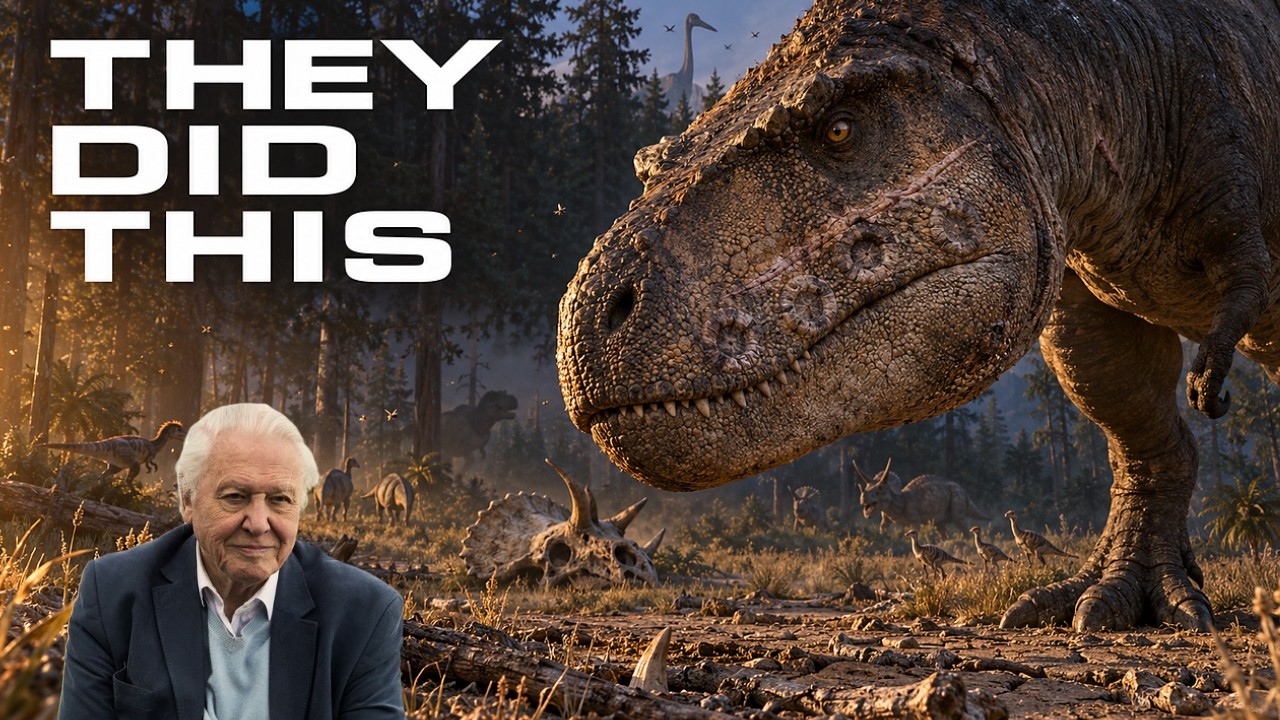
David Attenborough: Prehistoric Wounds So Severe You’ll Wonder How They Survived | Full Documentary
Keywords
Summary
138 words
Critical Evaluation
Value of the Information & Strength of the Argument
The documentary provides valuable insights into paleopathology, using specific fossil examples to illustrate how injuries and healing are recorded in bone. It effectively argues that survival after severe trauma was possible due to physiological resilience, behavioral adaptations, and ecological factors. The argumentation is coherent, building from individual cases to broader patterns, and it avoids overstating certainty by acknowledging debates, such as the cause of injuries or pack behavior in Allosaurus. However, it lacks direct references to scientific studies, which weakens the verifiability of its claims, though the information aligns with current paleontological knowledge.
Scientific Rigor, Source Quality, Title Accuracy
The documentary demonstrates scientific rigor by referencing well-known specimens like Sue the T. rex and the Cleveland-Lloyd Quarry, and by discussing concepts such as osteomyelitis and bone remodeling. However, it does not cite specific academic sources, relying instead on general paleontological knowledge. The title accurately reflects the content, focusing on severe prehistoric wounds and survival. The description mentions paleopathology and provides a list of topics, which aligns with the video’s content. No comments were provided for analysis.
185 words
Title / Content Match
The title accurately reflects the content, which focuses on severe prehistoric injuries and survival.
Quality & Reliability
7/10
The documentary presents scientifically plausible content based on established paleontological research, but lacks explicit citations or references to specific studies, reducing verifiability.
Key Moments
Markers derived by PSI from the transcript: the creator did not define chapters.
- Introduction to Tyrannosaurus rex skull with healed bite marks.
- Discussion of bite force and biomechanics of T. rex.
- Examination of Allosaurus forearm fracture and healing.
- Analysis of Triceratops frill injuries from Tyrannosaur attacks.
- Discussion of bone healing processes and paleopathology methods.
- Conclusion on survival and resilience in prehistoric life.
Cited Sources
- No external sources provided — The video description does not include any external links or references.
Concurring Sources
- Paleopathology — General reference for the field.
- Tyrannosaurus — Background on T. rex anatomy and behavior.
Contribution & Novelties
The documentary offers a compelling narrative on prehistoric survival through the lens of paleopathology, synthesizing known fossil evidence into accessible stories. It highlights the frequency and severity of injuries in apex predators and herbivores, emphasizing the role of healing in survival. The content is not novel in terms of new research but provides a comprehensive overview that may inspire further interest.
Pour aller plus loin :
- Paleopathology — Overview of the study of ancient diseases and injuries.
- Tyrannosaurus — Detailed information on T. rex anatomy and behavior.
- Allosaurus — Information on Allosaurus and its ecology.
- Bone healing — Explanation of the biological process of bone repair.
106 words
Radar Profile
The radar profile shows high scores in information quantity and quality, with moderate technical level and reliability. This indicates a content-rich documentary that is scientifically grounded but not overly technical, making it accessible to a broad audience.