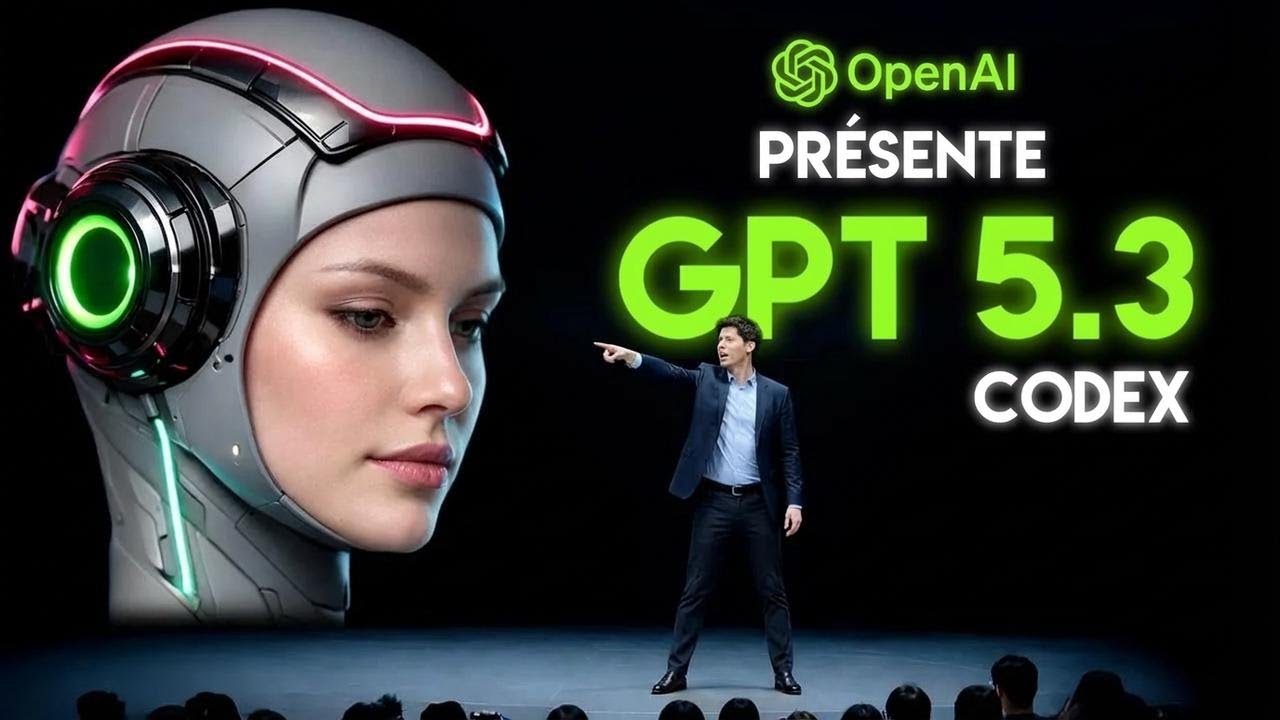
Le GPT 5.3 d’OpenAI surprend Anthropic : Opus 4.6 contre-attaque dans la guerre de l’IA
OpenAI's GPT 5.3 surprises Anthropic: Opus 4.6 counterattacks in the AI war
Keywords
Summary
143 words
Critical Evaluation
Value of the Information & Strength of the Argument
The video offers valuable information by summarizing key announcements and benchmark results from both OpenAI and Anthropic, making it a useful resource for staying updated on AI coding agents. The argumentation is primarily descriptive, presenting the companies’ claims and performance metrics without deep critical analysis. The structure is logical, moving from OpenAI’s release to Anthropic’s response, and includes context on market impact and adoption. However, the lack of independent verification and the promotional segment for a sponsor reduce the overall value. The video does not engage with potential limitations or controversies surrounding the models, such as the reliability of benchmarks or the implications of AI agents on employment.
Scientific Rigor, Source Quality, Title Accuracy
The video demonstrates moderate scientific rigor. It cites specific benchmark scores and mentions sources like SWE-Bench Pro and Terminal-Bench 2.0, but does not provide direct links to these benchmarks or the official announcements. The information is presented as reported by the companies, without cross-referencing independent analyses. The title accurately reflects the content, which is a news review of the competitive releases. The video includes a sponsored segment, which is clearly disclosed, but the promotional content may bias the presentation. The description provides a link to a Spotify podcast, but no direct references to the cited benchmarks or models. Overall, the video is informative but would benefit from more critical evaluation and direct source citations.
237 words
Title / Content Match
The title accurately reflects the content, which focuses on the competitive release of OpenAI's GPT-5.3 Codex and Anthropic's Claude Opus 4.6.
Quality & Reliability
6/10
The video provides a detailed overview of recent AI model releases with specific benchmark scores, but relies heavily on vendor claims without independent verification. The presentation is clear and structured, but the lack of critical analysis and the presence of a promotional segment reduce the overall reliability.
Key Moments
Markers derived by PSI from the transcript: the creator did not define chapters.
- Introduction of GPT-5.3 Codex and its key features
- Benchmark results for GPT-5.3 Codex on SWE-Bench Pro, Terminal-Bench 2.0, and OSWorld
- Sponsored segment for Higgsfield video AI platform
- Internal usage of GPT-5.3 Codex and Codex adoption metrics
- Introduction of Claude Opus 4.6 and its long-context capabilities
- Market impact and adoption statistics, including stock sell-off and enterprise spending
Cited Sources
- Spotify Podcast — The video mentions the channel is available on Spotify, providing an alternative platform for the content.
Concurring Sources
- SWE-bench — The benchmark is widely used to evaluate AI coding agents, and the video's reported scores align with the benchmark's purpose.
- Terminal-Bench — The benchmark measures terminal-based agent performance, consistent with the video's emphasis on terminal skills.
- OSWorld — The benchmark evaluates desktop task performance, matching the video's discussion of OSWorld scores.
Dissenting Sources
- No independent sources found — The video relies solely on vendor claims and does not include independent analyses or critiques, which could provide a more balanced perspective.
Contribution & Novelties
The video provides a timely overview of the competitive landscape in AI coding agents, highlighting the rapid advancements and strategic differences between OpenAI and Anthropic. It offers a comparative analysis of benchmark scores and features, which is valuable for developers and tech enthusiasts. The video also touches on market reactions and adoption trends, adding a business perspective.
Pour aller plus loin :
- SWE-bench — The benchmark used to evaluate AI coding agents on real-world software engineering tasks.
- Terminal-Bench — A benchmark for evaluating AI agents in terminal environments.
- OSWorld — A benchmark for evaluating AI agents in desktop environments.
- Anthropic’s Claude — Official page for Claude models, including Opus 4.6.
- OpenAI Codex — Official page for OpenAI’s Codex model.
119 words
Radar Profile
The radar profile shows moderate scores across all dimensions, with quantity of information and technical level being relatively higher, while reliability is lower due to reliance on vendor claims. This suggests the video is informative but not highly critical.