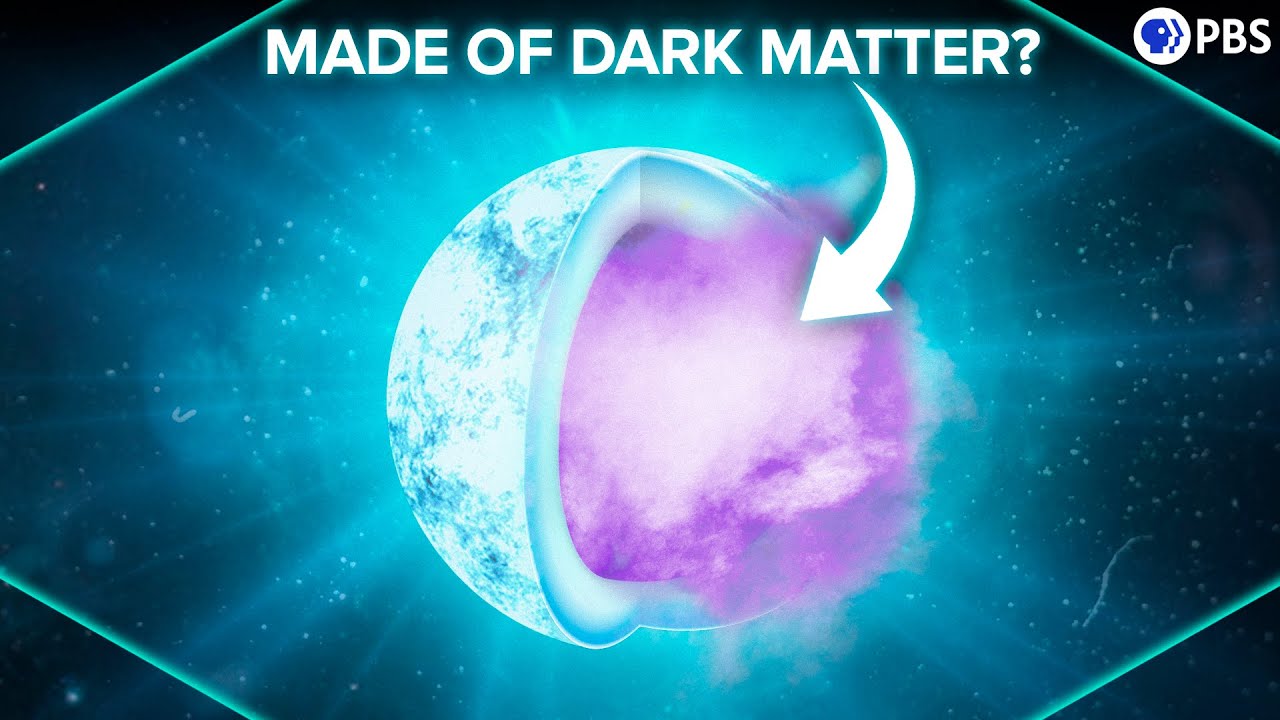
Did JWST Discover Dark Matter Stars?
Keywords
Summary
160 words
Critical Evaluation
Value of the Information & Strength of the Argument
The video provides substantial value by presenting a cutting-edge scientific hypothesis in an accessible yet detailed manner. It clearly explains the physics behind dark stars, including the requirements for dark matter self-interaction and annihilation, and connects the hypothesis to broader questions about the early universe and supermassive black hole formation. The argumentation is solid, acknowledging the speculative nature of the idea while presenting the observational evidence and potential tests. The host, Matt O’Dowd, effectively balances enthusiasm with scientific caution, and the inclusion of alternative explanations (e.g., galaxies) strengthens the credibility of the presentation.
Scientific Rigor, Source Quality, Title Accuracy
The video demonstrates strong scientific rigor by referencing specific papers (e.g., in Nature Astronomy and PNAS) and explaining the underlying physics accurately. It also mentions alternative interpretations and points to other science communicators (e.g., Dr. Becky) for further discussion. The title accurately reflects the content. The description includes links to PBS donation and merchandise pages, but not directly to the cited papers, which is a minor limitation for viewers seeking primary sources. The video’s production quality and the host’s expertise contribute to its reliability.
192 words
Title / Content Match
The title accurately reflects the content, which explores the possibility that JWST observations of early galaxies could be explained by dark matter stars.
Quality & Reliability
8/10
The video presents a well-structured scientific hypothesis (dark stars) with clear explanations of the underlying physics, references to specific papers (Nature Astronomy, PNAS), and acknowledges the speculative nature. The host is an expert in the field, and the content is consistent with current scientific understanding. However, the video does not provide direct links to the cited papers in the description, and some claims are simplified for a general audience.
Key Moments
Markers derived by PSI from the transcript: the creator did not define chapters.
- Introduction to JWST observations of early galaxies and the puzzle of their unexpected brightness.
- Introduction to the dark star hypothesis and its origin with Katherine Freese.
- Explanation of the requirements for dark matter to form dark stars.
- Formation process of dark stars in mini-halos and their growth.
- Fate of dark stars and their potential to become supermassive black holes.
- Observational signatures that could distinguish dark stars from galaxies.
- Discussion of alternative explanations and promotion of PBS Terra.
- Comment responses on previous episodes, including variable speed of light and gravitational wave lensing.
Cited Sources
- PBS Space Time Patreon — Support the show and access Discord.
- PBS Space Time Merch Store — Merchandise related to the show.
- PBS Space Time Mailing List — Sign up for episode notifications.
- PBS Space Time Library Search — Search the entire library of episodes.
- Human Footprint on PBS Terra — Promotion of a related PBS show.
- End Credits Music by J.R.S. Schattenberg — Music used in the video.
Concurring Sources
- Dark star (dark matter) - Wikipedia — Provides background on the dark star hypothesis.
- Katherine Freese - Wikipedia — Information on the physicist who proposed dark stars.
External References
Contribution & Novelties
The video provides a clear and engaging explanation of a novel scientific hypothesis (dark stars) and its potential connection to JWST observations. It synthesizes complex astrophysical concepts into an accessible format, highlighting the ongoing research and the excitement of discovery.
Pour aller plus loin :
- Dark star (dark matter) - Wikipedia — Overview of the dark star hypothesis.
- Katherine Freese - Wikipedia — Proposer of the dark star concept.
- James Webb Space Telescope - Wikipedia — The telescope used for the observations.
- Nature Astronomy - Wikipedia — Journal where the observational paper was published.
- Proceedings of the National Academy of Sciences - Wikipedia — Journal where the dark star paper was published.
112 words
Radar Profile
The radar profile shows high scores in information quantity, quality, and reliability, with a slightly lower technical level, reflecting the video's balance between depth and accessibility. The overall high scores indicate a well-produced, informative, and credible science communication piece.
💬 Très positif. Sur les 30 commentaires analysés, l'immense majorité exprime une admiration pour la qualité de la production, la clarté des explications et l'expertise de Matt O'Dowd, avec quelques commentaires constructifs sur le contenu scientifique.