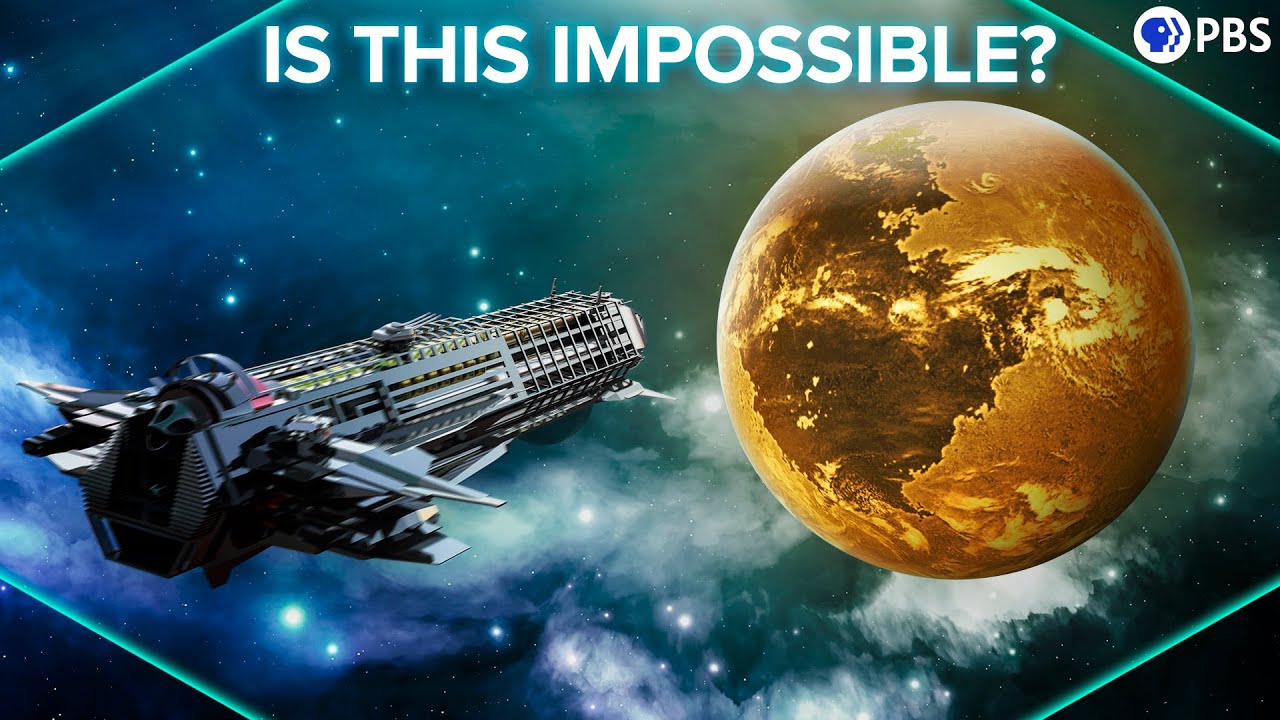
Is Interstellar Travel Impossible?
Keywords
Summary
193 words
Critical Evaluation
Value of the Information & Strength of the Argument
The video provides substantial value by debunking the common assumption that interstellar travel is impossible due to the ISM. It offers a quantitative analysis, using specific numbers for particle densities, impact energies, and shielding requirements. The argumentation is logical and well-structured, moving from the general problem to a specific design scenario. The presenter acknowledges uncertainties and cites relevant scientific literature, which strengthens the credibility. The conclusion is balanced, stating that while challenging, interstellar travel is not fundamentally impossible, and the Fermi paradox remains unresolved.
Scientific Rigor, Source Quality, Title Accuracy
The video demonstrates high scientific rigor by referencing specific peer-reviewed papers (Hoang et al. 2016, Semyonov 2006) and using established physics principles. The sources are credible and directly support the claims made. The title accurately reflects the content, and the video stays on topic. The production quality is high, with clear graphics and explanations. The comments section shows a generally positive reception, with viewers appreciating the practical approach and the presenter’s style.
171 words
Title / Content Match
The title accurately reflects the central question addressed, and the content directly answers it with a nuanced conclusion.
Quality & Reliability
8/10
The video presents a rigorous, physics-based analysis of interstellar travel feasibility, citing specific scientific papers (Hoang et al. 2016, Semyonov 2006) and using quantitative estimates. The reasoning is transparent and the presenter is a known astrophysicist. Minor simplifications for a general audience do not undermine the core scientific content.
Key Moments
Markers derived by PSI from the transcript: the creator did not define chapters.
- Introduction to the Fermi Paradox and the question of interstellar travel feasibility.
- Discussion of the first challenge: vast distances and potential propulsion methods.
- Introduction of the second challenge: the interstellar medium and its dangers.
- Analysis of micrometeoroid impacts and the need for shielding.
- Examination of gas and dust composition of the ISM and their effects at 0.2c.
- Discussion of radiation hazards from interstellar gas and cosmic rays.
- Assessment of shielding options and their mass implications.
- Conclusion that interstellar travel is difficult but not impossible.
- Q&A segment on quantum mechanics and black holes.
Cited Sources
- PBS Donation Page — Support the show
- Space Time Mailing List — Episode notifications
- Space Time Library Search — Search all episodes
- Space Time Merch Store — Merchandise
- End Credits Music by J.R.S. Schattenberg — Music credit
- Hawking Radiation Episode — Referenced in Q&A
- Aliens Playlist — Related content
Concurring Sources
- Hoang et al. 2016 (referenced in video) — Paper on dust grain impacts on relativistic spacecraft.
- Semyonov 2006 (referenced in video) — Paper on radiation hazards during relativistic travel.
Contribution & Novelties
The video provides a clear, quantitative assessment of the hazards of interstellar travel, synthesizing recent research on interstellar medium interactions. It offers a balanced view, countering the pessimistic ‘Great Filter’ hypothesis with a practical engineering perspective.
Pour aller plus loin :
- Interstellar medium — Background on the medium’s composition and properties.
- Breakthrough Starshot — A real project aiming for relativistic interstellar probes.
- Fermi paradox — The central question addressed in the video.
- Cosmic ray — High-energy particles that pose a radiation risk.
82 words
Radar Profile
The radar profile shows high scores in information quality and technical level, with slightly lower scores in quantity and reliability. This indicates a well-researched, technically detailed video that could benefit from more in-depth exploration of certain topics.
💬 Positif. Sur les 30 commentaires analysés, le public est très enthousiaste, appréciant la clarté des explications et l'approche pragmatique, avec quelques suggestions pertinentes sur la décélération et les boucliers.