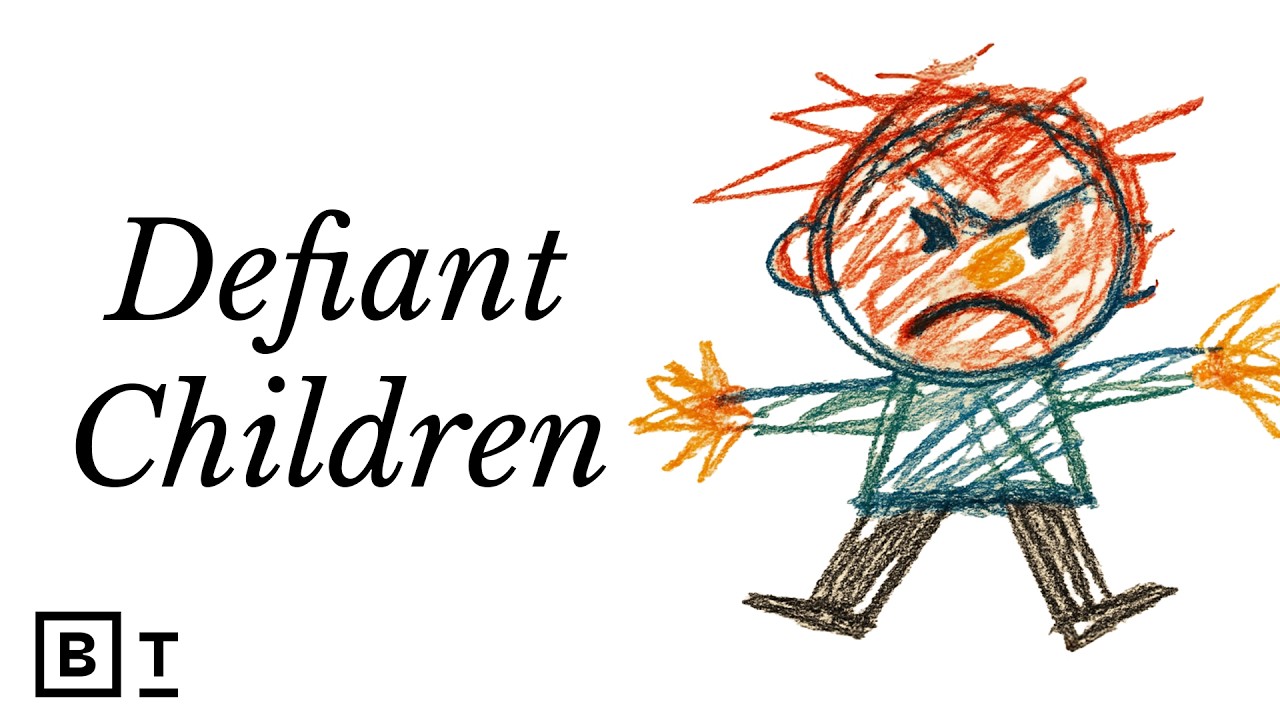
These children are labeled as defiant. Why that’s wrong | Becky Kennedy
Keywords
Summary
159 words
Critical Evaluation
Value of the Information & Strength of the Argument
The video offers valuable insights for parents and educators by reframing challenging behaviors as expressions of vulnerability and shame rather than defiance. Dr. Kennedy’s argument is coherent and grounded in her clinical experience, with relatable anecdotes that illustrate her points. However, the argumentation relies heavily on personal observation and lacks empirical data or references to scientific studies, which limits its generalizability. The proposed strategies are practical and actionable, but their effectiveness is presented without rigorous evidence.
Scientific Rigor, Source Quality, Title Accuracy
The scientific rigor is moderate: the content is based on expert opinion and clinical practice, but no specific studies or sources are cited. The only link in the description is to a membership page, not to research. The title accurately reflects the content, which focuses on challenging the ‘defiant’ label. The video does not overstate its claims, but it would benefit from referencing existing literature on emotion regulation and child development to strengthen its credibility.
166 words
Title / Content Match
The title accurately reflects the core message of the video, which challenges the label of 'defiant' for certain children.
Quality & Reliability
7/10
The content is based on the clinical experience of a licensed psychologist, but it is presented as opinion and anecdotal evidence rather than peer-reviewed research. The claims are plausible and align with established psychological frameworks, but lack empirical citations.
Key Moments
Markers derived by PSI from the transcript: the creator did not define chapters.
- Introduction of 'deeply feeling kids' and the problem of intense tantrums.
- Personal anecdote about her second child, leading to the realization about DFKs.
- Explanation of the core trait: vulnerability and shame occurring simultaneously.
- Critique of labeling DFKs as oppositional defiant and the negative impact of harsh discipline.
- Introduction of the 'side door strategy' with a concrete example.
- Emphasis on connection and understanding, and the positive traits of DFKs.
Cited Sources
- Big Think Membership — Link in the video description to support the channel, not a scientific source.
Concurring Sources
- Internal Family Systems Model — Dr. Kennedy mentions using this therapeutic model, which aligns with her approach.
Dissenting Sources
- Oppositional Defiant Disorder — The video challenges the clinical label of ODD, arguing it is often misapplied to deeply feeling kids.
Contribution & Novelties
The video provides a novel framework for understanding a subset of children often mislabeled as defiant, emphasizing the role of shame in amplifying emotional reactions. It offers a practical ‘side door’ communication strategy that differs from traditional validation techniques. The concept of ‘deeply feeling kids’ is not widely known, making this a valuable contribution to parenting discourse.
Pour aller plus loin :
- Internal Family Systems Therapy — Relevant as Dr. Kennedy mentions using this framework in her practice.
- Emotion regulation — Key concept underlying the video’s advice.
- Oppositional defiant disorder — The label the video critiques; understanding it provides context.
- Shame — Central to the video’s explanation of explosive behavior.
110 words
Radar Profile
The radar profile shows high scores in information quality and technical level, reflecting the expert's articulate presentation. However, the quantity of information is moderate, and the overall reliability is slightly lower due to the lack of cited research.