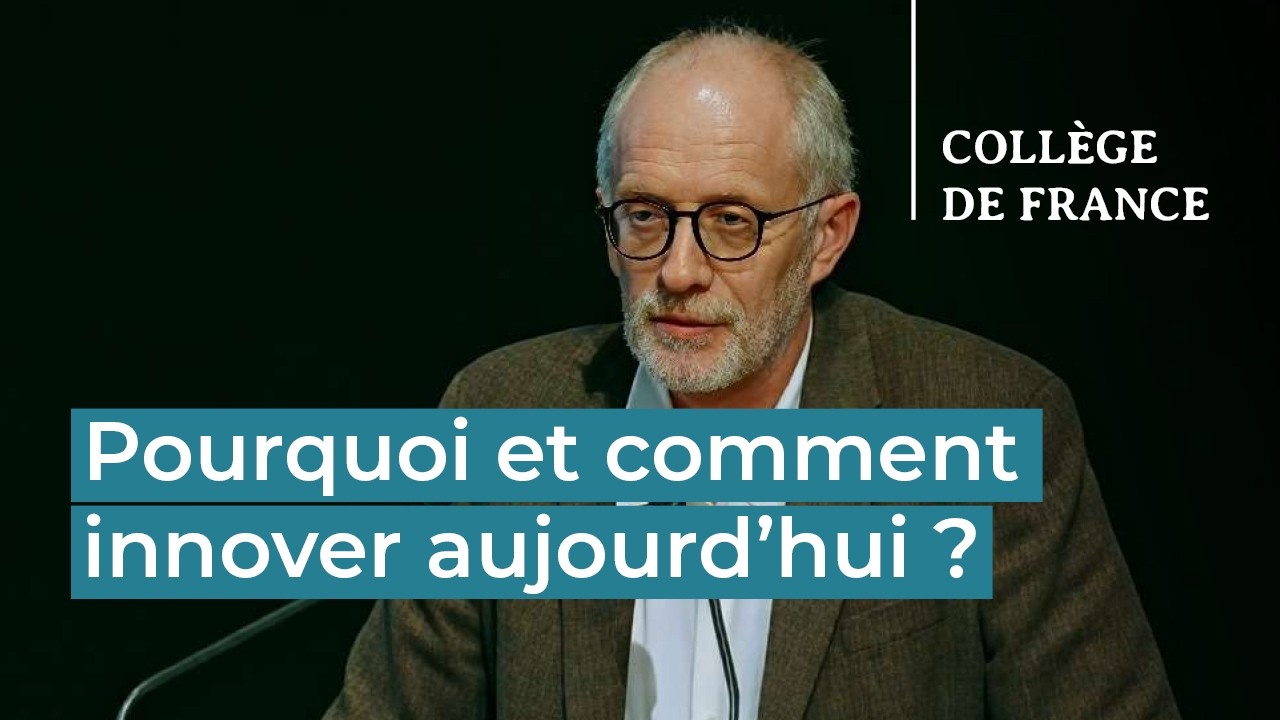
L’eau, entre science(s) et innovation - 2026-27 (5)
Water, between science(s) and innovation - 2026-27 (5)
Title history
- L’eau, entre science(s) et innovation - 2026-27 (5) — observed on 20261026-1552 UTC (YouTube)
Keywords
Summary
175 words
Critical Evaluation
Value of the Information & Strength of the Argument
The talk offers a compelling narrative connecting fundamental physics of water to high-impact applications. Bocquet underscores the value of curiosity-driven research, citing examples like the ricochet and ski friction, while demonstrating how such foundational understanding can lead to unexpected innovations. He argues that innovation is a ‘passage to action’ and that start-ups are effective means to concentrate resources and mission. He presents a balanced view, acknowledging both the strengths (focus, mix of scientists and engineers) and weaknesses (financial dependence) of start-ups. The argumentation is persuasive and grounded in concrete examples from his own research, such as osmotic diodes and ion-based computing.
Scientific Rigor, Source Quality, Title Accuracy
The presentation is scientifically rigorous, with references to established work (Navier-Stokes, osmosis, graphene) and personal research results. The source material includes the official event page of the colloquium and the playlist, but the talk itself does not cite specific external publications; it relies on the speaker’s authority and peer-reviewed work (implicitly). The title accurately reflects the dual focus on water science and innovation. There is no visible advertising or sponsorship in the video description.
190 words
Title / Content Match
The title accurately reflects the content: the speaker discusses both the scientific research on water and the path to innovation, including start-ups.
Quality & Reliability
8/10
Talk given by a CNRS researcher and professor at Collège de France, based on established scientific work and published results. The presentation is rigorous, well-structured, and includes concrete examples from the speaker's research and start-ups.
Key Moments
Markers derived by PSI from the transcript: the creator did not define chapters.
- Introduction: speaker and topic of water science and innovation
- Nanofluidics: carbon nanotubes, graphene, and anomalous water flow
- Artificial synapses and ionic computing, potential of ion-based computation
- Discussion on utility of science, researchers' role as 'vigies', and innovation as a passage to action
- Osmosis: fundamental physics, osmotic diodes, and large-scale membrane innovation
Cited Sources
- Collège de France - Pourquoi et comment innover aujourd'hui ? (Colloquium page) — Official event page of the colloquium where this lecture was given.
- Playlist of the colloquium on YouTube — Playlist containing video recordings of the colloquium sessions.
Concurring Sources
- Collège de France - Pourquoi et comment innover aujourd'hui ? — The speaker's talk is part of this colloquium, which focuses on innovation and fundamental research.
External References
Contribution & Novelties
The talk offers a unique perspective on how fundamental research on water can lead to concrete innovations, illustrated with personal examples like osmotic diodes and start-up creation. It argues for the importance of curiosity-driven science and presents ‘spin-in’ teams as a novel approach to technology transfer. The discussion on ionic computing and the analogy with PN junctions provides fresh conceptual links. The talk also highlights the challenges of scaling from nanoscale experiments to industrial applications.
Pour aller plus loin :
- Nanofluidics — Explanation of fluid flow at nanoscale, central to the talk.
- Osmosis — Fundamental concept, including osmotic pressure and applications.
- Navier–Stokes equations — The governing equations of fluid dynamics, mentioned as still unsolved in general.
- Graphene oxide — Material used for membranes in the speaker’s osmotic diode research.
129 words
Radar Profile
The radar profile indicates high scores in information quality, quantity, technical level, and reliability, with a slightly lower quantitative score due to the conceptual nature of the talk. The strong performance in quality and reliability reflects the academic setting and expert speaker.