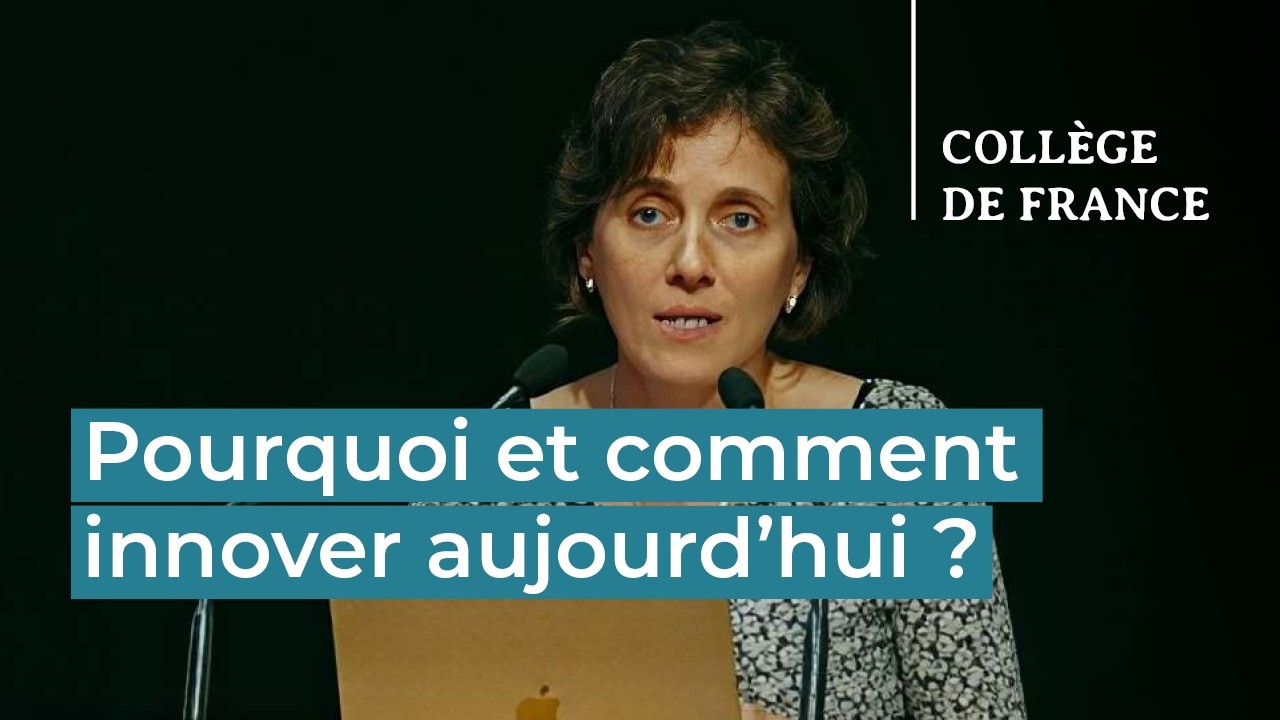
De l’étude des boîtes quantiques à l’ordinateur quantique - 2026-27 (4)
From the study of quantum dots to the quantum computer - 2026-27 (4)
Title history
- De l’étude des boîtes quantiques à l’ordinateur quantique - 2026-27 (4) — observed on 20261026-1553 UTC (YouTube)
Keywords
Summary
188 words
Critical Evaluation
Value of the Information & Strength of the Argument
The talk provides valuable insight into the process of translating fundamental research into industrial innovation. The speaker convincingly argues that curiosity-driven research on quantum dots, combined with engineering efforts, can lead to practical quantum technologies. She supports her argument with concrete examples, such as the fabrication of efficient single-photon sources and the creation of Quandela. The argumentation is solid, relying on her personal experience and technical explanations, though it is not a rigorous academic paper but rather an engaging narrative.
Scientific Rigor, Source Quality, Title Accuracy
The scientific rigor is high: the speaker is a recognized expert, and her explanations are physically accurate, referencing foundational concepts like the Purcell effect and quantum superposition. She mentions sources such as her own publications and the work of others, but she does not provide detailed citations in the talk itself. The sources listed in the video description include the Collège de France event page and playlist, which are relevant but not primary scientific references. The title accurately reflects the content, which transitions from quantum dot studies to quantum computing. The talk is well-structured and presented.
191 words
Title / Content Match
The title accurately reflects the content, which covers both the fundamental study of quantum dots and the eventual development of a quantum computer.
Quality & Reliability
8/10
The speaker is a leading expert in quantum photonics, CNRS research director, and member of the French Academy of Sciences. She presents her own research and innovation journey, providing accurate technical explanations and citing foundational work (e.g., Purcell effect). The talk is well-structured and scientifically sound, though it is a general-audience lecture rather than a peer-reviewed document.
Key Moments
Markers derived by PSI from the transcript: the creator did not define chapters.
- Introduction and context of the conference.
- Explanation of quantum dots and their ability to emit single photons.
- Purcell effect and fabrication of microcavities for controlled emission.
- Creation of Quandela and initial supply of single-photon sources.
- Decision to build a photonic quantum computer and shift in strategy.
- Applications of quantum computing and teaching approach at Collège de France.
Cited Sources
- Colloque « Pourquoi et comment innover aujourd'hui ? » — Event page for the conference where this talk was given.
- Playlist des enregistrements du colloque — Video playlist containing this talk and others.
- Site du Collège de France — Institutional website providing access to lectures and courses.
Concurring Sources
- Quantum dot — Confirms the properties of quantum dots as artificial atoms emitting single photons.
- Purcell effect — Supports the explanation of controlling spontaneous emission in microcavities.
External References
Contribution & Novelties
This talk offers a unique first-hand account of how fundamental research on quantum dots led to the creation of a photonic quantum computer startup. It bridges the gap between academic physics and industrial innovation, providing a concrete example of the ‘second quantum revolution’ in action. The speaker shares insights into the technical challenges and strategic decisions involved, which is rarely documented in such detail.
Pour aller plus loin :
- Quantum dot — The artificial atoms used as single-photon sources.
- Purcell effect — The enhancement of spontaneous emission in cavity, key to controlling photon direction.
- Linear optical quantum computing — The approach used by Quandela for quantum computation.
107 words
Radar Profile
The radar profile shows a balanced score across information quantity and quality, with slightly lower technical complexity, reflecting a talk that is informative and scientifically sound but accessible. Overall reliability is high due to the expert speaker and accurate content.