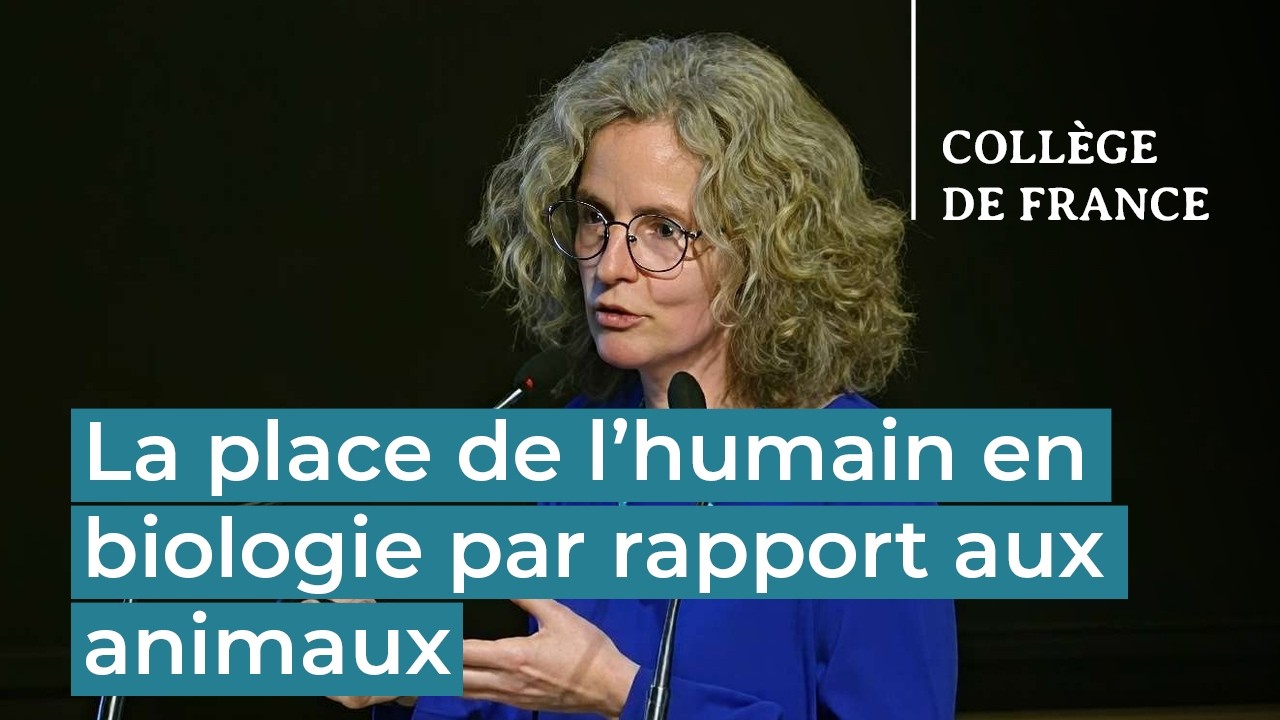
La place de l'humain en biologie par rapport aux animaux... - 2026-2027 (11)
The place of humans in biology compared to animals... - 2026-2027 (11)
Keywords
Summary
193 words
Critical Evaluation
Value of the Information & Strength of the Argument
The lecture provides a valuable synthesis of current scientific knowledge on the human impact on biodiversity, combining quantitative data (biomass proportions, Living Planet Index) with conceptual frameworks. The speaker argues convincingly that humans are both an animal among others (through evolutionary studies, genome comparisons) and a unique force shaping the biosphere. The reasoning is well-structured: first demonstrating the entanglement of technosphere and biosphere, then questioning the instrumental view of nature via ecosystem services, and finally proposing three ethical lenses to navigate our contradictory relationships with animals. The example of the giraffe Marius and the legal status of rats effectively illustrate the tensions between these ethical positions. The argumentation is balanced and open, avoiding dogmatism and emphasizing the importance of context-dependent perspectives.
Scientific Rigor, Source Quality, Title Accuracy
The scientific rigor is high: the speaker cites concrete data (e.g., 250 microplastic particles per m² per day in the Pyrenees, 73% decline in populations, genome size comparisons) and references frameworks from philosophers such as Reed Noss, Catherine Larrère, and Richard Sylvan. While no formal bibliography is displayed, the sources are credible and traceable (e.g., the Living Planet Index from WWF, institutional regulations). The title is faithful to the content, which indeed addresses whether humans are ‘just an animal’ or the origin of a biodiversity crisis. The speaker explicitly acknowledges drawing on broader research rather than presenting her own team’s findings, which strengthens transparency. However, the lecture is primarily a review of existing knowledge rather than an original contribution.
255 words
Title / Content Match
The title accurately reflects the content: the speaker addresses the paradoxical status of humans as both an animal among others and a species causing a major biodiversity crisis, and explores ethical frameworks.
Quality & Reliability
8/10
The lecture is given by a recognized biologist, director of research at CNRS, providing a rigorous synthesis of scientific data (biomass comparisons, Living Planet Index, resistance mutations) and philosophical frameworks (ecosystem services, intrinsic value, three environmental ethics). The information is accurate and well-structured, though it remains a general overview without new experimental results.
Key Moments
Markers derived by PSI from the transcript: the creator did not define chapters.
- Introduction and historical context of the human place in the living world.
- Examples of entanglement: microplastics in the Pyrenees and insecticide resistance.
- Biomass comparisons: humans and livestock dominate, wild mammals only 4%.
- Living Planet Index: 73% decline in vertebrate populations since 1970.
- Discussion of ecosystem services and their substitutability.
- Intrinsic value of nature; Richard Sylvan's thought experiment and legal recognition of rivers.
- Three environmental ethics (anthropocentric, biocentric, ecocentric) with examples: giraffe Marius and rats.
- Conclusion: optimism through dialogue; example of feather hat boycott and its success.
Cited Sources
- Collège de France – The Animal symposium program — Official program and resources for the symposium in which this lecture was presented.
- Collège de France — General website of the institution hosting the lecture.
External References
Contribution & Novelties
This lecture offers a clear and accessible synthesis of the dual nature of humans as both an animal species and a dominant force on the biosphere. Its originality lies in the integration of scientific data with philosophical and ethical frameworks, particularly the presentation of three environmental ethics (anthropocentric, biocentric, ecocentric) to interpret current contradictions in human-animal relationships. It also emphasizes the importance of intrinsic value beyond ecosystem services, using examples like the Spix’s macaw and the legal personhood of rivers.
Pour aller plus loin :
- Anthropocene — The concept of a geological epoch defined by human impact, central to the lecture.
- Living Planet Index — The metric used to show a 73% decline in vertebrate populations.
- Ecosystem services — The framework critically discussed in the talk, highlighting instrumental value.
129 words
Radar Profile
The radar profile shows a balanced distribution across quantity and quality of information, with slightly lower technical level indicating a general audience focus. Reliability is high, reflecting the speaker's expertise and the institutional context. The overall profile suggests a lecture that is comprehensive, accurate, and accessible.