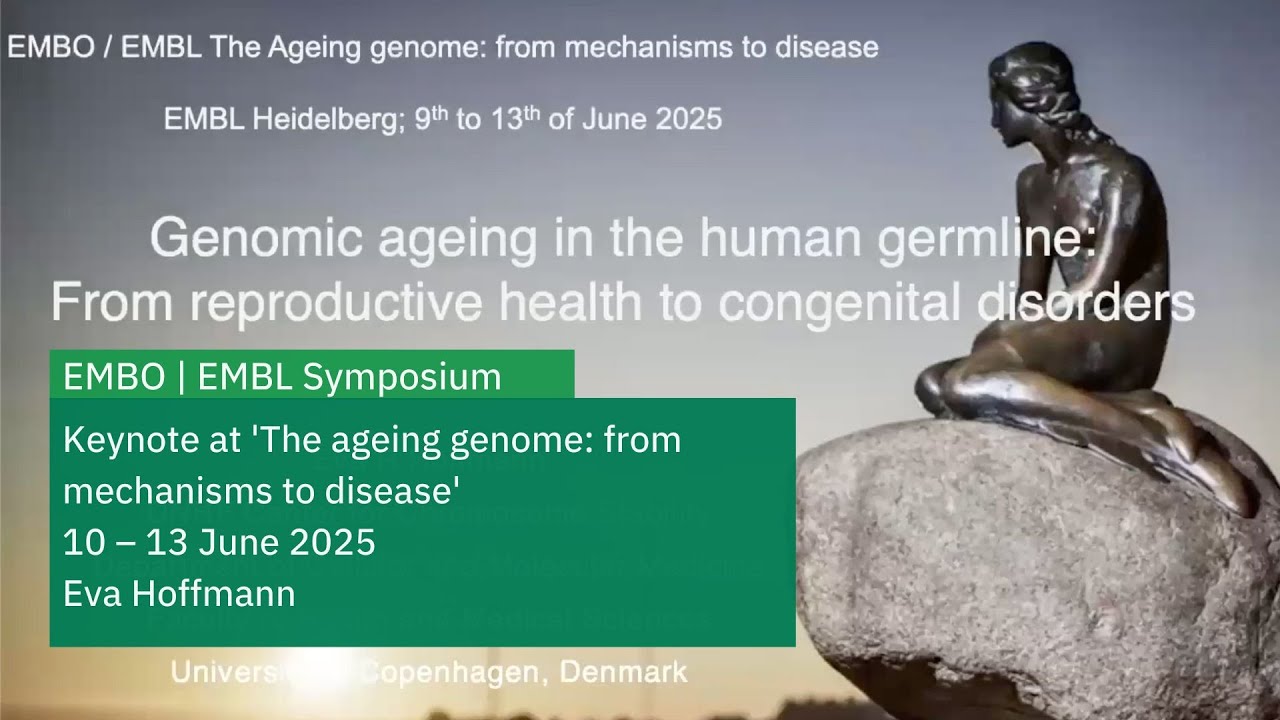
Genomic ageing in the human germline: from reproductive health to congenital disorders
Title history
- Genomic ageing in the human germline: from reproductive health to congenital disorders — observed on 20261028-0452 UTC (YouTube)
Keywords
Summary
180 words
Critical Evaluation
Value of the Information & Strength of the Argument
The value of the information is high, as it synthesizes large-scale data sets from over 3,000 oocytes, nearly 140,000 embryos, and thousands of pregnancy losses, providing compelling evidence for the U-shaped aneuploidy pattern and chromosome-specific effects. The argumentation is rigorous: she systematically tests hypotheses, controls for sequencing artifacts using polar body mirror images, and validates findings in independent cohorts. The logical progression from observation to mechanistic models is clear, and she acknowledges limitations, such as the retrospective nature of some studies and the need for further validation. The presentation is well-structured and supported by quantitative data, making the claims credible.
Scientific Rigor, Source Quality, Title Accuracy
The scientific rigor is strong: Hoffmann cites established studies (e.g., discovery of aneuploidies in 1959, NICE guidelines, HFEA data) and integrates her own research with published literature. The talk is from a known expert and is presented at a reputable EMBL symposium. The title perfectly matches the content, covering both reproductive health and congenital disorders. The use of large sample sizes and multiple data sources enhances reliability. The only minor caveat is that some data are not fully peer-reviewed in this setting, but overall the sources and methodology are sound.
205 words
Title / Content Match
The title accurately reflects the content, focusing on genomic aging in the germline and its implications for reproductive health and congenital disorders.
Quality & Reliability
8/10
The presentation is based on extensive original data sets and meta-analyses from large cohorts, with a clear description of methodology and control experiments. However, some results are not yet peer-reviewed, and the talk is a conference keynote rather than a formal publication, which slightly lowers the certainty.
Key Moments
Markers derived by PSI from the transcript: the creator did not define chapters.
- Introduction and background on inefficiencies in human germline
- Development of single-cell DNA sequencing for oocytes
- Presentation of the U-curve of aneuploidy across maternal age
- Chromosome-specific errors and meiosis I vs predivision errors
- Analysis of pregnancy losses and validation via embryo biopsies
- Fetal oocyte studies and recombination variability, future directions
Contribution & Novelties
The talk presents original findings from a multi-centre study of over 3,000 oocytes, demonstrating that aneuploidy risk follows a U-curve with age, with distinct chromosome-specific and error-type patterns. It also integrates large-scale data from embryo biopsies and pregnancy losses to confirm the maternal origin and per-egg variability of aneuploidy. This challenges previous assumptions that oocytes only deteriorate with age. The introduction of fetal oocyte data links recombination efficiency to later aneuploidy risk, offering a potential early-life biomarker.
Pour aller plus loin :
- Meiosis — Overview of the meiotic process, relevant to understanding crossover and segregation errors.
- Aneuploidy — Comprehensive description of aneuploidy causes and consequences.
- Cohesin — Explanation of the protein complex involved in sister chromatid cohesion, central to the proposed mechanisms.
- Preimplantation genetic testing — Context for the embryo biopsy data discussed in the talk.
136 words
Radar Profile
The profile shows high scores in quantity, quality, and technical depth, with slightly lower but still solid reliability, reflecting the advanced and data-rich nature of the talk.