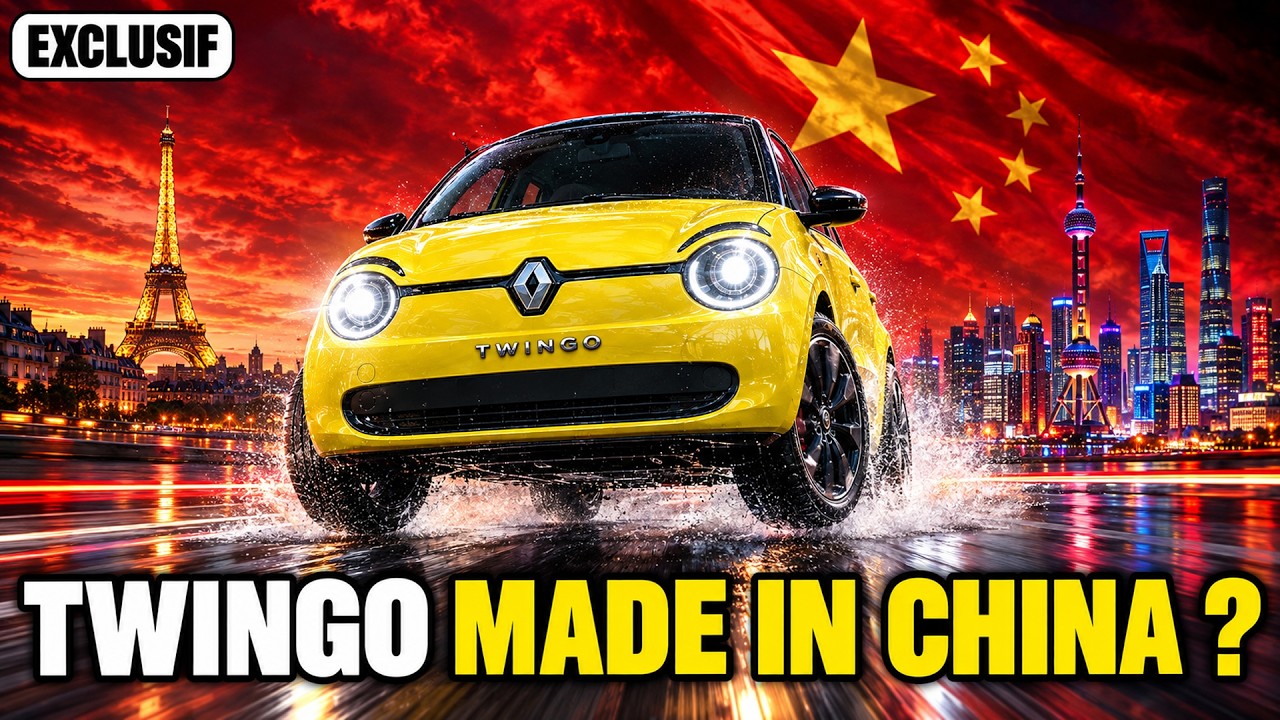
La Chine A Conçu La Nouvelle Twingo De Renault
China Designed Renault’s New Twingo
Keywords
Summary
213 words
Critical Evaluation
Value of the Information & Strength of the Argument
The video provides high informational value by combining technical, industrial, commercial, and regulatory data from numerous trade sources. It carefully distinguishes between reported figures (e.g., 21 vs 22 months, 40% vs 45% Chinese components) and attributes each to its source. The argumentation is balanced: it presents the strategy as both a rational response to competitive pressure and a potential long-term risk of dependency. The narrative structure leads the viewer through the development timeline, the business rationale, the commercial outcomes, and the strategic implications, building a coherent case for the thesis that Renault is using Chinese methods to compete with Chinese imports. The video does not shy away from contradictions, such as the CEO’s stance on local value creation versus his own actions, and it includes perspectives from unions and competitors.
Scientific Rigor, Source Quality, Title Accuracy
The scientific rigor is high given the nature of the content. Sources are diverse and include specialized automotive and economic media (Electrive, Tech.eu, Il Sole 24 Ore, Journal Auto, Automobile Propre, etc.), and the video explicitly notes when different sources provide conflicting numbers, showing methodological transparency. The title ‘La Chine A Conçu La Nouvelle Twingo De Renault’ is well-aligned with the core content, as the engineering development indeed was led from China. However, the subtitle ‘Conçu’ (designed) might be slightly broad because the car’s design (exterior styling) was done in France; the video clarifies that engineering, not design, was Chinese. Still, the overall claim is accurate.
251 words
Title / Content Match
The title accurately reflects the video's central claim that the Twingo's engineering was largely done in China, as evidenced by the detailed narrative on the Shanghai development center.
Quality & Reliability
8/10
The video meticulously cross-references multiple trade publications, discloses uncertainties in figures, and separates facts from commentary. It cites sources like Electrive, Tech.eu, Il Sole 24 Ore, and L'essentiel de l'écho, and explicitly notes when numbers vary between sources.
Chapters
Cited Sources
- Sud Radio — Mentioned for the historical sales figure of the original Twingo (2.5 million units).
- Tech.eu — Cited for average EV prices in Europe vs China, software development speed, and the 40% Chinese component figure in value.
- Electrive — Source for development timelines, Luca Deo's anecdote, Chinese component percentages, and technical specs of the Twingo.
- Il Sole 24 Ore — Italian economic daily providing figures on the size of the Shanghai center (150 engineers vs 7,000 in Paris) and time gains per phase.
- L'essentiel de l'écho — Belgian publication cited for the 21-month development time and 45% Chinese components, as well as details on the Novo Mesto plant.
- Journal Auto — Cited for the 22-month figure, details on BYD Dolphin Surf, Geely partnership, ACDC expansion to Hangzhou, and Renault's engineering manpower retention.
- Automobile Propre — Cited for union reactions, September 2026 registrations, and the Twingo's platform derivation from Renault 5.
- Motoractu — Cited for pricing details, the Dacia Spring's ineligibility for bonus, and future vehicles like the Dacia Sandero electric.
- Planète Renault — Provided sales figures for the Twingo in France and Germany, including top-3 EV status and order details.
- La Libre — Belgian newspaper cited for interviews with Renault CEO François Provost on demand and value-added remarks.
- AFP (Agence France-Presse) — Relayed by Connaissance des énergies for Renault's H1 2026 financial results.
- Connaissance des énergies — Publication that relayed AFP's financial data for Renault.
- Carnews China — Cited for Geely's 26.4% stake in Renault Brazil.
- International Fleet World — Cited for details on Volkswagen's ID Every 1 small EV.
- L'Argus — Cited for testing the Geely E2 with pricing details.
Contribution & Novelties
The video contributes original investigative synthesis by connecting the specific case of the Renault Twingo to broader geopolitical and industrial dynamics. It reveals concrete mechanisms of how a European manufacturer leverages Chinese engineering capacity while maintaining certain European advantages. The novelty lies in the explicit analysis of the 40-45% Chinese component share and the strategic reasoning behind it, offering a nuanced perspective that avoids simplistic ‘outsourcing vs. local production’ narratives.
Pour aller plus loin :
- Renault — Provides historical context on the company’s global strategy and product lines.
- CATL — The battery supplier’s role and technology, relevant to the supply-chain aspects discussed.
- BYD Auto — Competitor and its European expansion plans, discussed in the video.
- Bonus écologique — Explains the French EV incentive structure that influences the regulatory advantage highlighted.
- European Union anti-subsidy tariffs on Chinese EVs — For context on the trade policy barriers mentioned.
146 words
Radar Profile
The radar profile shows high quantity of information and reliability, with moderate technical depth and a strong focus on contextual framing. The balanced scores suggest the video is well-researched and suitable for audiences seeking a comprehensive understanding of the industrial strategy.