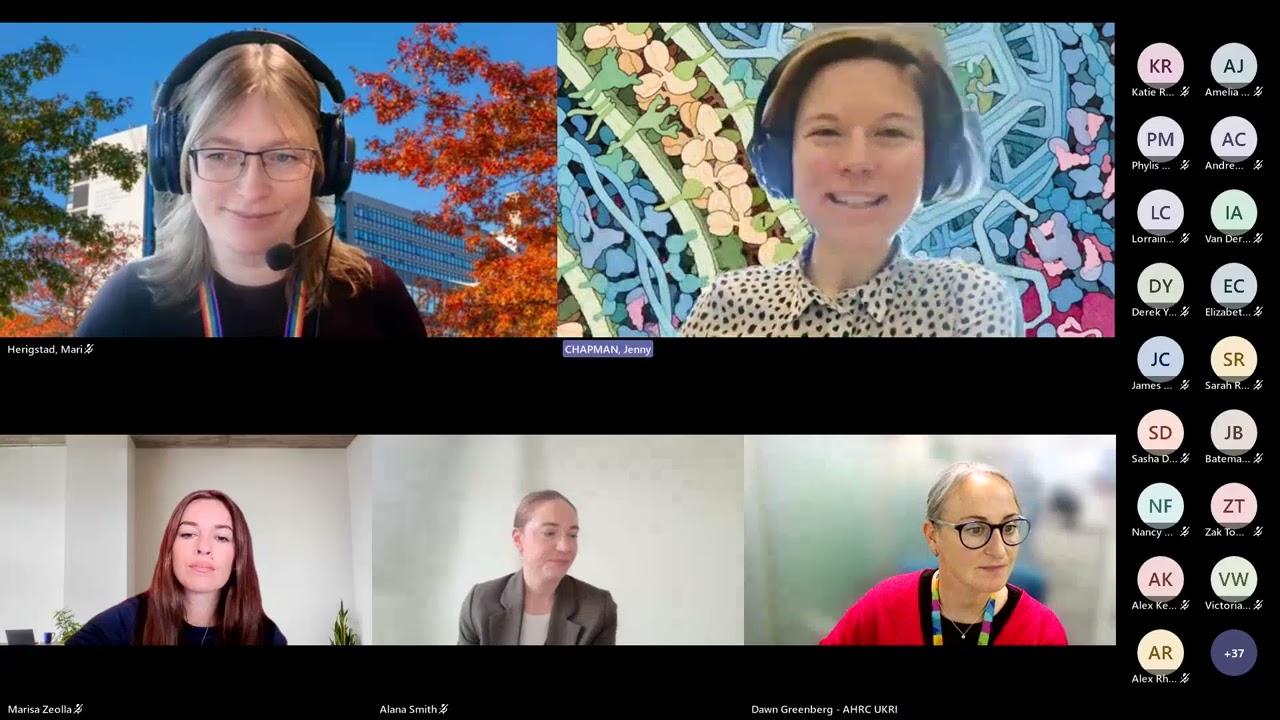
FST Big Questions: What does effective engagement between science and policy actually look like?
Title history
- FST Big Questions: What does effective engagement between science and policy actually look like? — observed on 20261025-1506 UTC (YouTube)
Keywords
Summary
152 words
Critical Evaluation
Value of the Information & Strength of the Argument
The video provides valuable firsthand insights from practitioners across academia, government, and industry. The argumentation is grounded in personal experience and concrete case examples, which lends credibility. Panelists build on each other’s points, creating a coherent narrative about the enablers and barriers to science-policy collaboration. They effectively illustrate abstract concepts with real-world scenarios, such as the Transform trial and the work of POST. The strength of the argumentation lies in its practicality; however, it remains anecdotal and does not engage with systematic evidence or theoretical frameworks. The discussion is balanced, with each panelist offering distinct perspectives, and the chair effectively draws out insights.
Scientific Rigor, Source Quality, Title Accuracy
The discussion is rigorous in terms of expertise, but lacks formal citations or references. Panelists mention specific organizations and initiatives (e.g., Transform trial, ARIS, POST) but do not provide data or peer-reviewed sources. The title accurately reflects the content, as the panel continuously addresses the question of what effective engagement looks like. No comment analysis is provided, as no comments were supplied.
180 words
Title / Content Match
The title accurately reflects the discussion, which explores effective science-policy engagement from multiple perspectives.
Quality & Reliability
7/10
Panel consists of experts from academia, industry, and policy backgrounds with direct experience in science-policy engagement. Their insights are based on first-hand experience, but the discussion is informal and lacks peer-reviewed evidence or citations.
Key Moments
Markers derived by PSI from the transcript: the creator did not define chapters.
- Panelist introductions begin with each member sharing their background and connection to science-policy.
- First question: why collaborations between scientists and policy makers are important now. Jenny uses prostate cancer screening as a case study.
- Discussion of factors supporting successful collaboration, including ARIS, knowledge exchange teams, and understanding different timescales.
- Panelists explore the importance of clear communication and managing expectations, with examples from civil service and industry.
Cited Sources
- Transform trial — Mentioned as an example of successful science-policy collaboration in prostate cancer screening.
- Areas of Research Interest (ARIS) — Mentioned as a way for government departments to signal research needs.
- Parliamentary Office of Science and Technology (POST) — Discussed as a key organization for science-policy engagement.
- Foundation for Science and Technology (FST) — The host organization.
Contribution & Novelties
The video offers a practical, practitioner-level overview of science-policy engagement, highlighting the value of long-term relationships and mutual understanding. It provides a candid view of the challenges, such as differing timescales and pressures for tangible outcomes, grounded in real examples. The panel’s diverse backgrounds enrich the discussion, offering actionable tips like engaging with knowledge exchange staff and using ARIS. While not groundbreaking, it serves as a useful primer for researchers and policymakers new to the interface.
Pour aller plus loin :
- Evidence-based policy — Explores the concept of using evidence in policy-making, relevant to the core discussion.
- Knowledge transfer — Covers the process of moving research findings to practical application, central to the panel’s focus.
- Science communication — Highlights the communication aspects and methods discussed in the webinar.
128 words
Radar Profile
The radar shows a strong performance in quality of information and reliability, reflecting the expert panel and practical insights. The quantity of information is moderate, and technical level is accessible, making it suitable for a general audience.