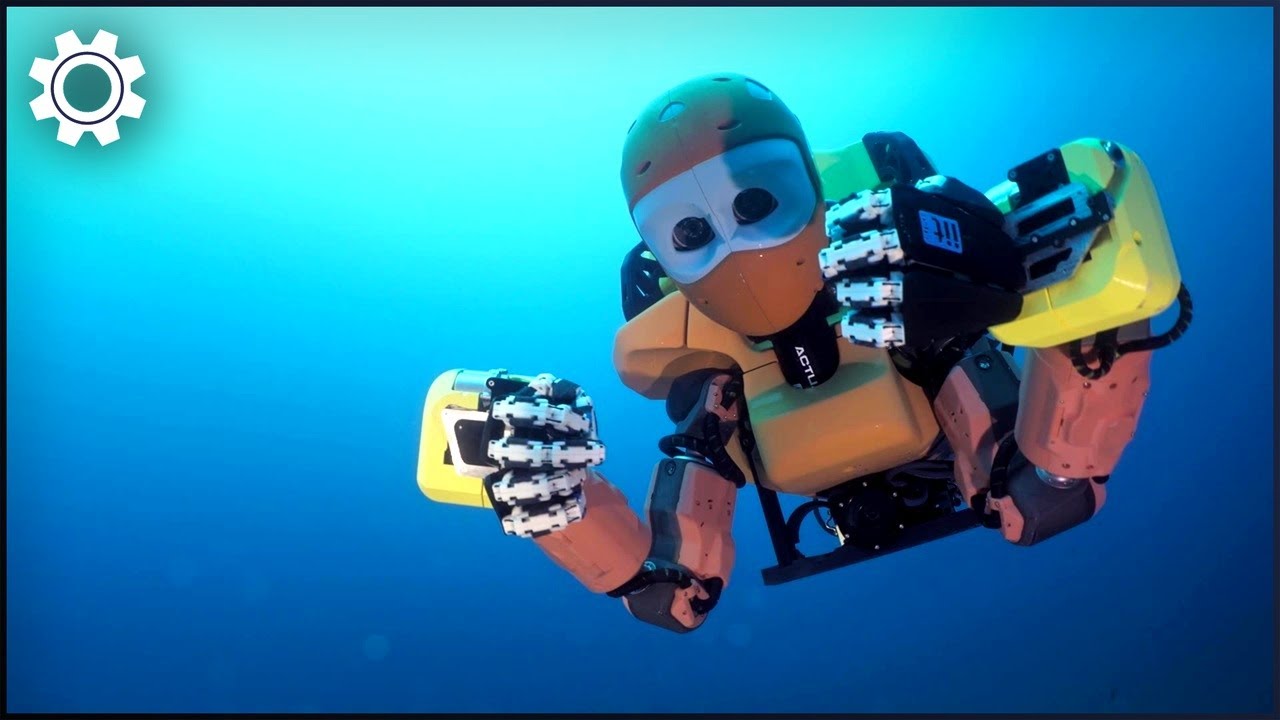
Ocean 1K Hits 850 m: Haptic Robot Recovers Roman Lamps and Crispi
Keywords
Summary
149 words
Critical Evaluation
Value of the Information & Strength of the Argument
The documentary provides valuable insights into the state of underwater robotics and its application to archaeology. It argues that haptic feedback enables remote manipulation with unprecedented precision, supporting the claim with live demonstrations and expert interviews. The narrative builds a strong case for the robot’s potential to access wrecks that are too deep or dangerous for human divers. The argument is coherent, and the progression from shallow to deep dives effectively demonstrates the robot’s capabilities. However, the documentary does not offer critical analysis of limitations or potential failures, which would strengthen its argumentation.
Scientific Rigor, Source Quality, Title Accuracy
The video features credible experts, including roboticist Oussama Khatib and archaeologist Michel L’Hour, and includes real footage from dives. It references specific wrecks and historical events, adding authenticity. However, it lacks formal citations or links to published research, and some statements (e.g., corrosion rates, dating of the Aleria wreck) are presented without sourcing. The title accurately matches the content, and the documentary does not contain obvious misinformation. Overall, the scientific rigor is moderate, relying on expert testimony rather than peer-reviewed evidence.
189 words
Title / Content Match
The title accurately reflects the content: the robot reaches 850 m and recovers Roman lamps from the Aleria I wreck, while also exploring the Crispi wreck.
Quality & Reliability
7/10
The documentary presents a detailed account of the Ocean 1K robot's dives, with interviews and on-site footage, but lacks independent verification or citations to scientific literature, reducing the overall reliability score.
Key Moments
Markers derived by PSI from the transcript: the creator did not define chapters.
- First dive to the P-38 Lightning wreck at 40 m; haptic feedback allows operator to feel the propeller.
- Test of delicate handling with a sea urchin at 60 m, attempts to pick it up and place it in a box.
- Dive to the Protée submarine at 125 m; survey of hull and documentation of corrosion damage.
- Dive to the Aleria I wreck at 330 m; recovery of four Roman oil lamps and amphorae.
- Final dive to 850 m; successful touchdown on seabed, followed by a technical issue during ascent.
Contribution & Novelties
This documentary showcases a world-first in underwater archaeology: a humanoid robot with haptic feedback capable of performing delicate manipulation at depths up to 850 m. It provides rare footage of wrecks previously inaccessible to humans and highlights the potential for future archaeological excavations in the deep sea. The novelty lies in the integration of telepresence and haptics, allowing archaeologists to ‘feel’ objects remotely, which could transform how underwater heritage is studied.
Pour aller plus loin :
- Haptic technology — Overview of haptic feedback mechanisms and applications.
- Underwater archaeology — Context on the field and its challenges.
- Remotely operated underwater vehicle — Related technology used for deep-sea exploration.
107 words
Radar Profile
The radar profile shows high scores for quantity and quality of information, indicating a content-rich documentary with solid technical depth. The technical level score is also high, reflecting the detailed explanation of robotic systems. Reliability is slightly lower, due to the lack of external sourcing and the absence of critical discussion. Overall, the documentary is informative but relies on expert narrative rather than verifiable data.