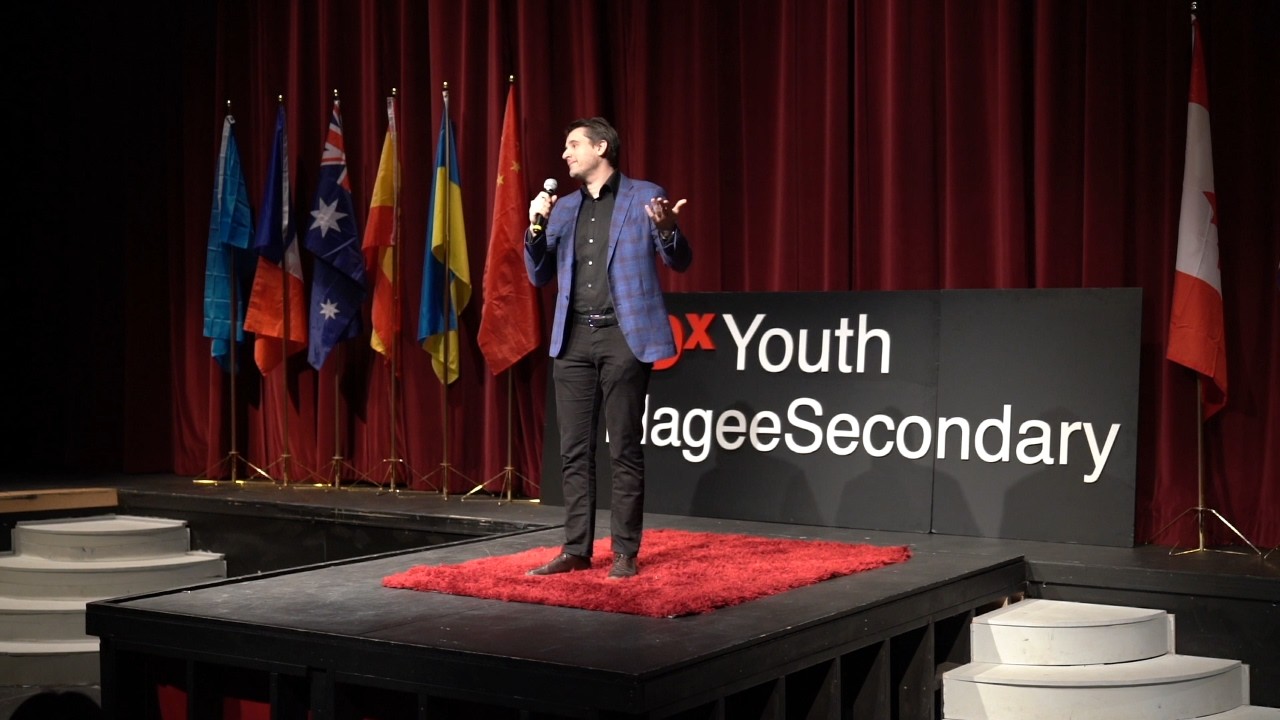
How Video Games Shape Our Creativity and Future | Carl Petersson | TEDxMagee Secondary Youth
Title history
- How Video Games Shape Our Creativity and Future | Carl Petersson | TEDxMagee Secondary Youth — observed on 20261106-0145 UTC (YouTube)
Keywords
Summary
157 words
Critical Evaluation
Value of the Information & Strength of the Argument
The talk provides genuine value through a compelling personal narrative that illustrates universal principles of perseverance and self-determination. The argumentation is anecdotal but coherent, building from childhood experiences to a clear message. The speaker’s journey demonstrates that consistent effort and proactive outreach can overcome initial disadvantages, though it does not offer empirical evidence or systematic analysis, relying instead on emotional appeal and a single success story.
Scientific Rigor, Source Quality, Title Accuracy
The talk lacks scientific rigor, as it is based entirely on personal testimony without reference to psychological research or literature on motivation, resilience, or skill acquisition. The only source provided is the general TEDx link, which does not confirm any specific claims. The adequacy between title and content is poor: the title mentions video games and creativity, but the speech focuses on piano practice and career persistence, with no mention of video games. This mismatch may mislead viewers expecting a discussion on gaming and creativity.
166 words
Title / Content Match
The title mentions video games and creativity, but the content is about piano learning and perseverance; there is a significant mismatch between title and actual content.
Quality & Reliability
5/10
Personal anecdote-based talk with no scientific references; offers motivational insights but lacks empirical evidence or cited research.
Key Moments
Markers derived by PSI from the transcript: the creator did not define chapters.
- He starts playing piano at 14 and feels it's too late.
- Sees a 15-year-old play Liszt's Totentanz and becomes hooked.
- Faces rejection from Copenhagen academy but works hard to get in.
- Sends thousands of emails to concert societies worldwide.
- Meets conductor Kerry Stratton in Prague leading to concert opportunities.
Cited Sources
- TEDx Program — The talk was given at a TEDx event, independently organized, and this is the official TEDx page.
Contribution & Novelties
The talk contributes a first-hand account of navigating a career in classical music against early discouragement. It emphasizes proactive self-promotion and the importance of persistence, resonating with broader concepts of growth mindset and grit. While not presenting novel scientific insights, it offers practical lessons for aspiring artists.
Pour aller plus loin :
- Grit (personality trait) — Perseverance and passion for long-term goals, directly relevant to the speaker’s message.
- Growth mindset — The belief that abilities can be developed through effort, aligning with the talk’s core theme.
- 10,000-hour rule — The idea of deliberate practice as crucial for mastery, though the speaker focuses on consistency rather than exact hour counts.
109 words
Radar Profile
The scores show low technical depth and moderate information quality, reflecting the talk's personal and non-technical nature. The fiabilité globale is low due to lack of external sources, but the emotional authenticity compensates partially.