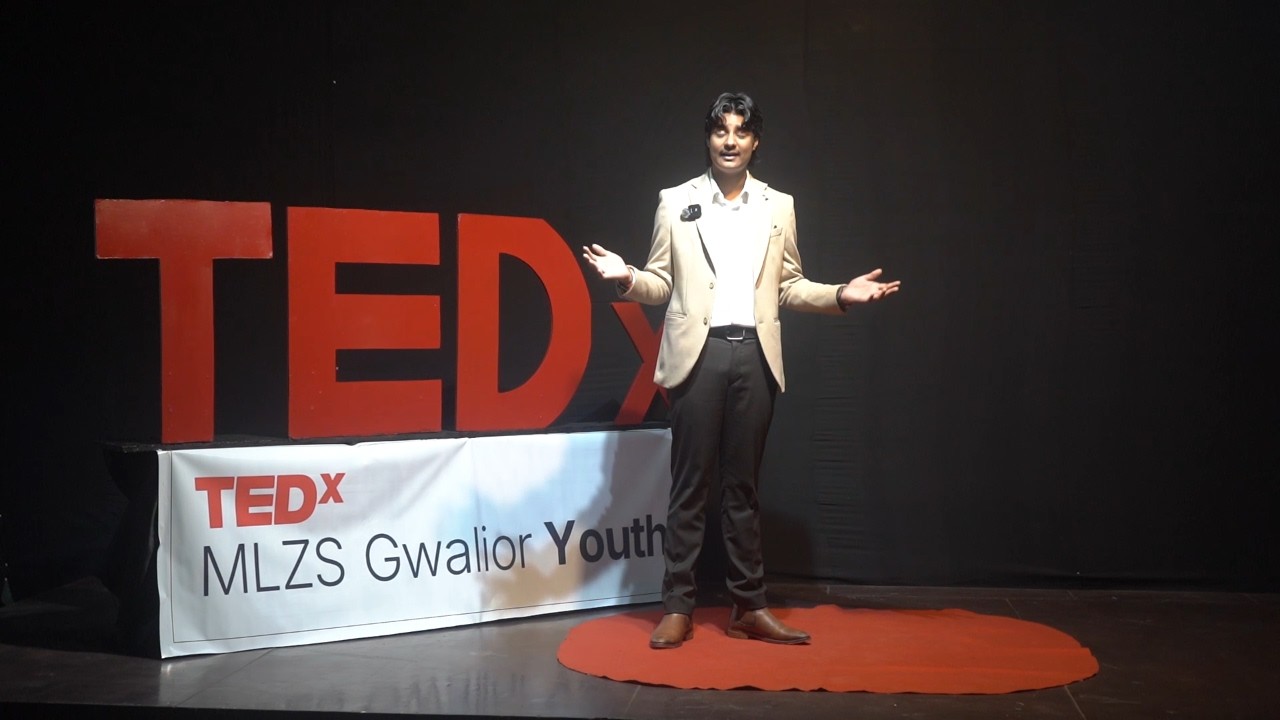
The Sleep Debt Crisis | Yuvraj Singh Tomar | TEDxMLZS Gwalior Youth
Keywords
Summary
166 words
Critical Evaluation
Value of the Information & Strength of the Argument
The talk provides a clear and relatable argument about the importance of sleep, using effective analogies (e.g., money debt, phone battery) that make the concept accessible to a wide audience. The speaker builds a compelling case by connecting sleep to academic performance, memory, and health, citing authoritative bodies like the NIH and AASM. However, the argumentation relies heavily on emotional appeal and personal experience rather than in-depth scientific evidence. The discussion of the Norwegian study is mentioned but not detailed, and no specific statistics or citations are provided. The logical flow is strong, leading from problem to solution, but the depth of scientific backing is limited, making the talk more motivational than rigorously analytical.
Scientific Rigor, Source Quality, Title Accuracy
The talk references reputable organizations (NIH, AASM) and a specific study, but does not provide direct citations or URLs. The only external link in the description is the general TEDx page. The title accurately reflects the content, focusing on the crisis of sleep debt. The scientific accuracy is generally maintained, but the lack of explicit references reduces the verifiability of the claims. The speaker’s status as a student adds authenticity but also limits the perceived authority. No comments were provided for analysis, so public reception cannot be assessed.
217 words
Title / Content Match
The title accurately reflects the content, focusing on the crisis of sleep debt and its consequences, as elaborated throughout the talk.
Quality & Reliability
6/10
The talk is accessible and generally accurate, but relies on broad claims and personal anecdotes rather than detailed scientific exposition. It cites established recommendations from NIH and AASM and mentions a specific study, but provides no direct references or data. The scientific content is sound but not deeply explored, and the speaker is a student rather than a specialist, which slightly limits the depth of authority.
Key Moments
Markers derived by PSI from the transcript: the creator did not define chapters.
- Engaging opening question about last night's sleep and the common 'snooze' habit.
- Introduction of the concept of sleep debt and the analogy of borrowing money daily.
- Explanation that sleep deprivation accumulates and weekend catch-up is not equivalent.
- Personal anecdote about staying up late and the brain's 'closed for maintenance' state.
- Discussion of the cultural glorification of exhaustion and obsession with productivity.
- Citing the NIH recommendation of 8-10 hours for teens and the Norwegian study on academic performance.
- Contrast between caffeine and real sleep; biological needs cannot be overridden.
- Emphasis on the difference between being busy and being effective, and the power of sleep for better functioning.
- Call to action: stop competing over exhaustion, treat sleep as an investment in the future self.
Cited Sources
- TEDx Talks — The talk was given at a TEDx event, and the description links to the general TEDx page.
Concurring Sources
- National Institutes of Health (NIH) sleep recommendations — The speaker cites NIH's recommendation of 8-10 hours for teenagers, which is consistent with widely accepted guidelines.
- American Academy of Sleep Medicine (AASM) consensus statement — The speaker refers to AASM's recommendation of at least 8 hours for students aged 13-18, aligning with their published consensus.
Contribution & Novelties
The talk brings a fresh perspective on sleep deprivation by framing it as a ‘debt’ and challenging the glorification of exhaustion in student culture. It personalizes the issue with relatable anecdotes and makes the science accessible without oversimplifying. The emphasis on ‘being busy vs. being effective’ adds a valuable practical insight.
Pour aller plus loin :
- Sleep deprivation — Detailed overview of causes, effects, and research on sleep deprivation.
- Sleep debt — Explanation of the concept and its physiological consequences.
- Circadian rhythm — The biological clock that regulates sleep-wake cycles, relevant to the talk’s discussion of ‘me time’ vs. biological needs.
101 words
Radar Profile
The radar profile shows moderate scores across all dimensions, with particularly low technical level and relatively higher quality and reliability. This is typical for a science communication talk that prioritizes accessibility over depth. The talk is useful for raising awareness but lacks quantitative rigor and detailed citations.