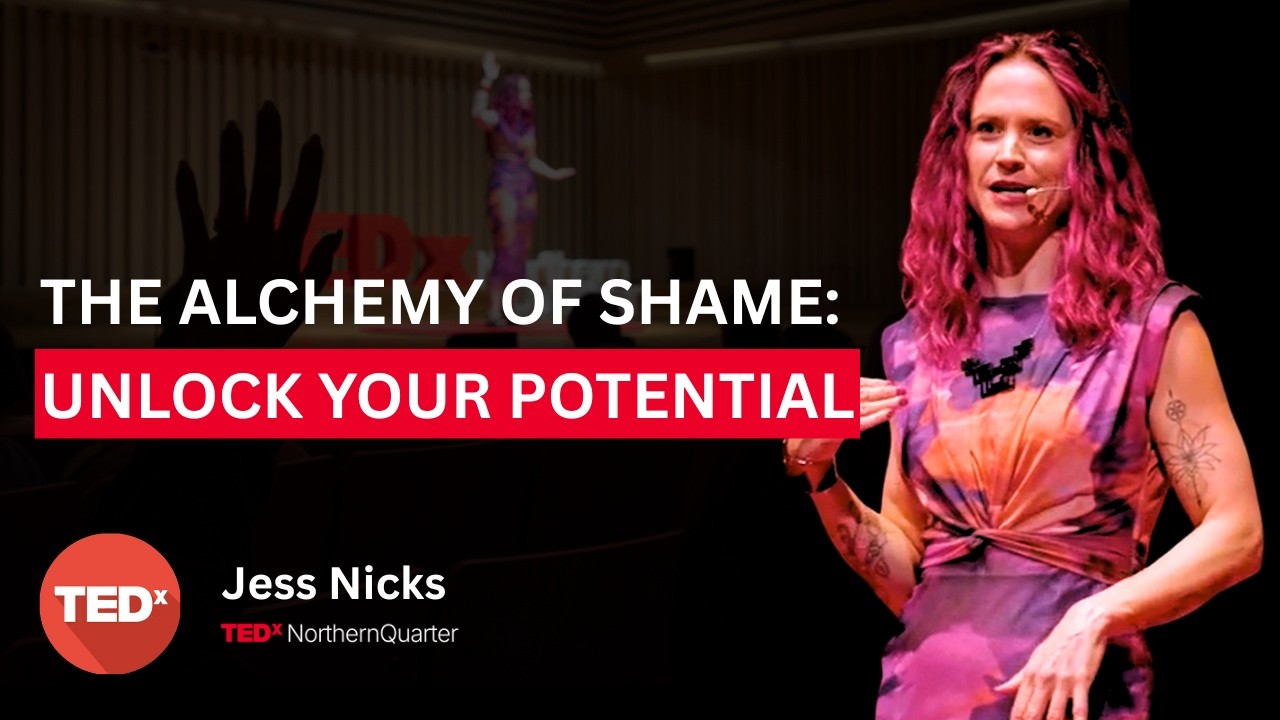
The Alchemy of Shame | Jess Nicks | TEDxNorthern Quarter
Title history
- The Alchemy of Shame | Jess Nicks | TEDxNorthern Quarter — observed on 20261101-0410 UTC (YouTube)
Keywords
Summary
134 words
Critical Evaluation
Value of the Information & Strength of the Argument
The talk offers a deeply personal narrative that gives it a certain emotional authenticity, and the proposed three-step method (Recognize, Release, Reprogram) is presented in a clear and memorable way. However, the argumentation is based entirely on subjective experience and anecdote, with no reference to scientific studies or established psychological frameworks. The speaker makes claims about trauma, body memory, and NLP that are not empirically validated, and she does not acknowledge existing research on shame or alternative evidence-based therapies. The reasoning is largely rhetorical and motivational, which limits its value as a source of reliable information.
Scientific Rigor, Source Quality, Title Accuracy
The title accurately reflects the talk’s theme of transforming shame, using ‘alchemy’ as a metaphor for inner change. The talk itself is a personal testimony rather than a scholarly presentation. The only sources provided in the description are TED’s content guidelines and the general TEDx page, neither of which substantiate scientific claims. The speaker mentions Brené Brown’s work on shame but gives no citation. Overall, the scientific rigor is low, and the talk fails to distinguish subjective opinion from evidence-based knowledge. The TED flag explicitly warns that the content falls outside content guidelines and lacks scientific support, which aligns with our assessment.
213 words
Title / Content Match
The metaphor of alchemy fits the talk's promise of transforming shame into potential, so the title is a good match.
Quality & Reliability
3/10
TED's own note flags this talk as lacking scientific support, and the speaker relies heavily on personal anecdote and NLP principles without empirical evidence.
Key Moments
Markers derived by PSI from the transcript: the creator did not define chapters.
- Introduction and audience interaction about getting in one's own way
- Teenage trauma and the internalization of shame
- Breakdown, therapy, and discovery of NLP
- Introduction of the three Rs: Recognize, Release, Reprogram
- Recognize: self-doubt and connecting thoughts to the body
- Release: befriending the body and letting go of past trauma
- Reprogram: conscious action and shifting beliefs
- Application to a cabaret show and TEDx appearance
- Brené Brown quote and concluding question about alchemizing shame
Cited Sources
- TEDx Content Guidelines — Referenced in the video description as the standards for TEDx organizers, indicating the talk has been flagged for not meeting these guidelines.
- TEDx Program — Mentioned in the video description as the platform for independently organized TEDx events.
Contribution & Novelties
The talk’s original contribution is a memorable personal framework (’the three Rs’) that combines elements of introspection, body awareness, and proactive reframing. However, it lacks scientific foundation and builds on pseudoscientific NLP concepts. The novelty lies more in the storytelling and the use of the ‘debitch’ metaphor to make self-help playful, rather than offering any empirically grounded new knowledge.
Pour aller plus loin :
- Brené Brown: The Power of Vulnerability — This TED talk by shame researcher Brené Brown provides a research-based perspective on vulnerability and shame, offering a credible counterpoint to the anecdotal claims in this video.
- Shame (Wikipedia) — A comprehensive overview of shame from psychological, social, and philosophical perspectives, useful for understanding the concept beyond personal testimony.
- Neuro-linguistic programming (Wikipedia) — This article discusses the controversial status of NLP and the lack of scientific evidence for its effectiveness, which is directly relevant to the speaker’s claims.
149 words
Radar Profile
The radar profile shows a low score in reliability and quality, with moderate quantity and technical level. This indicates a talk that is engaging and reasonably informative in terms of personal anecdotes but lacks scientific credibility and depth.