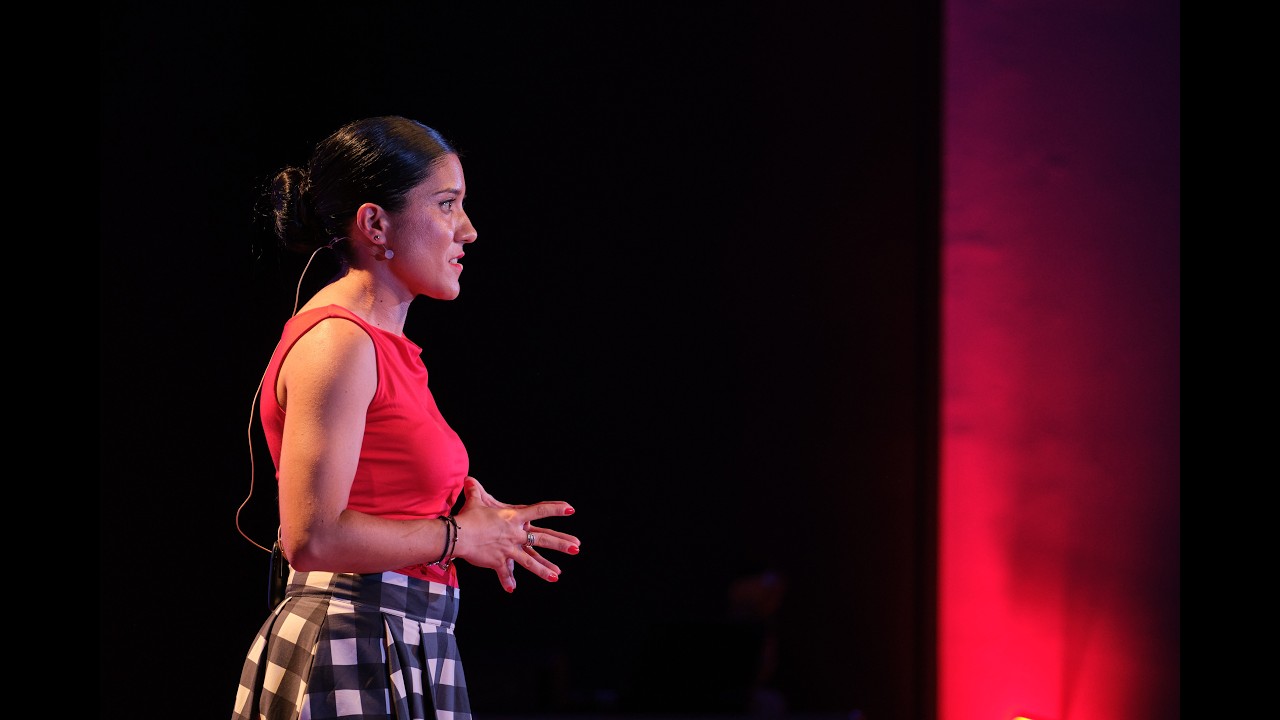
Com podem garantir el dret a l’habitatge? | Gemma Caballé Fabra | TEDxTarragona Women
How can we guarantee the right to housing? | Gemma Caballé Fabra | TEDxTarragona Women
Title history
- Com podem garantir el dret a l’habitatge? | Gemma Caballé Fabra | TEDxTarragona Women — observed on 20261104-2321 UTC (YouTube)
Keywords
Summary
168 words
Critical Evaluation
Value of the Information & Strength of the Argument
The talk provides a coherent historical and legal analysis, offering concrete data (e.g., 40% income spent on housing, 125,000 waiting for social housing, 30-year average emancipation age). The speaker’s five-pronged diagnosis and solutions are clearly structured, and she argues convincingly against rent controls using international evidence, though she doesn’t cite specific studies. The argumentation is balanced, acknowledging both individual responsibility and systemic issues, while championing private property as a stabilizing force. However, some claims are not fully developed, and the perspective is explicitly pro-market, which may overlook alternative policy approaches.
Scientific Rigor, Source Quality, Title Accuracy
The speaker, an academic specialist, provides a reasoned analysis, but she only references general legal texts (e.g., the 2019 Spanish law, 2023 national housing law, Catalan Civil Code) without precise citations or URLs. The TEDx format limits depth, yet the content is rigorous for a public talk. The title directly matches the content, which asks and answers the question of how to guarantee the right to housing.
172 words
Title / Content Match
The title poses a question directly addressed throughout the talk, which analyzes causes and proposes solutions, though it remains broad and philosophical.
Quality & Reliability
7/10
The speaker is a law professor and housing researcher, offering a structured analysis of Spain's housing crisis with historical context and concrete data, but the talk is opinion-based and lacks detailed citations for many claims.
Key Moments
Markers derived by PSI from the transcript: the creator did not define chapters.
- Introduction: speaker's personal experience and the urgency of the housing problem in Spain.
- Comparison with 20 years ago and changing public perception.
- Data on housing costs, social housing waiting list, and youth emancipation age.
- Historical look at the 1990s economic boom and liberalization.
- 2008 crash, evictions, and legislative responses (2011-2013).
- 2019 law restricting mortgages and its impact on rental demand.
- 2023 state housing law and rent cap measures.
- Five identified causes, including interventionism, lack of housing discipline, territorial imbalance.
- Proposed solutions: professionalization of housing, long-term policies, diversifying tenures.
- Conclusion: call for structural, long-term solutions to ensure dignified housing.
Cited Sources
- TEDx Talks — Link to the TEDx platform in the video description.
Concurring Sources
- Housing Law in Spain (2023) — The speaker relies on the 2023 Spanish Housing Law, which is a real legislative measure; no official URL provided in the talk.
- Academic studies on rent control — The speaker references international academic work showing negative effects of rent caps, but does not cite specific papers.
Dissenting Sources
- Pro-rent control advocacy — Some economists and activists argue that rent control can be effective in protecting tenants; the speaker disputes this based on her referenced evidence.
Contribution & Novelties
The talk contributes an informed academic perspective on Spain’s housing crisis, advocating for a balanced approach between private property and public intervention. It introduces the concept of ‘housing’ as an interdisciplinary field and highlights lesser-known legal tools like temporary and shared ownership from Catalan civil law.
Pour aller plus loin :
- Rent control - Wikipedia — Provides evidence of rent control effects, relevant to the speaker’s claims.
- Shared ownership - Wikipedia — Explains the model discussed as a potential solution.
- Housing - Wikipedia — Introduces the multidisciplinary ‘housing’ field, central to the talk’s argument.
94 words
Radar Profile
The radar profile shows balanced scores across information quantity, quality, technical level, and reliability, reflecting a well-structured but not deeply technical talk. The speaker's academic background boosts reliability, while the lack of detailed citations slightly lowers quality and technical depth.