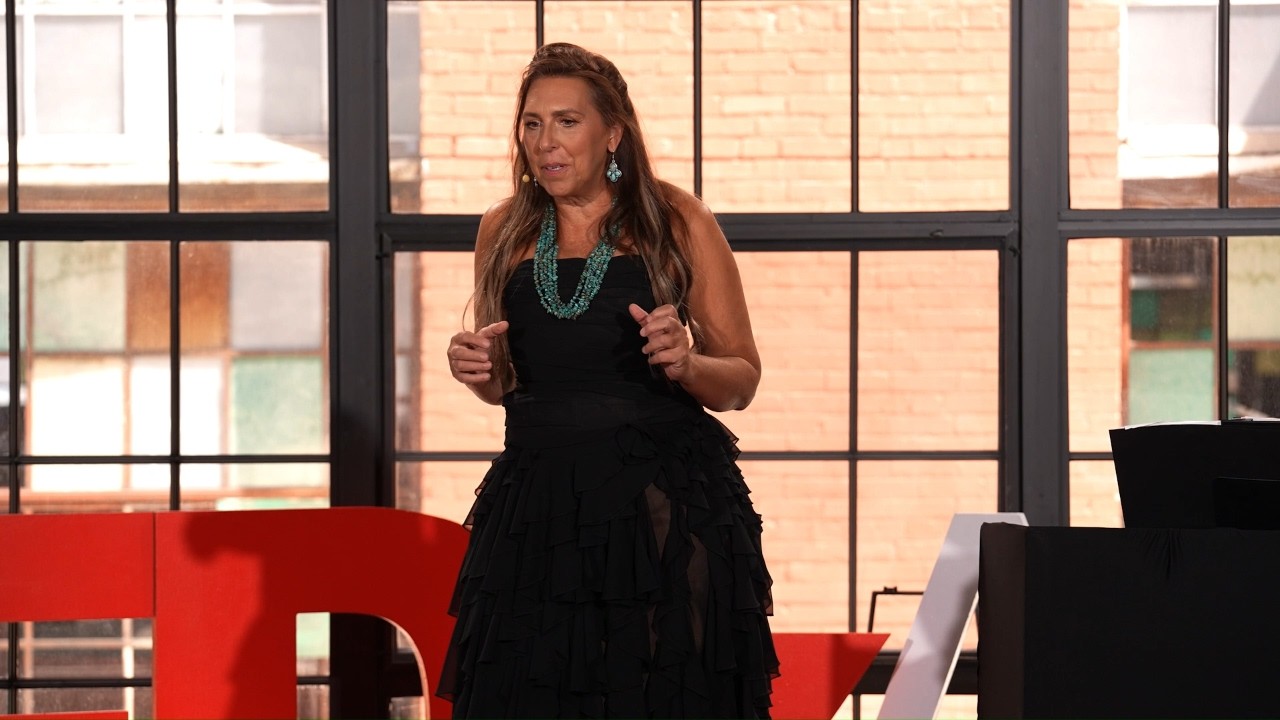
Performance isn't Projection. It's Connection. | Elizabeth Garland | TEDxABQ
Title history
- Performance isn't Projection. It's Connection. | Elizabeth Garland | TEDxABQ — observed on 20261027-1738 UTC (YouTube)
Keywords
Summary
153 words
Critical Evaluation
Value of the Information & Strength of the Argument
The value of this talk lies in its authentic personal testimony and the reframing of introverted sensitivity as an asset rather than a weakness. Garland’s argument is cohesive and emotionally compelling, weaving concrete anecdotes with a clear conceptual framework (‘Superpresence’). However, the argumentation is largely anecdotal and lacks empirical support or references to psychological research. The underlying message—that connection and purpose outperform self-promotion—is valuable, but the talk would benefit from stronger evidence or theoretical grounding. Nevertheless, the author’s background as a performance coach lends practical credibility, and the narrative structure effectively illustrates the transformation.
Scientific Rigor, Source Quality, Title Accuracy
The talk is a personal narrative without explicit citations to external studies or literature. The only source mentioned is TEDx itself (in the description). The title accurately represents the content: the idea that performance is about connection rather than projection. The talk’s scientific rigor is limited due to anecdotal evidence and lack of citations, but it is consistent in its internal reasoning and aligns with existing psychological concepts on performance anxiety (e.g., cognitive reframing) without formally referencing them. The absence of empirical data affects the overall reliability, though the author’s professional experience adds some weight.
204 words
Title / Content Match
The title accurately reflects the core message: performance as connection rather than projection, directly supported by the narrative.
Quality & Reliability
7/10
Personal narrative grounded in the author's experience as a performer and performance coach. The talk offers practical reframing of performance anxiety, though it lacks empirical citations or systematic research evidence. The emotional authenticity and coherent argumentation add credibility, but scientific rigor is limited.
Key Moments
Markers derived by PSI from the transcript: the creator did not define chapters.
- Opening performance and introduction to stage fear.
- Recounting the music school incident with the professor's harsh comment.
- Discussion of teaching experiences and common self-doubt patterns.
- Grandmother's death, inheritance of Steinway, and care for uncle Gus.
- Realization that purpose and connection eliminate nerves.
- The Vienna performance and the low point in the bar.
- Epiphany: performance is energetic connection, not projection.
- Closing message and final piano piece 'Angels Overhead'.
Cited Sources
- TEDx Program — Mentioned as the organizing platform for the talk.
Concurring Sources
- TEDx Program — The talk is part of the TEDx series, which is a platform for sharing ideas (mentioned in the description).
Contribution & Novelties
The talk introduces ‘Superpresence’ as a novel concept for reframing performance anxiety, emphasizing connection rather than projection. It challenges mainstream advice (e.g., power poses) and offers a sensitivity-positive perspective. However, the novelty is primarily conceptual and anecdotal, not empirically validated. The personal narrative provides a compelling case but lacks broader evidence.
Pour aller plus loin :
- Performance anxiety - Wikipedia — Provides background on the psychological condition, useful for contextualizing Garland’s personal experiences.
- Introversion - Wikipedia — Discusses the personality trait and its relationship to performance, relevant to the talk’s theme of introverted performers.
- Flow (psychology) — Csikszentmihalyi’s concept of optimal experience aligns with Garland’s description of being carried by the music, offering a theoretical frame.
- Impostor syndrome - Wikipedia — The talk explicitly references impostor syndrome in the Vienna scene; this article explains the phenomenon.
136 words
Radar Profile
The radar profile shows moderate scores across all dimensions, with slightly higher quality of information and lower technical depth. This reflects a personal, emotionally resonant talk that is conceptually coherent but not highly technical or empirically grounded.