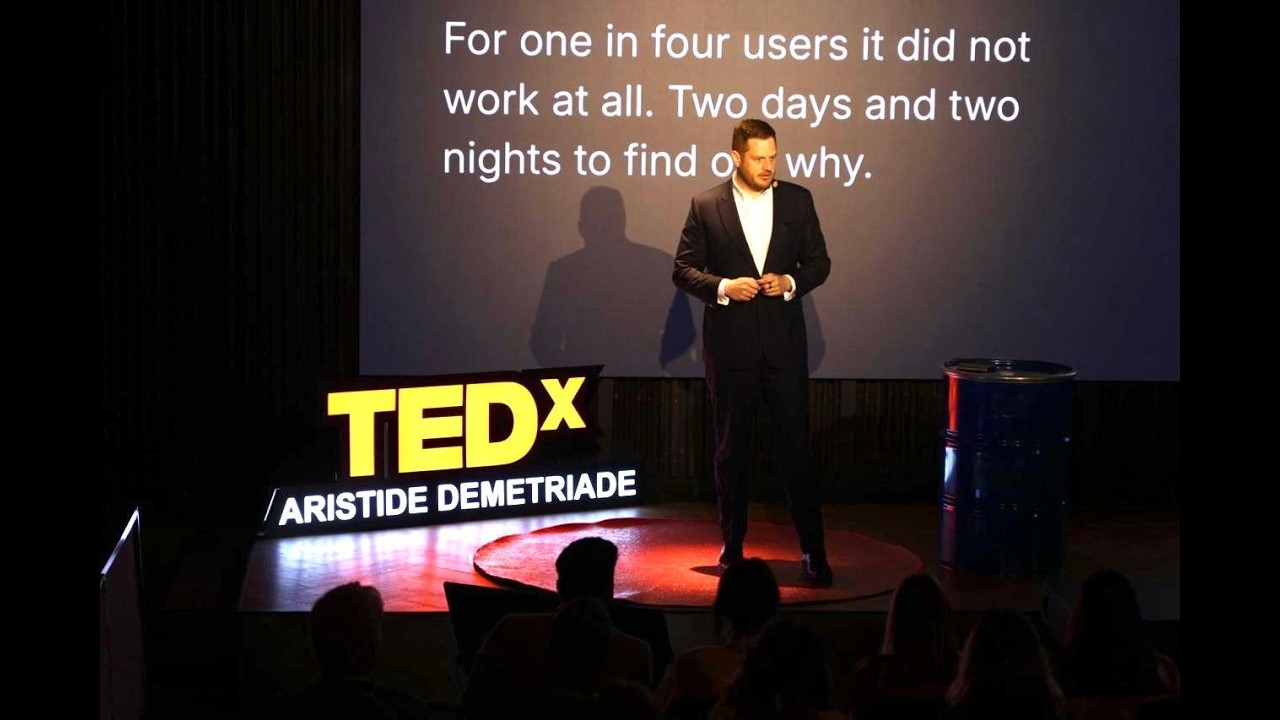
Becoming a pioneer in digital government | Janusz Cieszyński | TEDxAristide Demetriade Street
Keywords
Summary
147 words
Critical Evaluation
Value of the Information & Strength of the Argument
The talk provides valuable, concrete insights into the practical challenges and success factors of digital government implementation. The speaker’s arguments are compelling and grounded in personal experience, particularly the episodes involving e-prescriptions and the rapid issuance of digital IDs to Ukrainian refugees. However, the argumentation relies heavily on anecdotal evidence and a single country’s experience, lacking comparative data or independent verification. The advice, such as avoiding mere digitization of existing bureaucracy and prioritizing user-centric services, is sensible and actionable, but the lack of systematic evidence weakens the overall robustness of the claims.
Scientific Rigor, Source Quality, Title Accuracy
The talk does not cite academic or formal sources; it relies on the speaker’s authority as a former minister. The only external references are the TEDx content guidelines and the TEDx website provided in the description. While the speaker’s insider perspective adds value, the absence of citations or references to policy documents limits scientific rigor. The title accurately matches the content, as the talk is entirely dedicated to the speaker’s pioneering efforts in digital government. No comment data is available to assess public reception.
191 words
Title / Content Match
The title accurately reflects the content: the speaker recounts his journey and lessons in pioneering digital government initiatives in Poland.
Quality & Reliability
7/10
The speaker is a former Polish Minister of Digital Affairs with direct experience in implementing large-scale e-government projects, lending credibility to the narrative. However, the talk is largely anecdotal and does not present systematic data or rigorous evaluation, so overall reliability is moderate.
Key Moments
Markers derived by PSI from the transcript: the creator did not define chapters.
- Introduction with passport and wallet, posing the question of why we carry paper documents.
- Story of e-prescriptions: initially a huge project with over 100 million euros spent and no results, but eventually succeeded.
- mObywatel app: started in 2017 as a gadget, turning point with Ukrainian refugees in 2022.
- Three principles for digital services: don't digitize bureaucracy, build trust, and deliver things people actually use.
- Examples of popular features: penalty point checks, identity freeze, driver's license, and vehicle documents.
- Comparison with Germany's Anmeldung and advice for Romania on leveraging digital apps for drone alerts.
Cited Sources
- TEDx Content Guidelines — Referenced in the video description as a policy document for TEDx organizers.
- TEDx Program — Mentioned in video description as the official TEDx platform.
Contribution & Novelties
The talk offers a unique insider perspective on the adoption of digital government services in a European country, providing concrete examples and practical principles that are not commonly discussed in academic literature. It bridges the gap between policy theory and real-world implementation, particularly highlighting the importance of user-centric design and rapid response to crises. The speaker’s emphasis on treating digital services as consumer products rather than bureaucratic processes is a valuable contribution to the discourse on e-government.
Pour aller plus loin :
- E-government — Overview of digital government initiatives and best practices.
- Diia — Ukraine’s digital government app, mentioned in the talk as an example of citizen-centric services.
- Electronic prescription — The system that was successfully implemented in Poland, illustrating key technical and operational considerations.
125 words
Radar Profile
The radar profile shows a high quantity of information and moderate quality, indicating a talk rich in examples and practical advice. The technical depth is relatively low, reflecting a focus on policy and user experience rather than underlying technology. Reliability is moderate, consistent with the speaker's authoritative but anecdotal approach.