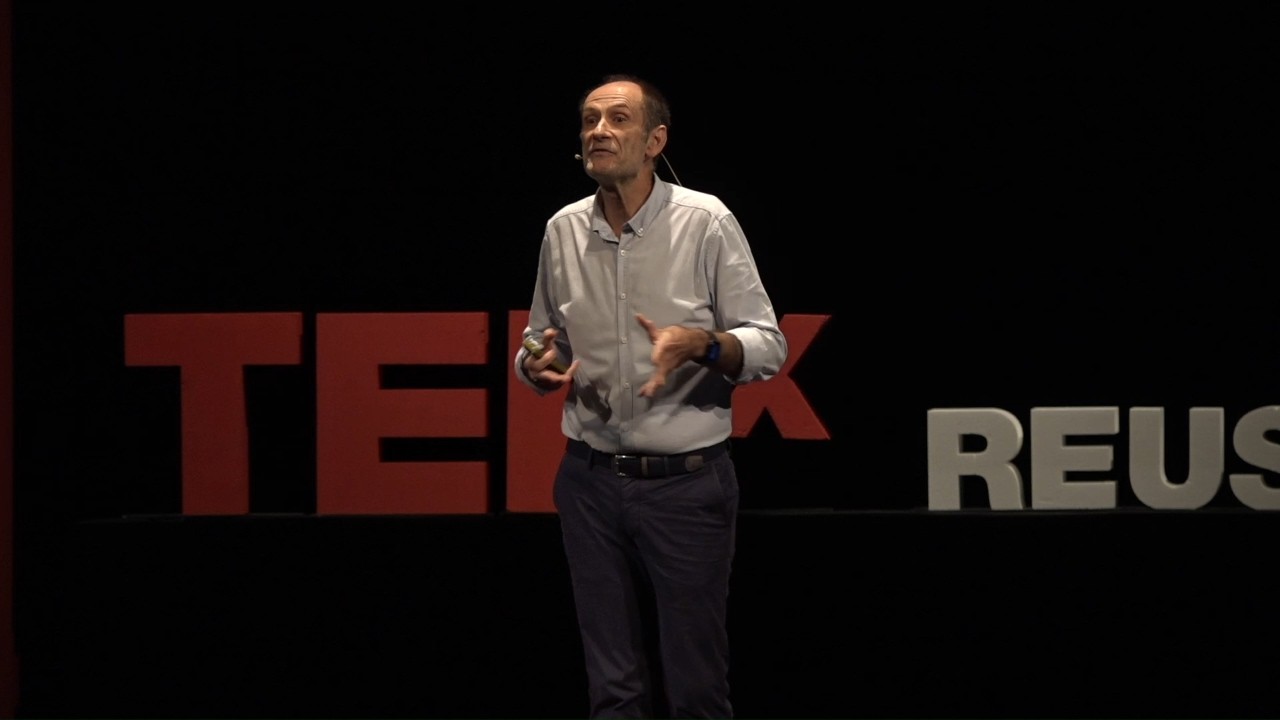
Sobre assassins silenciosos i àngels de la guarda | Eduard Llobet Valero | TEDxReus
About silent assassins and guardian angels | Eduard Llobet Valero | TEDxReus
Title history
- Sobre assassins silenciosos i àngels de la guarda | Eduard Llobet Valero | TEDxReus — observed on 20261026-1337 UTC (YouTube)
Keywords
Summary
134 words
Critical Evaluation
Value of the Information & Strength of the Argument
The value of the information is high: it presents a pressing public health issue with concrete statistics from WHO and a local study of 60,000 pediatric patients linking asthma episodes to ozone and NOx. The argument is persuasive, moving from problem (low granularity of current monitoring) to solution (portable low-cost sensors). The speaker’s credibility as a researcher in the field reinforces the technical claims. However, the argumentation is somewhat one-sided, emphasizing benefits without thoroughly addressing limitations or potential biases in sensor data, but it remains scientifically grounded.
Scientific Rigor, Source Quality, Title Accuracy
The rigor is acceptable: the speaker cites WHO and the Copernicus programme, and refers to a specific local study, demonstrating familiarity with authoritative sources. However, no publications or references are shown on slides, limiting verifiability. The title is metaphorical but accurate, reflecting the content’s dual focus on dangers and technological safeguards. The talk is an expert opinion rather than a peer-reviewed study, which is appropriate for a TEDx format.
171 words
Title / Content Match
The metaphorical title accurately encapsulates the dual theme: air pollution as a silent assassin and portable sensing devices as guardian angels.
Quality & Reliability
8/10
The speaker is a recognized professor in electronic technology and nanosensors, providing credible expertise. Claims are supported by WHO statistics and a local pediatric study, though no direct external citations are shown on screen.
Key Moments
Markers derived by PSI from the transcript: the creator did not define chapters.
- WHO statistics: 7 million premature deaths annually, 99% of population exposed.
- Explanation of PM2.5 particles and their health impact.
- Comparison of monitoring methods: costly stations and satellite coverage, with map of NO2 over Europe.
- Example of a school in the US showing pollution spikes during weekdays.
- Introduction of portable low-cost sensors as 'guardian angels' with AI and nanotechnology.
- Demonstration of a wearable device measuring VOCs in real time.
- Applications: occupational safety, patient monitoring, and collaborative mapping for healthy routes.
Cited Sources
- TEDx page — General TEDx event information and disclaimer about independently organized talks.
- World Health Organization (WHO) — Source of statistics on premature deaths and global exposure cited by the speaker.
- Copernicus Programme — European satellite initiative used for monitoring air pollutants like NO2.
Contribution & Novelties
The talk contributes by proposing a decentralized, citizen-driven air quality monitoring approach using wearable sensors, addressing the limitation of sparse ground stations and low-resolution satellites. It bridges environmental monitoring with personalized medicine, suggesting a shift from aggregate data to individual exposure tracking. This is an original perspective on integrating IoT and nanotechnology for public health.
Pour aller plus loin :
- MEMS — Micro-electromechanical systems that enable miniaturized sensors; central to the device technology discussed.
- Exposomics — The study of an individual’s total environmental exposure, directly relevant to the speaker’s emphasis on personal dose.
- Internet of Things (IoT) — Enables connectivity and data sharing for the wearable sensors proposed.
108 words
Radar Profile
The profile shows high scores in quality and reliability, moderate in quantity and technique. This reflects a well-argued expert talk with strong content but limited technical depth and breadth of sources.