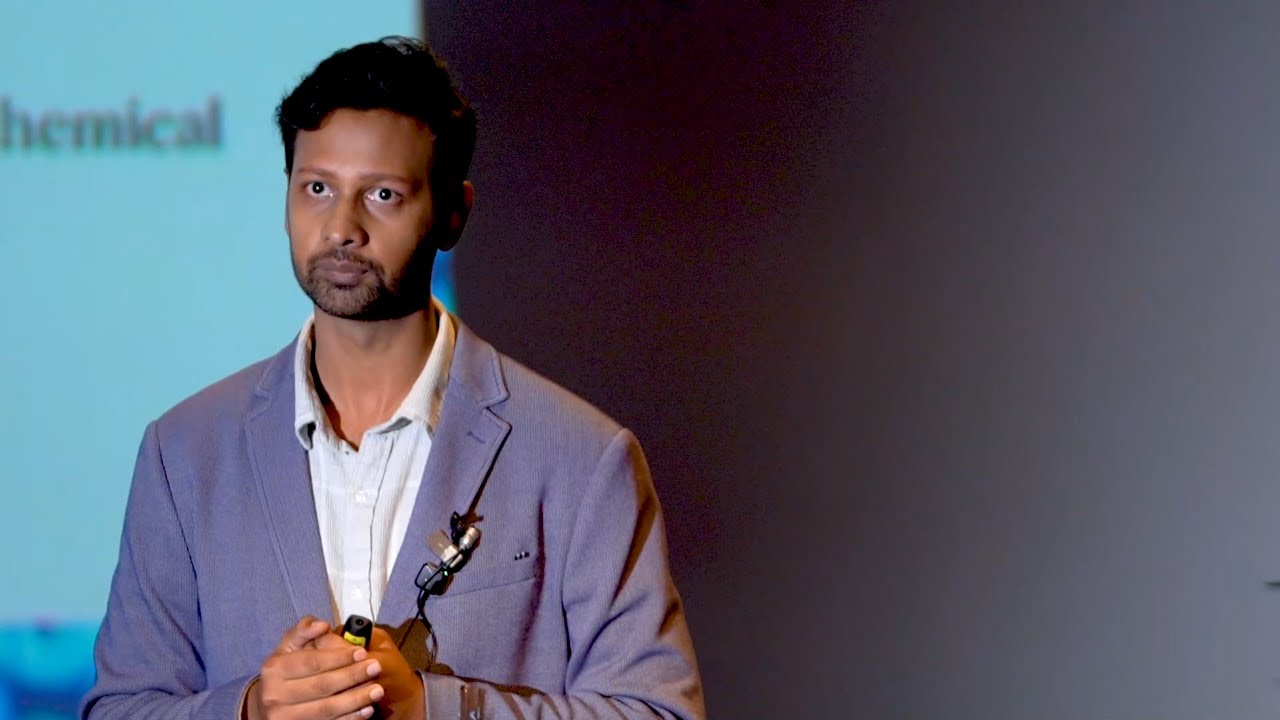
Rethinking Well-Being and Success | Dr. Saahil Rathore | TEDxPIET Panipat
Keywords
Summary
140 words
Critical Evaluation
Value of the Information & Strength of the Argument
The talk offers a motivational and integrative perspective, combining modern psychological concepts with traditional Indian wisdom. The argumentation is largely anecdotal, relying on personal experience and vague references to ‘research’ without specific studies. The speaker’s emphasis on inner stability as a performance multiplier is plausible but not substantiated. The three-part framework (hardware, software, network) provides a memorable heuristic, yet the treatment is superficial and lacks critical analysis. The claims about brain energy and beta-amyloid are oversimplified and potentially misleading. The 80/20 soft-skills statistic is presented without a source, and the assertion that meditation releases specific neurotransmitters is scientifically unproven. Overall, the talk has motivational value but weak scientific backing.
Scientific Rigor, Source Quality, Title Accuracy
The talk does not cite any formal sources during the presentation. The description includes links to TEDx content guidelines and the general TEDx page, but these are not research references. The speaker references the Bhagavad Gita, the Bible, Steve Jobs, and JP Morgan, but these are anecdotal. The TED note explicitly disclaims the scientific validity of several claims, indicating low rigor. The title accurately matches the content, though the content is more of a motivational speech than a scientific presentation. The lack of citations and the presence of unverified claims significantly undermine the scientific quality.
219 words
Title / Content Match
The title accurately reflects the talk's focus on redefining success through well-being, although the content is largely anecdotal and lacks rigorous evidence.
Quality & Reliability
2/10
The talk makes multiple scientific claims (e.g., beta-amyloid clearance, serotonin release from meditation, 80% success from soft skills) without providing citations or references. TED's own note explicitly states that several claims lack scientific support and fall outside content guidelines.
Key Moments
Markers derived by PSI from the transcript: the creator did not define chapters.
- Introduction with a question about brushing teeth, leading to the importance of mental hygiene.
- Discussion of the brain as hardware, neurons, beta-amyloid, and sleep necessity.
- Emphasis on exercise as 'new medicine', releasing dopamine and endorphins.
- Transition to software: importance of soft skills, 80% success claim, and education system criticism.
- Introduction to breathwork and meditation, personal IIT story, serotonin and oxytocin claim.
- Reference to Vedic wisdom, 'The Secret', law of attraction, and Bible verse.
- Discussion of network: learning from different cultures (US, Germany, Japan, etc.) and India's spiritual heritage.
- Conclusion: new definition of success with holistic elements, call to action.
Cited Sources
- TEDx Content Guidelines — Referenced in the video description as the guidelines from which this talk deviates.
- TEDx official page — Provided in the description as the general TEDx platform page.
Contribution & Novelties
The talk’s original contribution lies in synthesizing modern self-help concepts with Vedic philosophy and framing well-being as a performance multiplier. However, the novelty is limited by a lack of empirical grounding. The speaker introduces practical micro-habits but does not provide evidence-based protocols.
Pour aller plus loin :
- Neuroplasticity — Relevant to the claim that mental practices can alter brain structure.
- Mindfulness-based stress reduction — Scientific approach to meditation’s benefits.
- Growth mindset — Connects to the idea that inner beliefs affect success.
- Law of attraction — The speaker mentions this concept; note its scientific criticism.
94 words
Radar Profile
The radar profile shows very low scores across all dimensions, particularly in technical level and reliability, indicating a talk that is motivational but lacks scientific depth. The quantity of information is moderate but superficial, and the overall quality is poor due to unsupported claims.