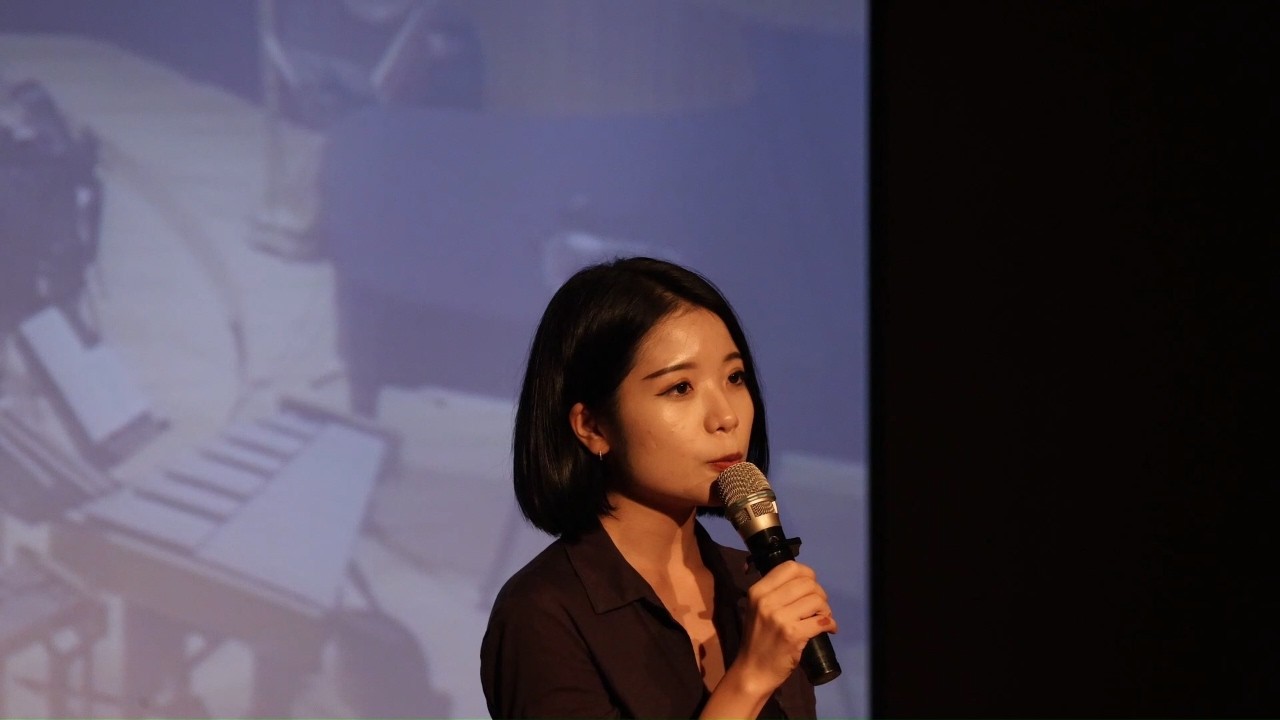
흘러가는 대로가 아닌, 생각하는 대로 | 예은 황 | TEDxSejong University
Not Just Going with the Flow, but Living with Intention | Yeeun Hwang | TEDxSejong University
Keywords
Summary
220 words
Critical Evaluation
Value of the Information & Strength of the Argument
The primary value of the information lies in its practical, self-help perspective on career and life planning, offering a reproducible framework (top-down vision to today’s action) and an honest acknowledgment of the psychological weight of entrepreneurial choices. The argumentation follows a coherent structure: posing a question, contrasting societal norms with individual values, presenting a detailed personal case study, and invoking a reflective thought exercise. It is a persuasive motivational argument rather than a scientific or data-driven one. The speaker’s personal narrative adds authenticity, but the reasoning relies entirely on anecdotal evidence and subjective interpretation, lacking empirical backing, data points, or balanced counterpoints to the proposed framework.
Scientific Rigor, Source Quality, Title Accuracy
The scientific rigor is evidently low; the talk is an ’expert opinion’ based solely on personal experience, with no references to studies, academic literature, or external data. The only source provided is the generic TEDx platform link, which offers no verifiable evidence for the speaker’s claims beyond her own statements. The title accurately reflects the content, describing deliberate life choices over passive drifting, and the presentation stays firmly aligned with this thesis without deviation, never introducing unrelated topics or technical jargon.
202 words
Title / Content Match
The title accurately encapsulates the central message: choosing a life driven by deliberate thought and defined values rather than passively drifting through time.
Quality & Reliability
4/10
The talk is an autobiographical narrative sharing career and life lessons. It lacks scientific evidence or external references, making the reliability score low, though internal coherence is maintained.
Key Moments
Markers derived by PSI from the transcript: the creator did not define chapters.
- Makes the defining distinction between 'what you want to become' and 'what life you want to live', arguing that values must come before choosing a career.
- Introduces her personal definition of success (social impact) and describes choosing the classical music business as a top-down means to achieve that vision.
- Explains the creation of the YouTube channel '또모' (Ddomo), combining classical music and entertainment, which gathered over 300,000 subscribers in a year.
- Details the expansion into live production, including film concerts (Interstellar) and collaborations with game IPs like Krafton to popularize classical music.
- Reveals the path was filled with costly failures and crises, but that having a clear personal vision made navigating tough choices much easier.
- Emphasizes the heavy responsibility and the inability to escape once one has made self-directed professional and life choices.
- Poses the crucial reflective question: 'If no one is watching and nothing is at stake, what life would you truly want?' and concludes by urging deliberate thought over drifting.
Cited Sources
- TEDx Program — Official link provided in the video description, stating that the talk was independently organized by a local community using the TED conference format.
Concurring Sources
- Ikigai — Concerns the intersection of what you love, what you are good at, and what the world needs, similar to the talk's call for defining personal values.
- Self-determination theory — Supports the talk's assertion that autonomous, value-congruent choices increase motivation and well-being.
Contribution & Novelties
The talk contributes a personal, entrepreneurial lens to the common theme of finding life purpose by integrating classical music with digital content and event business. It offers a practical top-down method: defining a life vision first, then breaking it into 5-year, 1-year, and daily actionable steps. The emphasis on the heavy responsibility of self-directed choices provides a grounded counterweight to typical motivational speeches.
Pour aller plus loin :
- Ikigai — Relevant to the talk’s emphasis on aligning daily actions with a personally meaningful purpose.
- SMART criteria — Relevant to the speaker’s advice on breaking down long-term dreams into specific, measurable annual and daily goals.
- Self-determination theory — Provides a scientific framework for the psychological benefits of autonomy and value-congruent choices discussed in the talk.
124 words
Radar Profile
The radar profile suggests a talk that is intellectually and technically lightweight (scoring low on technical level and factual quantity) but of moderate quality in its narrative structure and internal coherence. The reliability is middling, consistent with an experience-driven speech rather than a research-based review.