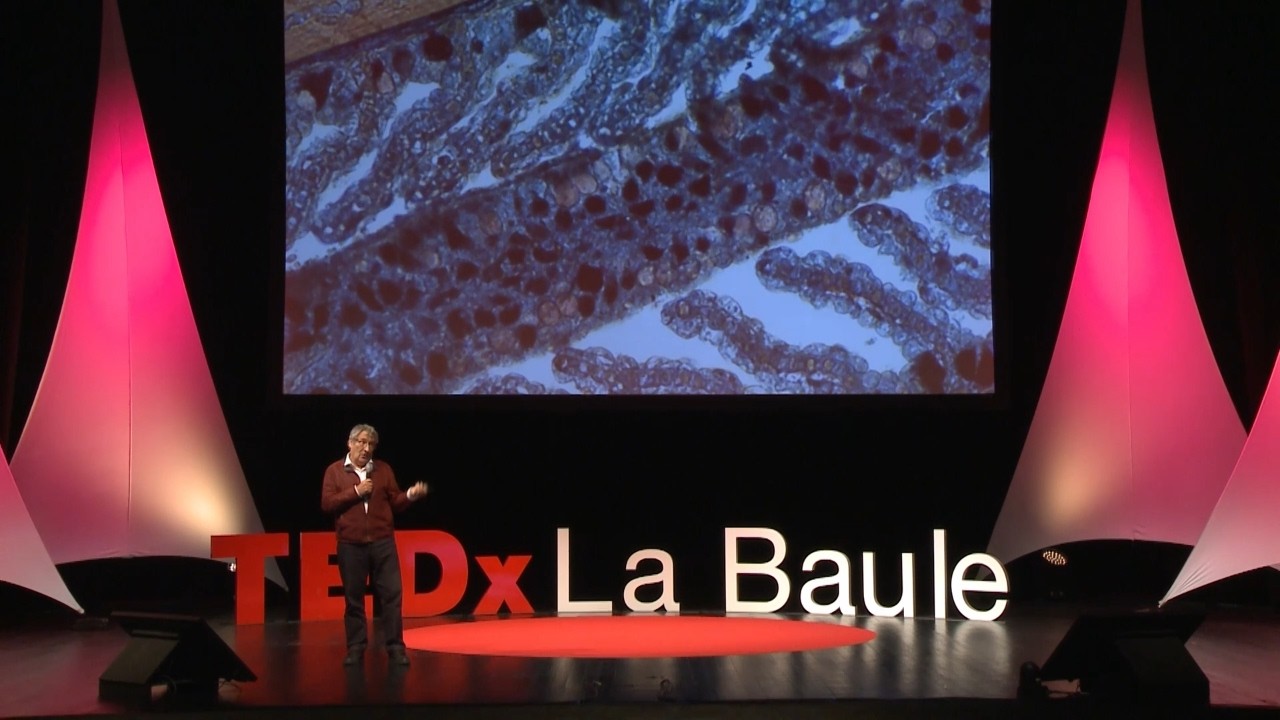
La fantaisie dans le vivant. | Gilles BOEUF | TEDxLaBaule
Title history
- La fantaisie dans le vivant. | Gilles BOEUF | TEDxLaBaule (PSI archive)
- La fantaisie dans le vivant. | Gilles BOEUF | TEDxLaBaule — observed on 20261027-0205 UTC (YouTube)
Keywords
Summary
215 words
Critical Evaluation
Value of the Information & Strength of the Argument
The information presented is rich in examples and anecdotal evidence, effectively illustrating the wonder and complexity of living systems. The argument is coherent: life is extraordinary, human actions are destroying it, and we must act collectively. Boeuf’s credentials lend strong authority, and he uses vivid imagery (e.g., the butterfly mimicking a leaf, the Romanesco fractal) to make the science accessible. However, the talk is more inspirational than analytical; it does not present new research but synthesizes known facts and personal insights. The argumentation relies on emotional appeal and ethical calls rather than a rigorous demonstration of causality, but it remains persuasive for a general audience.
Scientific Rigor, Source Quality, Title Accuracy
The speaker cites his own work and the Tara expedition, but the talk does not reference specific publications or external sources in detail. The description only links to the TEDx platform. The title accurately reflects the content, which focuses on the surprising and creative aspects of life. As a TEDx talk, the format encourages broad statements, and while the science is reliable, some claims (e.g., ’never divorce in symbiosis’) are simplified. Overall, the rigor is adequate for a popular talk, though it lacks the precision of a peer-reviewed presentation.
209 words
Title / Content Match
The title captures the core theme: the surprising creativity and inventiveness of life, which the talk develops through numerous biological examples.
Quality & Reliability
8/10
The speaker is a highly credible biologist (former president of the Muséum National d'Histoire Naturelle) and presents a well-structured talk with many concrete examples, though it remains a popularization and contains some personal opinions.
Key Moments
Markers derived by PSI from the transcript: the creator did not define chapters.
- Introduction: the wonder of life and the speaker's background.
- The ancient ocean and the Tara expedition; microbial life dominates.
- Symbiosis and the human microbiome; cooperation vs. competition.
- Water as the sacred molecule; origin of life and the importance of liquid water.
- Fish gills and osmoregulation; adaptation from water to land.
- Overfishing and the El Niño-driven desert bloom in Atacama.
- Human flaws (improvidence, arrogance, greed) and examples like invasive species and biomimicry.
- Call to action: science, politics, NGOs, and business must collaborate to save biodiversity.
Cited Sources
- TEDx Talks — The talk was given at a TEDx event using the TED conference format but independently organized by a local community.
Contribution & Novelties
The talk offers a personal and enthusiastic perspective on biodiversity, emphasizing the creative and playful aspects of life’s evolution. It popularizes concepts like symbiosis, biomimicry, and the microbiome, making them accessible to a broad audience. The original contribution lies in the synthesis of these ideas with the speaker’s own experience and the inclusion of lesser-known examples (e.g., diatoms, fish gills, El Niño desert blooms). The talk does not present new data but reframes familiar concepts in a compelling narrative.
Pour aller plus loin :
- Biomimicry — Explanation of the field that draws inspiration from nature to solve human problems.
- Symbiogenesis — The theory that symbiosis is a major driver of evolutionary novelty.
- Microbiome — Overview of the microbial communities that live inside and on humans, relevant to the talk’s discussion of symbiosis.
132 words
Radar Profile
The profile shows high scores in quantity and quality of information, with moderate technical level and high reliability. The talk is information-dense and authoritative, but not overly technical, making it suitable for a general audience while retaining scientific credibility.