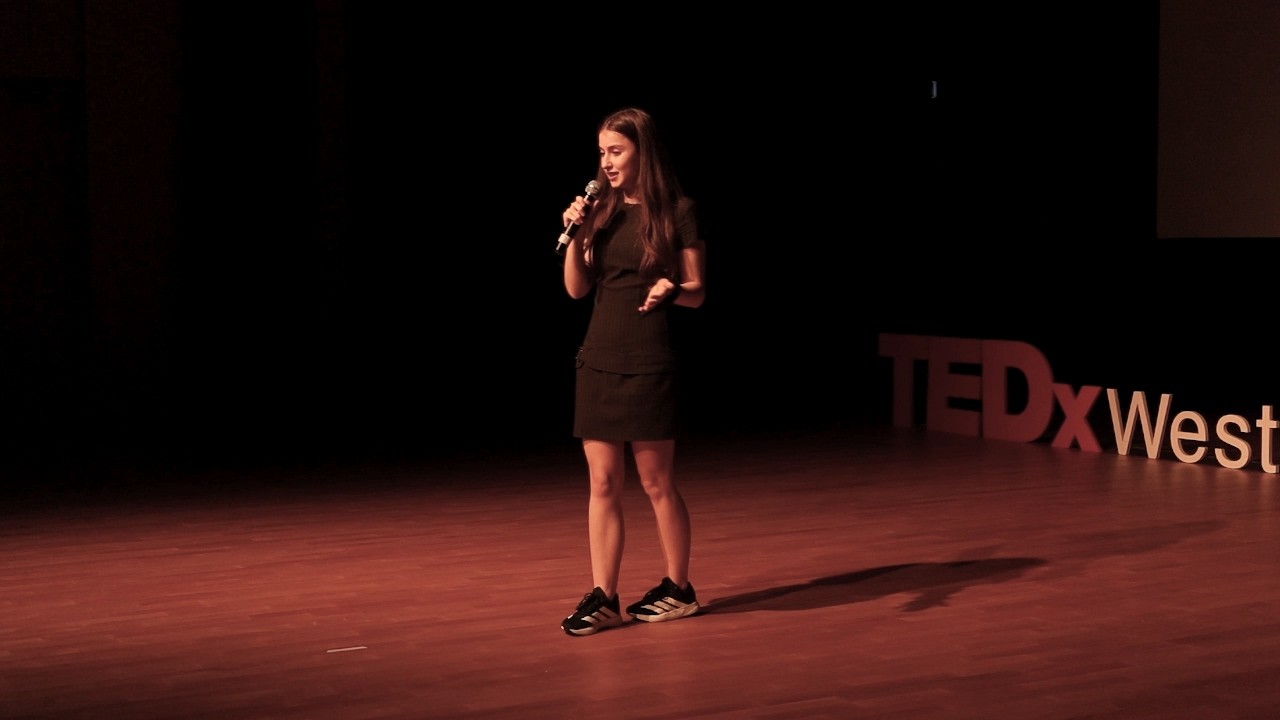
Is Perception Reality? | Romy Fremder | TEDxWest Island School Youth
Keywords
Summary
178 words
Critical Evaluation
Value of the Information & Strength of the Argument
The value of the information lies in its relatable personal anecdotes and a practical, if simple, method for altering one’s perception. The argumentation relies heavily on narrative and emotional appeal rather than empirical evidence. The speaker effectively uses stories to illustrate points, but the logical connection between perception and the ability to change it is not rigorously substantiated. The interactive spice tolerance example is a nice visual demonstration of innate differences, but it doesn’t support the claim that perception can be easily overridden. Overall, the talk provides motivational value but lacks scientific depth.
Scientific Rigor, Source Quality, Title Accuracy
No external sources are cited beyond the general TEDx platform link. The content is based on personal experience and common psychological concepts mentioned without explicit references. The title overstates the depth of the discussion on reality, as the talk primarily addresses practical mindset changes rather than a philosophical examination of reality. The scientific rigor is minimal, and the reliability of the claims is low due to the absence of supporting evidence. The talk is presented as a personal development perspective rather than a scientific analysis, which aligns with its nature as a TEDx youth talk.
203 words
Title / Content Match
The title is somewhat broad and philosophical, but the talk focuses on how personal perception shapes experience and can be changed, rather than deeply investigating the nature of reality itself.
Quality & Reliability
3/10
The talk is primarily anecdotal and personal, lacking scientific evidence or citations. It presents subjective experiences and motivational advice, which limits its reliability as a source of factual information.
Key Moments
Markers derived by PSI from the transcript: the creator did not define chapters.
- Romy shares her childhood question about whether everyone sees colors the same.
- She discusses the Harry Potter scene and how upbringing shapes responses.
- She recounts her experience moving to Hong Kong and struggling with English.
- Interactive spice tolerance example illustrating biological differences in perception.
- She describes her method of adding rewards to make study habits more enjoyable.
- She concludes with advice to stop negative self-talk and ask 'what if I can?'.
Cited Sources
- TEDx Talks — General TEDx platform where this talk and others are hosted.
Contribution & Novelties
The talk’s originality lies in its personal narrative and the simple suggestion to reframe one’s approach by adding extrinsic rewards to studying. While not new, it offers a relatable and easily implementable strategy for young students. The underlying psychological concepts, such as growth mindset and self-efficacy, are well-established but presented through anecdote rather than research.
Pour aller plus loin :
- Growth mindset - Wikipedia — The concept popularized by Carol Dweck that abilities can be developed, which supports the talk’s message about changing one’s perception.
- Self-efficacy - Wikipedia — Albert Bandura’s theory on belief in one’s own capabilities, directly relevant to the speaker’s emphasis on self-confidence.
- Cognitive bias - Wikipedia — Systematic patterns of deviation from norm or rationality in judgment, which relates to how perception is filtered.
128 words
Radar Profile
The radar profile shows moderate information quantity but low technical depth and reliability, reflecting the anecdotal nature of the talk. The scores suggest a motivational piece rather than a rigorous scientific contribution.