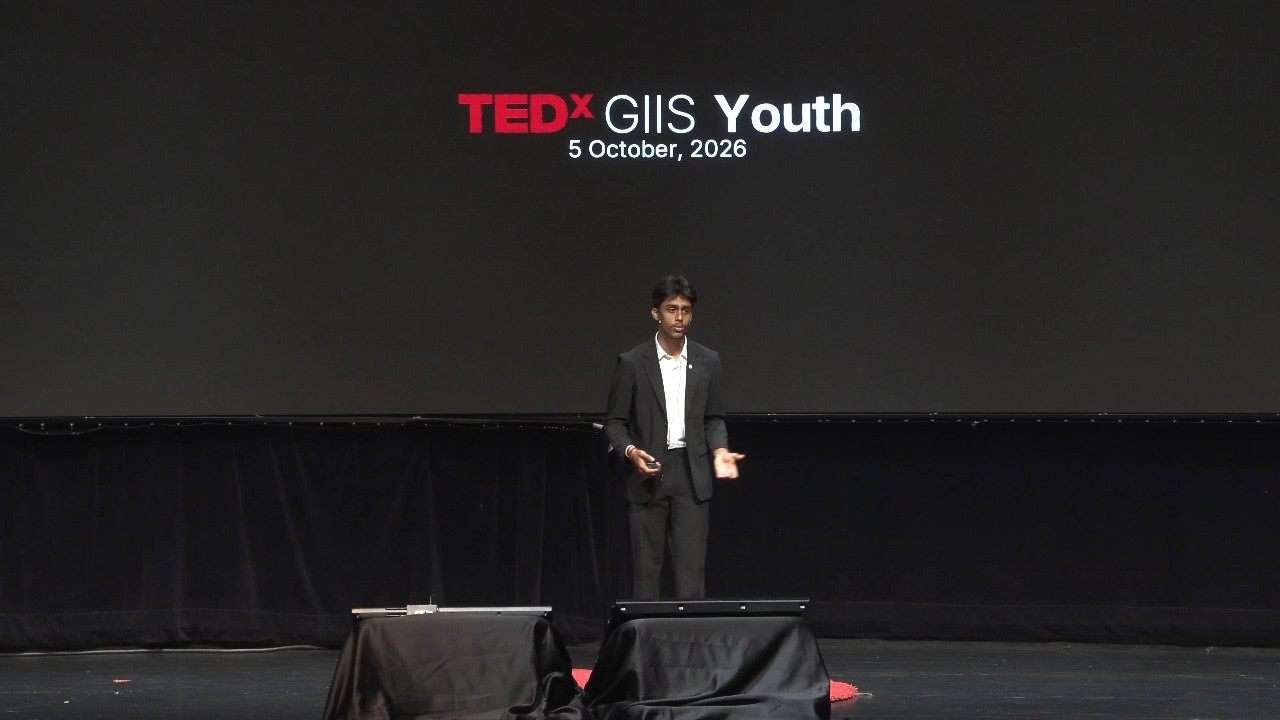
Purpose isn't found - it's built | Gautam Krishna | TEDxGIIS Youth
Title history
- Purpose isn't found - it's built | Gautam Krishna | TEDxGIIS Youth — observed on 20261102-1656 UTC (YouTube)
Keywords
Summary
146 words
Critical Evaluation
Value of the Information & Strength of the Argument
The talk presents a valuable perspective that reframes purpose as a dynamic construction rather than a static discovery. The argumentation is logically structured: it starts with a common question, identifies a flaw in the traditional path, introduces Ikigai as an alternative, and builds a case for curiosity-driven action. The use of relatable examples strengthens the narrative, though the reasoning relies primarily on anecdotal evidence. The incorporation of Ikigai, while simplified, is accurate enough for a general audience. The speaker’s personal story adds authenticity and helps illustrate the core message. However, the talk lacks empirical backing for psychological claims, and the concept of purpose building could benefit from references to existing research on motivation or identity formation.
Scientific Rigor, Source Quality, Title Accuracy
The talk does not explicitly cite academic sources, but the underlying concept of Ikigai is referenced directly. The description provides only a link to the TEDx organization, which serves as a general reference but does not supply specific studies. The title precisely aligns with the content, capturing the central thesis. The speaker’s arguments are internally consistent, and the message is delivered with clarity. While the presentation is not rigorously scientific, it is well-structured and stays on topic. The absence of explicit citations reduces the academic rigor, but for a TEDx talk aimed at inspiration, this is acceptable. The title’s assertion is well-supported throughout the speech.
236 words
Title / Content Match
The title accurately reflects the central thesis of the talk, which argues that purpose is constructed through experience rather than discovered.
Quality & Reliability
7/10
The talk is a personal and reflective narrative, not based on empirical research, but aligns with known psychological concepts like growth mindset and intrinsic motivation. The arguments are coherent and the use of Ikigai is well-explained, though references are implicit.
Key Moments
Markers derived by PSI from the transcript: the creator did not define chapters.
- Introduction of the question 'What do you want to be when you grow up?'
- Speaker shares his diverse interests in aviation, finance, and football, illustrating the lack of a single path.
- Introduction of the concept of Ikigai and its common Western interpretation as four circles.
- Discussion on how language of 'finding' purpose implies a hidden treasure, and shift to curiosity as the starting point.
- Emphasis on experience coming first, meaning second, and how curiosity drives action.
- Critique of the pressure to justify every decision by usefulness, and the value of pointless experiences.
- Metaphor of life as a rough draft, allowing changes and evolution of purpose.
- Conclusion: Purpose is built, not found, and the new question to ask is what to try next.
Cited Sources
- TEDx Program — Official TEDx page mentioned in the video description as the event organizer.
Contribution & Novelties
The talk offers a fresh perspective on purpose by shifting from discovery to construction, emphasizing the role of curiosity and small actions. It simplifies but appropriately uses Ikigai to support its thesis. The contribution lies in making this concept accessible to youth and advocating for an iterative, experimental approach to life choices.
Pour aller plus loin :
- Ikigai - Wikipedia — Provides an overview of the Japanese concept referenced in the talk.
- Growth mindset - Wikipedia — Related psychological concept that aligns with the speaker’s call to embrace learning and change.
- Intrinsic motivation - Wikipedia — Explores the psychological basis for pursuing activities out of curiosity rather than external reward.
110 words
Radar Profile
The profile shows high quality of information and good overall credibility, but lower technical depth and moderate quantity. This reflects the talk's inspirational nature, focusing on practical life advice rather than technical evidence.