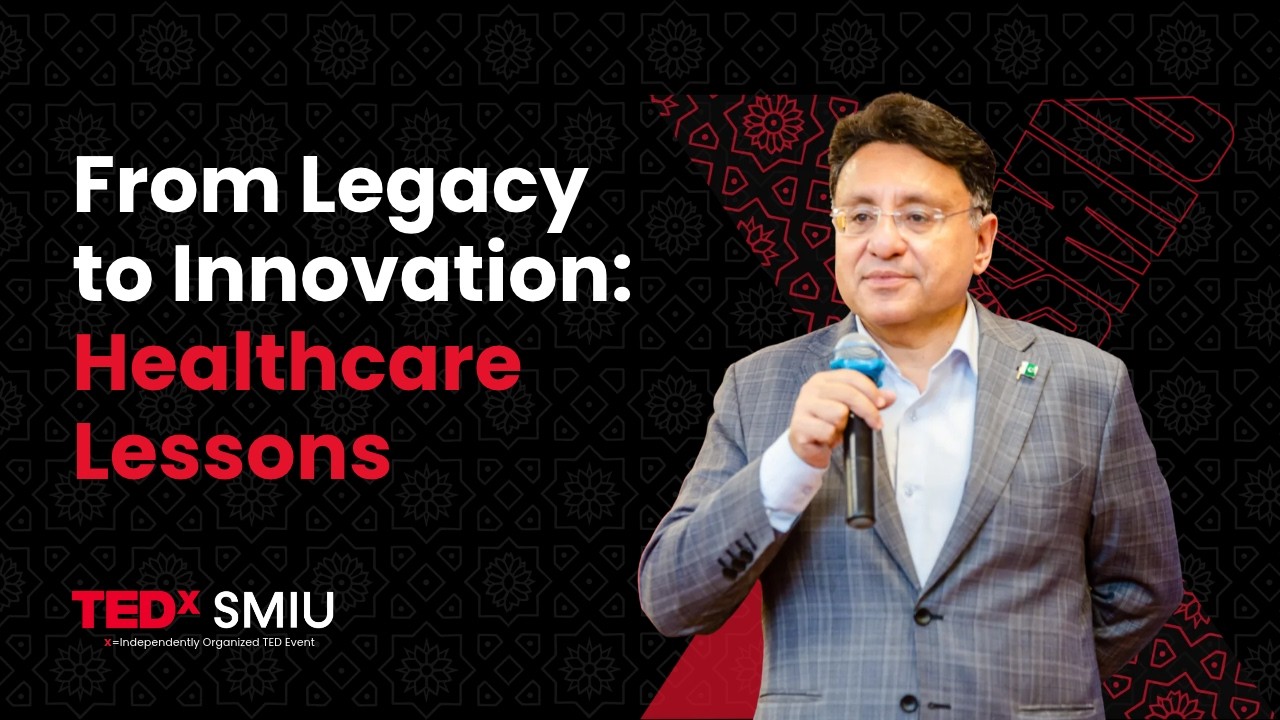
From Legacy to Innovation: Healthcare Lessons | Prof. Dr. Farhan Essa Abdullah | TEDxSMIU
Title history
- From Legacy to Innovation: Healthcare Lessons | Prof. Dr. Farhan Essa Abdullah | TEDxSMIU — observed on 20261102-1656 UTC (YouTube)
Keywords
Summary
148 words
Critical Evaluation
Value of the Information & Strength of the Argument
The talk offers value in its accessible, experience-based insights into mentorship and the concept of ‘social human capital,’ which is presented as a practical framework for building relationships. The speaker’s argumentation is largely anecdotal, relying on personal success stories and examples rather than empirical evidence. He effectively illustrates the importance of proactive networking and emotional well-being through the COVID anecdote, though the causal claims about recovery speed are not scientifically substantiated. The argumentation is coherent in its motivational tone but lacks rigorous data or citations, making it more persuasive than evidence-based.
Scientific Rigor, Source Quality, Title Accuracy
The talk has low scientific rigor, as it is an opinion piece without references to literature or studies. The only source mentioned is the TEDx program itself, with a link to the official TEDx page. The title suggests a focus on healthcare innovation and legacy, but the content is broader, covering personal development and national pride. While there is some alignment with healthcare through health tips and the COVID story, the talk does not deliver deep insight into ’legacy to innovation’ as the title implies. The adequacy is moderate, and the mismatch slightly affects the overall rating.
203 words
Title / Content Match
The title suggests healthcare lessons related to legacy and innovation, but the talk is more about general success tips, mentorship, and patriotic encouragement. It partially covers healthcare through health habits and COVID experience, but the focus is broader.
Quality & Reliability
5/10
The talk is an opinion-based motivational speech with personal anecdotes, lacking scientific references or data. The speaker does not cite any studies or evidence, relying on personal experience and subjective observations.
Key Moments
Markers derived by PSI from the transcript: the creator did not define chapters.
- Introduction and greeting, reflecting on attending TEDx as a student.
- Emphasis on extra-curricular activities and building professional relationships.
- Introduction of the 'social human capital' concept and the importance of mentors.
- Discussion on competition and the ease of success when moving up.
- Health advice: sleep, hydration, exercise, and stress management.
- COVID-19 story about resolving emotional grievances and faster recovery.
- Patriotic sentiments, praising Pakistan's potential and armed forces.
- Encouragement to seek scholarships abroad and network effectively.
- Closing thoughts on unity, shared success, and a poetic ending.
Cited Sources
- TEDx Program — The talk was given at a TEDx event organized independently. This official page explains the TEDx format.
Contribution & Novelties
The talk’s original contribution lies in its practical framing of ‘social human capital’ as an account that needs replenishing, and the emphasis on emotional health as a factor in physical recovery. While these ideas are not new, the personal narrative adds an accessible perspective. The speaker also integrates patriotic encouragement with professional advice, which may resonate particularly with Pakistani youth.
Pour aller plus loin :
- Social capital — The concept of networks and relationships as a resource, relevant to the speaker’s ‘social human capital’ idea.
- Mentorship — The role of mentors in personal and professional development, as emphasized in the talk.
- Melatonin — The hormone involved in sleep regulation, mentioned by the speaker regarding sleep patterns.
- COVID-19 and stress — The intersection of emotional well-being and recovery, related to the COVID anecdote.
132 words
Radar Profile
The radar profile shows moderate scores across information quantity and quality, with low technical depth. The fiabilite is average, reflecting the opinion-based nature. The talk is strong on personal engagement but weak on scientific backing.