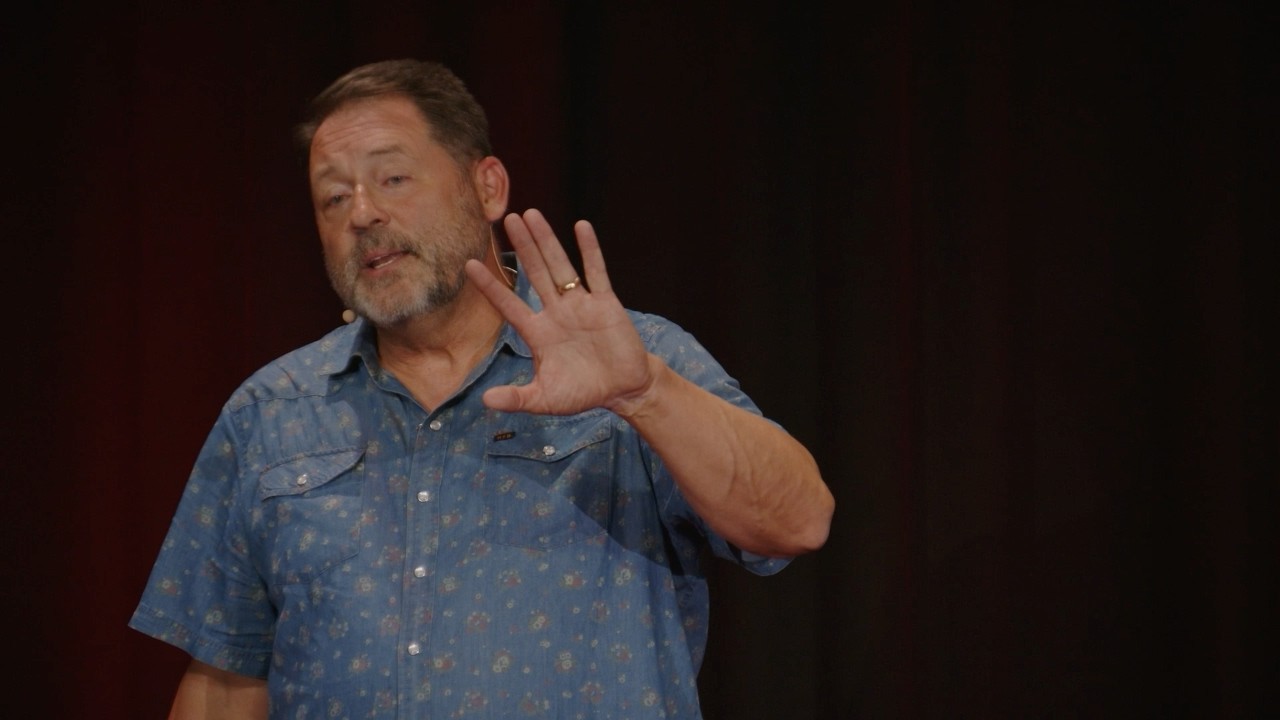
The Age of Unforeseen Outcomes | Chris Holmes | TEDxRiverfield Country Day School
Title history
- The Age of Unforeseen Outcomes | Chris Holmes | TEDxRiverfield Country Day School — observed on 20261104-2220 UTC (YouTube)
Keywords
Summary
107 words
Critical Evaluation
Value of the Information & Strength of the Argument
The talk offers a compelling personal narrative that challenges conventional educational assumptions. Holmes argues that despite his initial plan for a structured curriculum, the unexpected interactions were more impactful than academic lessons. He uses vivid anecdotes—like meeting Bob on a boat tour, the advice from hotel manager Holly, and repeated answers about being true to oneself—to illustrate the importance of allowing children to discover their own paths. The argumentation is coherent and emotionally engaging, though it relies on subjective experience rather than systematic evidence. The value lies in its thought-provoking perspective on education and neurodiversity, encouraging reflection on what truly matters in learning.
Scientific Rigor, Source Quality, Title Accuracy
The talk does not cite scientific sources; it is based entirely on personal experience and observation. The title is metaphorical but clearly explained: in an age of rapid change and AI, predictable outcomes are less relevant than unforeseen ones. The speaker’s credibility as a former Teacher of the Year lends weight, but the lack of external references limits the scientific rigor. The title aligns well with the content, as Holmes demonstrates that his planned outcomes gave way to more meaningful, unexpected ones. Public reactions are not provided, so no comment trends are analyzed.
211 words
Title / Content Match
The title 'The Age of Unforeseen Outcomes' captures the central theme: the value of unplanned experiences over predicted outcomes. It is well-matched to the content.
Quality & Reliability
6/10
The talk is a personal narrative without empirical data or citations, but the speaker is an experienced educator with credible professional background. The reflections are sincere and coherent, yet the reliability is limited by anecdotal evidence.
Key Moments
Markers derived by PSI from the transcript: the creator did not define chapters.
- Introduction: Holmes recalls his childhood question 'Why are we here?' and his teacher's dismissal.
- Introduction to the road trip with his grandson Colin and the 'road school' concept.
- Boat tour encounter with Bob, who plays putt putt golf with them, shifting the trip's focus.
- Meeting Holly, who advises 'stop expecting' and emphasizes taking life one second at a time.
- Repeated question to strangers: 'What's the most important thing in life?' and answers about being true.
- Observing Colin with the bakery girls and reflecting on his self-discovery.
- Conclusion: In the 'age of unforeseen outcomes', rethinking what's important to learn.
Cited Sources
- TEDx program — General link to TEDx events mentioned in the video description
Contribution & Novelties
The talk contributes a personal case study of ‘road schooling’ and highlights the importance of unforeseen outcomes in education, especially for neurodivergent children. It challenges the prescriptive nature of traditional schooling and advocates for holistic, experience-based learning.
Pour aller plus loin :
- Neurodiversity — Provides background on the concept of neurodiversity, relevant to Colin’s experience.
- Experiential education — Educational philosophy emphasizing learning through experience, aligning with road schooling.
- Self-determination theory — Psychological framework on motivation and autonomy, relevant to Holmes’s observations about self-discovery.
83 words
Radar Profile
The radar profile shows moderate scores in information quality and reliability, but low scores in quantity and technical depth, reflecting the talk's anecdotal, non-technical nature. The strongest aspect is the qualitative value of its message, while its weak points are breadth and rigor.