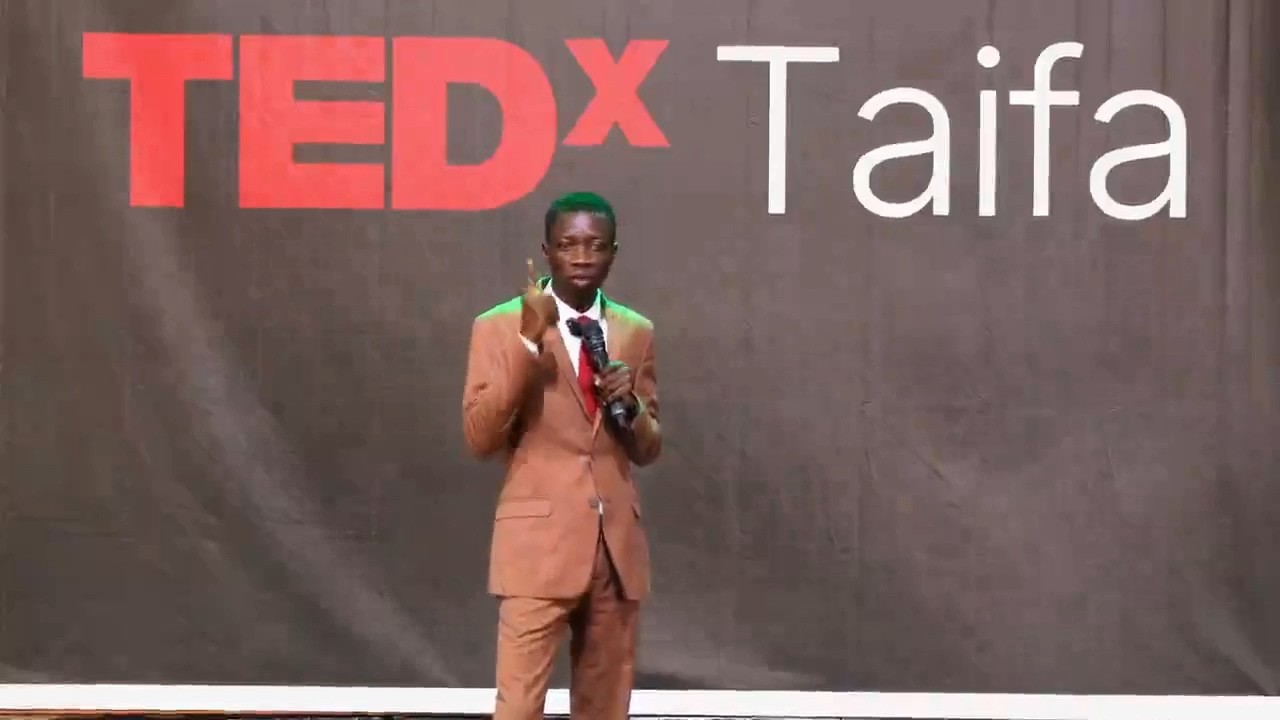
The Future of AI | Mr. Emmanuel Kwesi Baah | TEDxTaifa
Title history
- The Future of AI | Mr. Emmanuel Kwesi Baah | TEDxTaifa — observed on 20261106-0136 UTC (YouTube)
Keywords
Summary
167 words
Critical Evaluation
Value of the Information & Strength of the Argument
The talk provides a compelling narrative about the urgency of involving African youth in AI development, with concrete examples of successful young innovators. However, the argumentation relies heavily on anecdotal evidence and personal opinion rather than systematic data or research. The ‘ABC’ framework is simple and practical, but its effectiveness is not demonstrated. The speaker’s passion is clear, but the reasoning would be stronger with citations to studies on AI impact or education outcomes. The claim about Africa’s talent share is stated without a source, weakening the foundation. Still, the message about the need for educational reform and youth empowerment is valuable and aligns with broader discussions on AI and inequality.
Scientific Rigor, Source Quality, Title Accuracy
The talk does not reference any external sources beyond the TEDx platform; the description only links to ted.com/tedx. Thus, the scientific rigor is low, as claims like ‘0.01% of global AI talent’ lack verifiable references. The title accurately reflects the content, which is a general discussion of AI’s future with a focus on African youth. There is no significant mismatch, though the talk is more motivational than technical. No comments were provided for analysis.
200 words
Title / Content Match
The title accurately reflects the content: a TEDx talk about the future of AI, its opportunities, and challenges, with a focus on African youth.
Quality & Reliability
6/10
The talk is based on personal experience and examples, but lacks verifiable data or citations. Some claims (e.g., Africa holding 0.01% of AI talent) are stated without sources, which limits reliability.
Key Moments
Markers derived by PSI from the transcript: the creator did not define chapters.
- Introduction: presents an image of a 70-year-old and asks about the future of youth in the AI era.
- Introduces two 17-year-old Nigerian innovators (Chim Guanjun and Okuku Muaz) who built generative AI tools for African problems.
- Mentions the economic rule: if AI reduces costs of processes, adoption becomes inevitable; warns Africa lacks compute and talent (0.01% of global talent).
- Describes his teaching approach at Lancaster University and the partnership with KGL Foundation and Stanic, where students built projects.
- Introduces the 'ABC of emerging innovators': Ask questions, Build prototypes, Connect with mentors.
- Encourages the audience to identify three problems worth solving and to start nurturing ideas.
- Concludes with a call to reset education and collaborate to solve real societal problems.
Cited Sources
- TEDx Program — Reference to the TEDx event format and program.
Contribution & Novelties
The talk adds a local African perspective to the global AI discourse, emphasizing the need for youth empowerment and curriculum redesign. It proposes a simple actionable framework (ABC) for emerging innovators. While not groundbreaking, it serves as a motivational call to action.
Pour aller plus loin :
- AI for Africa — Background on AI development and challenges in Africa.
- TEDx Talks — The official TEDx platform for related talks.
- The Future of Work and AI — OECD research on AI’s impact on jobs and skills.
- Education Reform in Africa — Brookings Institution on education innovation in Africa.
97 words
Radar Profile
The radar profile shows moderate scores across information quantity and quality, with lower technical depth and reliability. This reflects a motivational talk with anecdotal evidence rather than rigorous analysis.