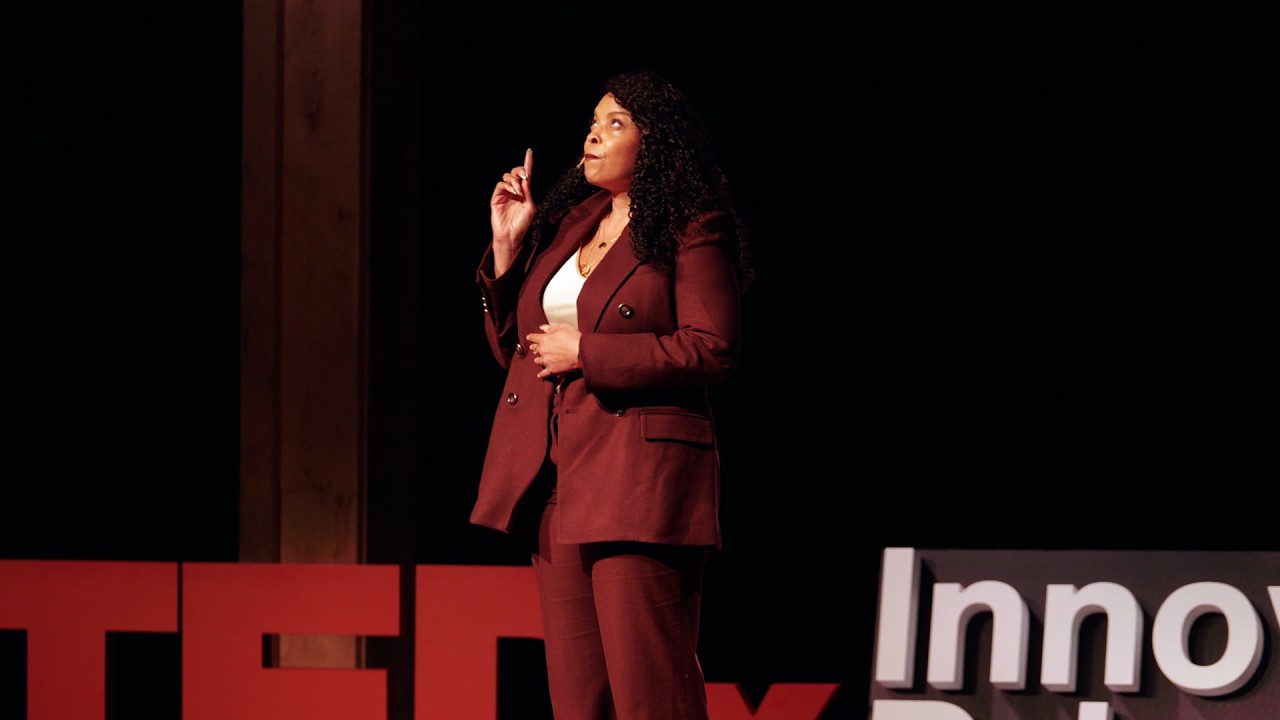
Curiosity Is a Readiness Skill | Dr. Wizdom Powell | TEDxInnovation Drive
Keywords
Summary
160 words
Critical Evaluation
Value of the Information & Strength of the Argument
The talk offers a powerful personal narrative that illustrates the importance of curiosity in individual and societal flourishing. Powell skillfully uses her biography to ground her argument, making abstract concepts tangible. The value lies in reframing curiosity as a public health and innovation issue, supported by her professional experiences at the Department of Defense and Headspace. However, the argument relies heavily on anecdote and general claims about ‘future of work reports’ without citing specific data, weakening its scientific rigor. The call to action is coherent and inspirational, but the evidence base could be stronger to fully persuade a critical audience.
Scientific Rigor, Source Quality, Title Accuracy
The talk does not cite specific studies or publications; rather, it references broad concepts like ‘future of work reports’ implicitly. The speaker’s own credibility and the TEDx platform provide some assurance, but the absence of explicit sources limits scientific verification. The title aligns well with the content, emphasizing curiosity as a preparatory skill. The description offers only a generic link to TEDx, which does not supply additional references. Overall, the rigor is moderate, fitting an inspirational keynote rather than an academic presentation.
197 words
Title / Content Match
The title accurately reflects the core message: curiosity as a fundamental readiness skill for innovation and wellbeing.
Quality & Reliability
7/10
The speaker holds reputable credentials (White House Fellow, Chief Purpose Officer at Headspace) and presents a coherent argument, though the talk relies primarily on personal narrative and general references rather than specific cited studies.
Key Moments
Markers derived by PSI from the transcript: the creator did not define chapters.
- Introduction of the personal story about her mother's warning and its origin in trafficking trauma.
- Explaining the difference between experimental curiosity and advanced curiosity, with the need for support to develop the latter.
- Story of Margie Day Walker and the children's theater, introducing the concept of the 'wonder ecosystem.'
- Application of curiosity in professional roles, including the Department of Defense and Headspace, with examples of challenging systemic assumptions.
- Critique of digital technologies that exploit curiosity and a call to invest in wonder infrastructure; concluding benediction.
Cited Sources
- TEDx Talks — Generic platform link from the description, used to reference the official TEDx format rather than a specific source.
Contribution & Novelties
The talk contributes a fresh perspective on curiosity as a strategic asset for innovation, bridging personal trauma recovery with national policy implications. It introduces the metaphor of ‘wonder ecosystems’ as a framework for investing in community resources that nurture curiosity. The speaker’s dual background in psychology and public policy adds depth. While not offering new empirical data, it synthesizes existing ideas in a compelling call to action.
Pour aller plus loin :
- Curiosity (Wikipedia) — Overview of psychological research on curiosity, its types, and developmental aspects.
- Creativity (Wikipedia) — Factors influencing creativity, including environmental conditions such as play and wonder.
- Innovation (Wikipedia) — Economic and societal importance of innovation, and how curiosity and creativity feed it.
116 words
Radar Profile
The radar profile shows moderate scores across all dimensions, indicating a balanced but not exceptional talk. The higher scores in quality and reliability reflect the speaker's credibility and coherent argument, while lower technical level and quantity of information suggest it is more inspirational than data-dense, typical of a TEDx narrative.