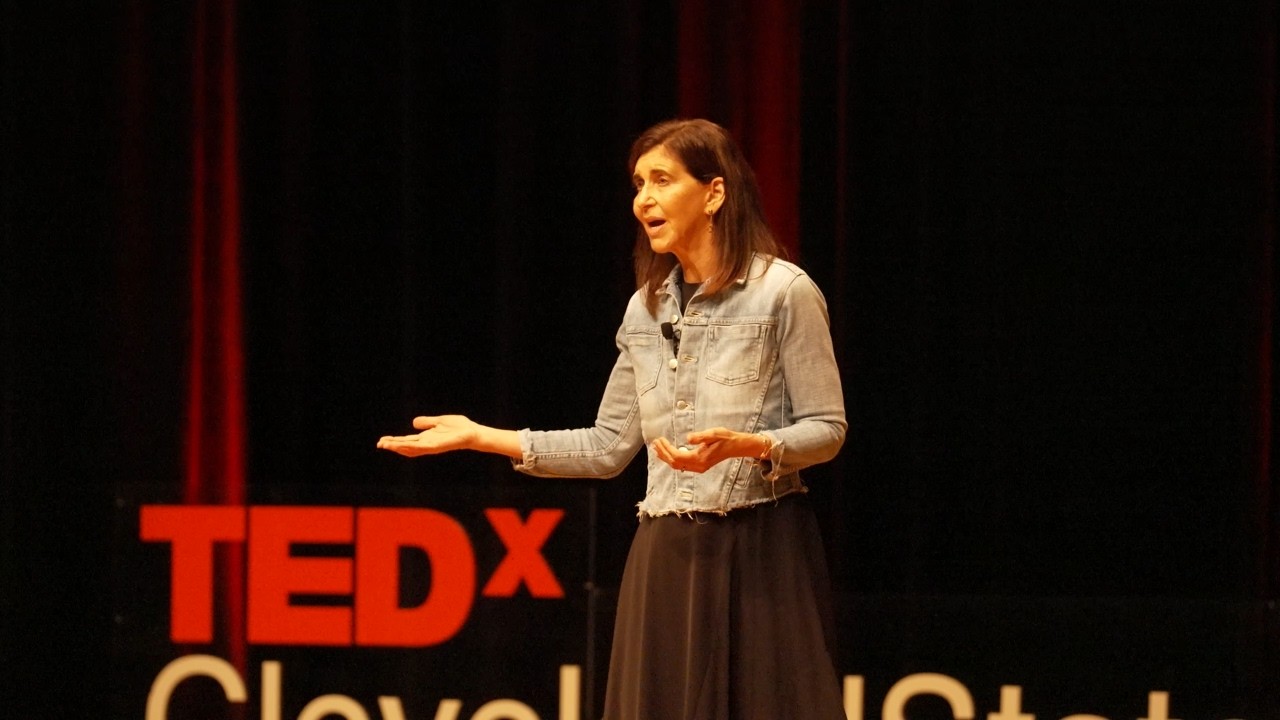
When Work Isn’t Enough | Sharon Sobol Jordan | TEDxClevelandStateUniversity
Title history
- When Work Isn’t Enough | Sharon Sobol Jordan | TEDxClevelandStateUniversity — observed on 20261101-0409 UTC (YouTube)
Keywords
Summary
181 words
Critical Evaluation
Value of the Information & Strength of the Argument
The talk provides a compelling personal narrative that humanizes the issue of economic instability. Its strength lies in the emotional connection and real-world examples, such as Bobby’s story and the employer’s initiative, which illustrate the effectiveness of workplace-based support. The argument is structured around a clear thesis—work alone is insufficient—and supported by statistics that highlight the scale of the problem. However, the argumentation relies heavily on anecdotal evidence and broad claims (‘research shows’) without specific citations or methodological details. The reasoning is plausible and persuasive, but would benefit from more rigorous data and explicit source references to strengthen its scientific validity.
Scientific Rigor, Source Quality, Title Accuracy
From a scientific rigor perspective, the talk lacks explicit citations for its statistical claims, which undermines verifiability. While the speaker’s position as CEO of United Way lends credibility, the data presented (e.g., income thresholds, mobility trends) are asserted without references. The description links to TEDx guidelines and the general TEDx page, but these are not substance-related sources. The title accurately reflects the content, and the talk stays on-topic throughout. No comments were provided for analysis.
191 words
Title / Content Match
The title accurately captures the core argument that a job no longer guarantees economic security or upward mobility.
Quality & Reliability
7/10
Speaker is CEO of United Way and provides concrete statistics, but no explicit sources are cited. Personal anecdotes complement data, but there is over-reliance on authority rather than peer-reviewed evidence.
Key Moments
Markers derived by PSI from the transcript: the creator did not define chapters.
- Introduction of father's optimistic outlook and the beginning of the personal story.
- Description of the family business and its collapse leading to bankruptcy and divorce.
- Explanation of ALICE households and statistics on families above poverty but struggling.
- Discussion of United Way 211 helpline and the high proportion of callers who are employed.
- Story of Bobby, his employer's involvement, and the success of workplace financial coaching.
- Call to action urging listeners to provide timely help and be navigators in their communities.
Cited Sources
- TEDx Content Guidelines — Reference document for TEDx events, provided in the video description but not directly related to the talk's content.
- TEDx Program — General information about TEDx events, also from the description; not a substantive source for the talk.
Contribution & Novelties
The talk contributes a personal and organizational perspective on how social capital and tailored interventions can mitigate economic precarity for employed families. It emphasizes proactive, employer-led support as a replicable model. While not novel scientifically, it synthesizes existing concepts (ALICE, 211) into a compelling advocacy message.
Pour aller plus loin :
- Social capital — Relevant to the networks and relationships highlighted as key to opportunity.
- Economic mobility — Directly tied to the talk’s claim that upward mobility is declining.
- Working poor — Parallels the ALICE concept of employed individuals unable to cover basic needs.
94 words
Radar Profile
The profile shows a moderate quantity of information and good quality, but low technical depth. Reliability is decent given the speaker's authority, yet the lack of explicit citations keeps the fiabilite slightly limited. This suggests an accessible, advocacy-oriented presentation rather than a rigorous scientific piece.